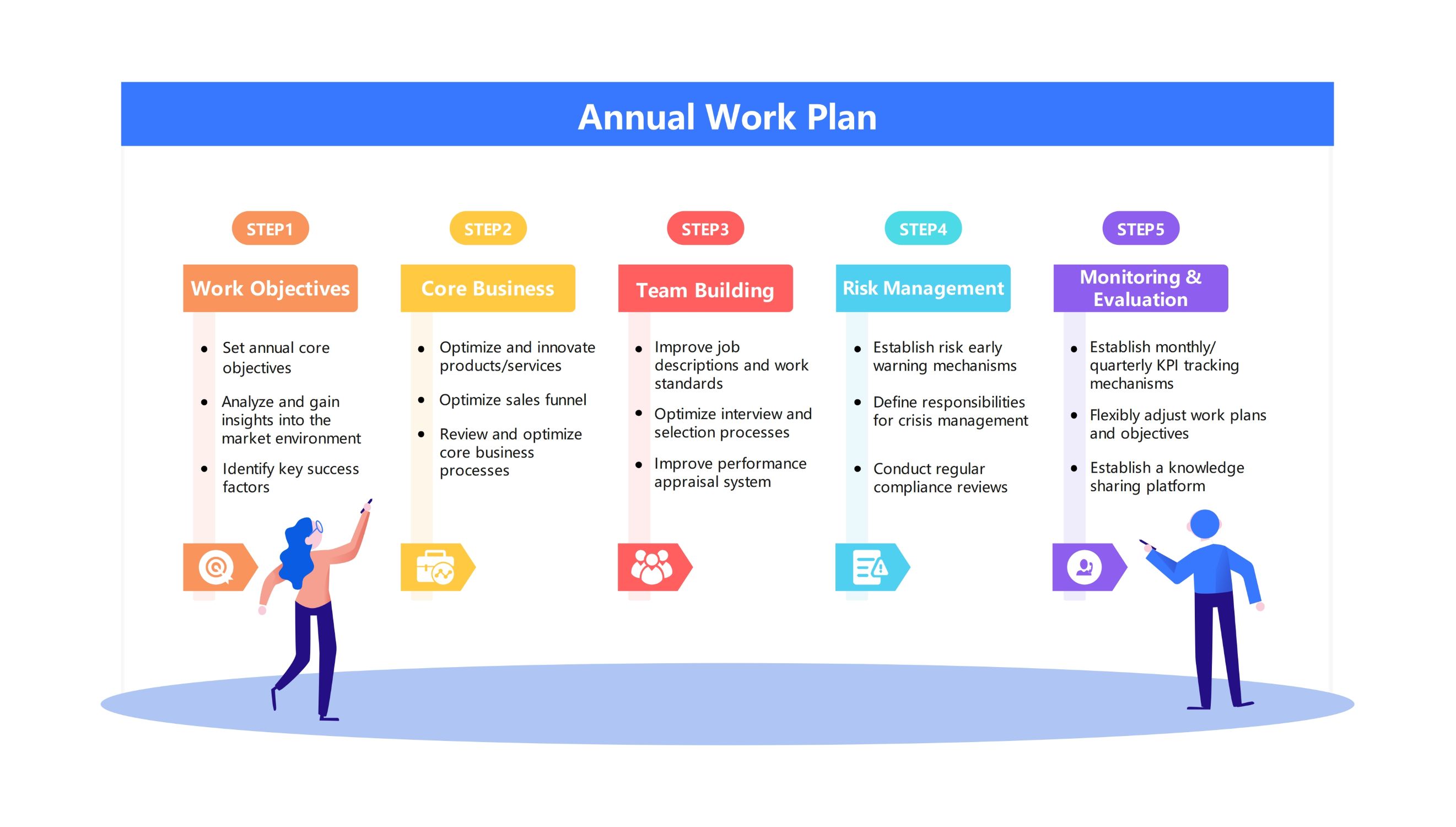
About this Annual Work Plan Management Flowchart template
This template provides a clear visual structure for organizational planning. It breaks down the yearly strategy into five manageable stages. It is designed to help managers track goals, optimize business operations, and manage risks effectively throughout the calendar year.
Work Objectives
The first step focuses on establishing a strong foundation for the year. This phase involves deep market analysis to ensure goals are realistic and achievable. Defining key success factors early helps the team maintain focus throughout the year.
- Set annual core objectives
- Analyze and gain insights into the market environment
- Identify key success factors
Core Business
In this stage, the focus shifts to operational excellence and growth. Organizations must evaluate their current products and services to find areas for innovation. Improving the sales funnel and business processes ensures better efficiency and higher revenue generation.
- Optimize and innovate products/services
- Optimize sales funnel
- Review and optimize core business processes
Team Building
Success depends on the people within the organization. This section outlines how to strengthen your workforce through better standards and processes. By improving recruitment and performance systems, companies can build a more motivated and highly skilled professional team.
- Improve job descriptions and work standards
- Optimize interview and selection processes
- Improve performance appraisal system
Risk Management
Planning for the future requires identifying potential threats before they happen. This section helps businesses stay compliant and prepared for unexpected crises. Establishing early warning systems allows for quick responses to challenges, protecting the organization from significant operational disruptions.
- Establish risk early warning mechanisms
- Define responsibilities for crisis management
- Conduct regular compliance reviews
Monitoring & Evaluation
The final phase ensures that the work plan stays on track through continuous feedback. By tracking KPIs regularly, teams can make data-driven adjustments to their objectives. Knowledge sharing platforms further help the organization learn from its successes and failures.
- Establish monthly/quarterly KPI tracking mechanisms
- Flexibly adjust work plans and objectives
- Establish a knowledge sharing platform
FAQs about this Template
-
How do I customize this annual work plan flowchart for my specific industry?
To customize this template, first identify the core pillars relevant to your industry. For example, a tech firm might emphasize software development cycles, while a retail business focuses on seasonal inventory. Adjust the specific tasks within each node to reflect your unique operational goals. Using a flexible tool like EdrawMax allows you to easily drag, drop, and edit these sections.
-
Why is risk management included in an annual work plan?
Risk management is crucial because unforeseen events can derail even the best-laid plans. By including it in your annual flowchart, you proactively identify potential bottlenecks, financial shifts, or market changes. This allows your team to develop contingency plans in advance. Preparedness ensures that your business remains resilient and can continue its operations smoothly despite external or internal challenges.
-
How often should we review the monitoring and evaluation section?
You should review the monitoring and evaluation section at least once a month or quarterly. Regular tracking of key performance indicators (KPIs) helps you see if you are meeting your annual objectives. Frequent reviews allow for quick adjustments to your strategy if market conditions change. This constant feedback loop ensures that your team stays aligned with the overall vision throughout the year.

 (AI & Web)