About this Scientific Research Planning template
This template provides a structured roadmap for students and researchers. It focuses on intelligent algorithm optimization but can be adapted for any academic study. It breaks down the research process into logical phases like theory, experimentation, and final publication to ensure no detail is missed during the term.
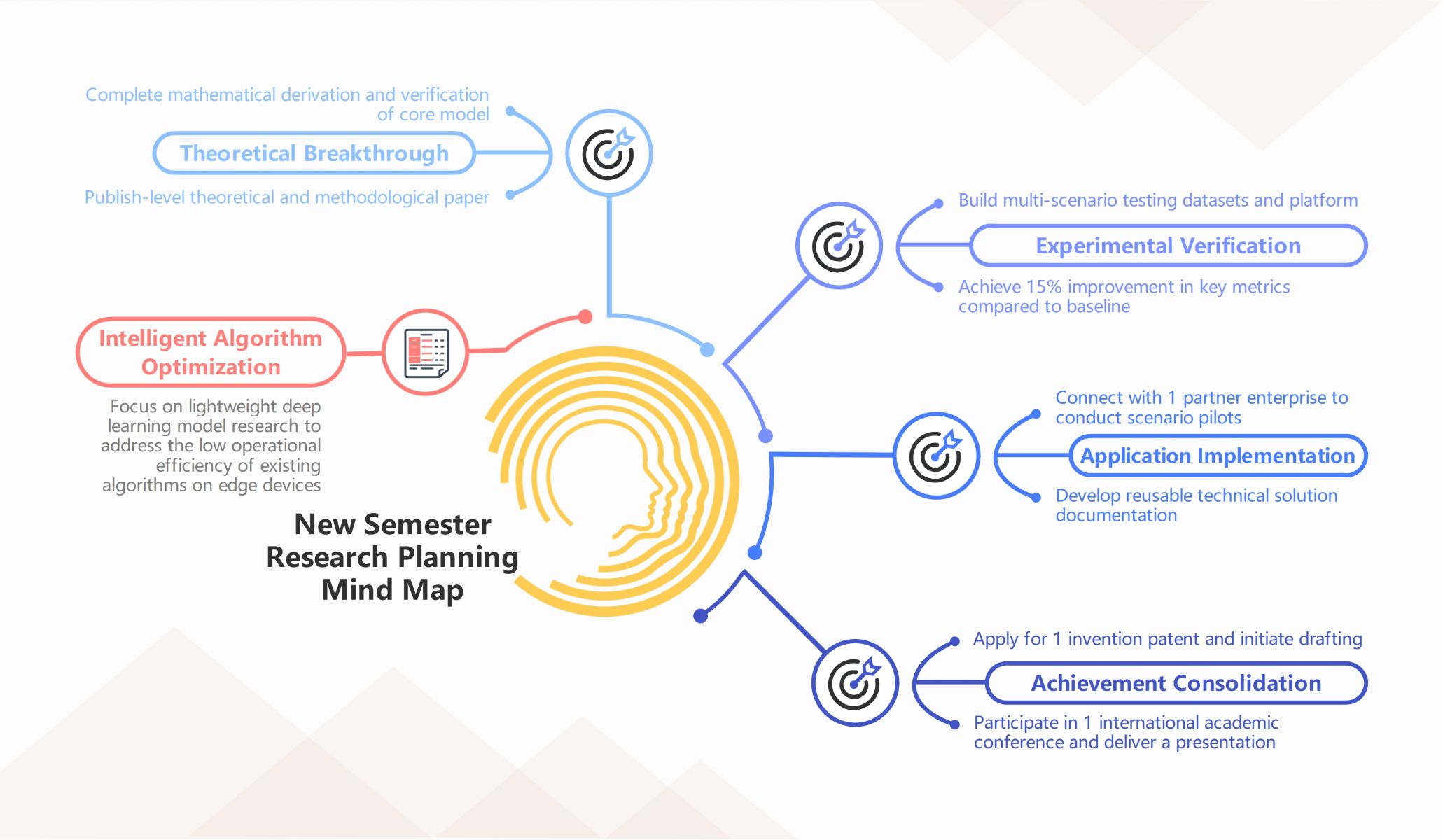
Intelligent Algorithm Optimization
This central node focuses on lightweight deep learning research. It aims to solve efficiency issues for algorithms on edge devices. This section sets the foundation for all technical tasks and goals throughout the upcoming academic semester.
- Research lightweight deep learning models
- Address low operational efficiency on edge devices
- Optimize existing algorithm frameworks
Theoretical Breakthrough
The theory phase involves deep mathematical work and formal documentation. Researchers must verify their core models to ensure accuracy. This stage is critical for producing high-quality papers that meet international publication standards during the research cycle.
- Complete mathematical derivation of the core model
- Verify theoretical framework accuracy
- Draft a publish-level methodological paper
Experimental Verification
This section outlines the practical testing phase of the research project. It requires building robust platforms and datasets to validate the theory. Success is measured by hitting specific performance targets compared to current industry benchmarks.
- Build multi-scenario testing datasets and platforms
- Achieve 15% improvement in key metrics
- Compare results against established baseline data
Application Implementation
Implementation bridges the gap between lab research and real-world use. This node focuses on collaborating with industry partners to test solutions. Creating documentation ensures that the technical findings are reusable and easy for others to implement.
- Connect with one partner enterprise
- Conduct real-world scenario pilots
- Develop reusable technical solution documentation
Achievement Consolidation
The final phase focuses on protecting intellectual property and sharing findings. It includes legal filings and academic networking. Presenting at conferences helps build a professional reputation while securing the research through formal patent applications.
- Apply for one invention patent
- Initiate patent drafting process
- Participate in an international academic conference
- Deliver a formal research presentation
FAQs about this Template
-
How do I start a research plan for the new semester?
To start your research plan, first define your core objective. Use a mind map to break your project into smaller categories like theory, testing, and results. Assign specific deadlines to each task to stay on track. This visual method helps you see the entire scope of your work and ensures you balance your time effectively between different phases.
-
What are the benefits of using a mind map for research?
Mind maps allow you to visualize complex relationships between different research tasks. They help you organize thoughts logically and identify potential bottlenecks early. By using a central hub for your ideas, you can easily add new details as your project evolves. This structure improves memory retention and makes it much easier to explain your plan to academic advisors.
-
How can I ensure my research meets publication standards?
Ensuring publication quality requires rigorous theoretical verification and strong experimental data. Focus on creating a clear mathematical foundation and testing your results against baseline metrics. Additionally, prepare detailed documentation throughout the process. Participating in international conferences and seeking peer feedback before submission will also help you refine your work to meet the high standards of top-tier academic journals.

 (AI & Web)