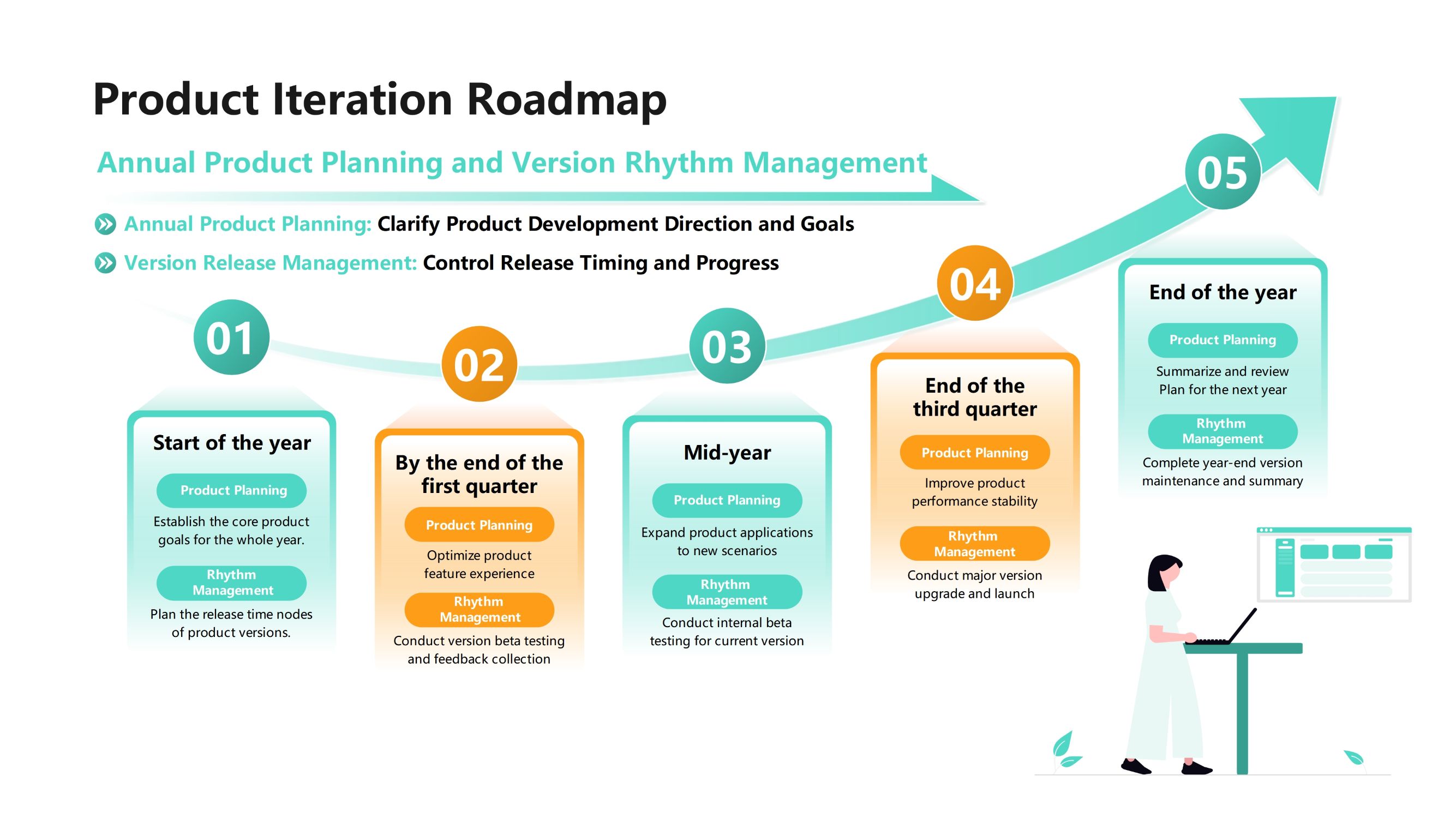
About this Product Iteration Roadmap template
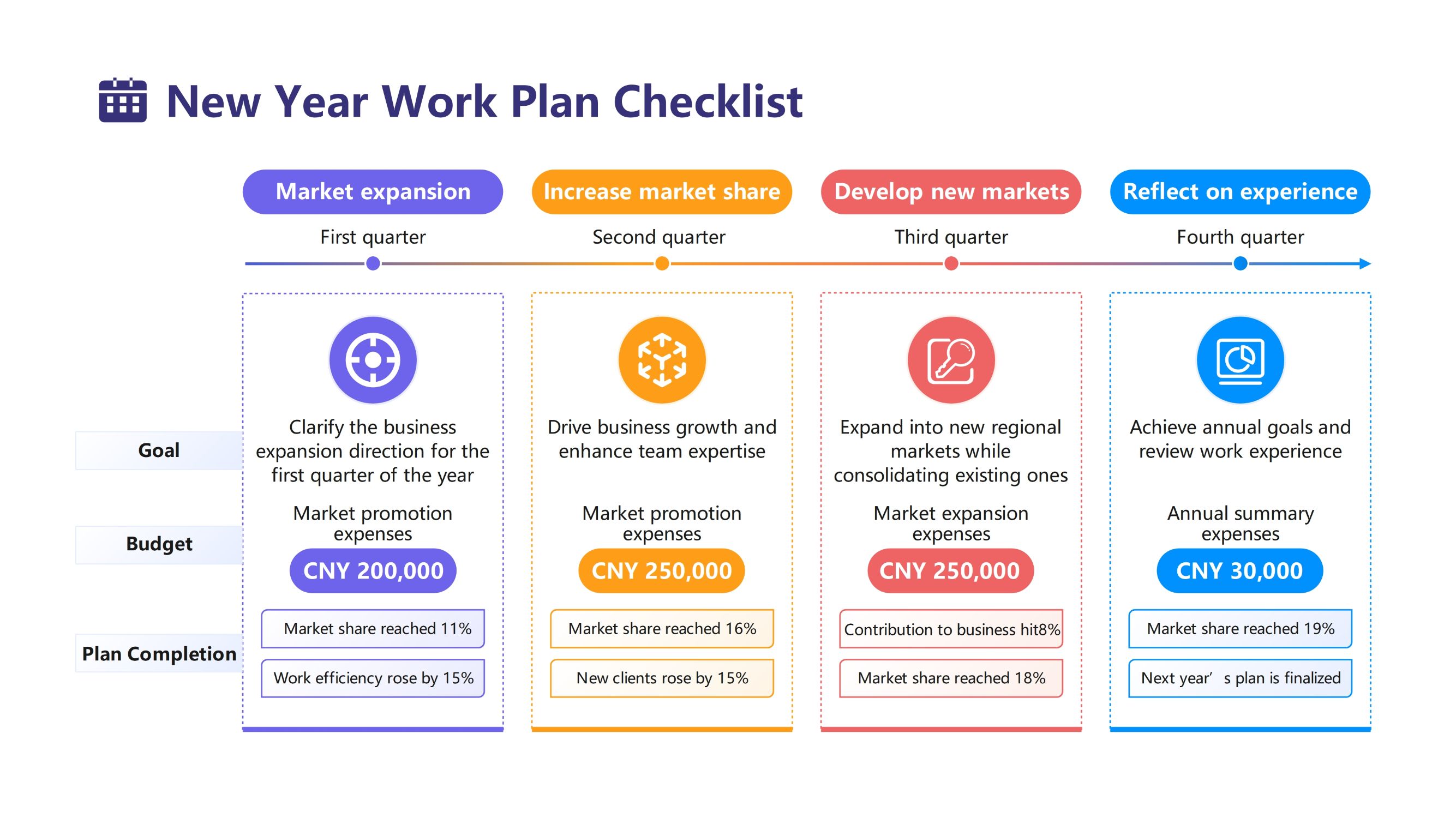
This template provides a clear framework for annual product planning and version rhythm management. It helps project managers track development goals and release schedules from the start of the year until the final review phase.
Start of the Year
The first stage focuses on setting the foundation for the entire year. Teams must define their core objectives to guide the development process. Clear goals help everyone stay focused on the same vision.
- Establish core product goals for the year
- Plan release time nodes for versions
End of the First Quarter
By the end of the first quarter, the team focuses on refining the user experience. This phase involves testing early versions to find bugs. Feedback from users helps improve the product before updates.
- Optimize product feature experience
- Conduct version beta testing
- Gather and analyze feedback
Mid-year Milestones
The mid-year phase is about expansion and internal validation. Developers look for new ways to apply the product in different scenarios. Internal testing ensures the current version is stable before reaching more customers.
- Expand product applications to new scenarios
- Conduct internal beta testing for current version
End of the Third Quarter
During the third quarter, the priority shifts to stability and major upgrades. The team works hard to make the software reliable. This period often concludes with a significant version launch to meet market demands.
- Improve product performance stability
- Conduct major version upgrade and launch
End of the Year
The final stage involves reflection and maintenance of the current system. Teams review their progress to learn from past challenges. This data is then used to create an effective plan for the upcoming year.
- Summarize and review annual progress
- Create plan for the next year
- Complete year-end version maintenance
FAQs about this Template
-
Why is a product iteration roadmap important for teams?
An iteration roadmap is essential because it provides a clear vision for the entire development team. It aligns stakeholders on specific goals and ensures that resources are used effectively. By breaking down the year into quarters, managers can better predict release dates and manage risks. This structured approach helps maintain a steady pace of improvement and keeps the product competitive.
-
How often should you update your product roadmap?
You should review and update your roadmap at least once per quarter. While the annual goals might stay the same, the specific tasks often change based on user feedback or market shifts. Regular updates allow the team to stay agile and react to new challenges. This flexibility ensures the product remains relevant and addresses the actual needs of your target audience.
-
What is version rhythm management in product development?
Version rhythm management is the process of controlling the timing and progress of product releases. It ensures that updates are delivered at a consistent pace rather than being rushed or delayed. By managing this rhythm, teams can prevent burnout and maintain high-quality standards. It also allows marketing and support teams to prepare for new features, ensuring a smooth transition for all users.

 (AI & Web)