About this Company Development Business Process template
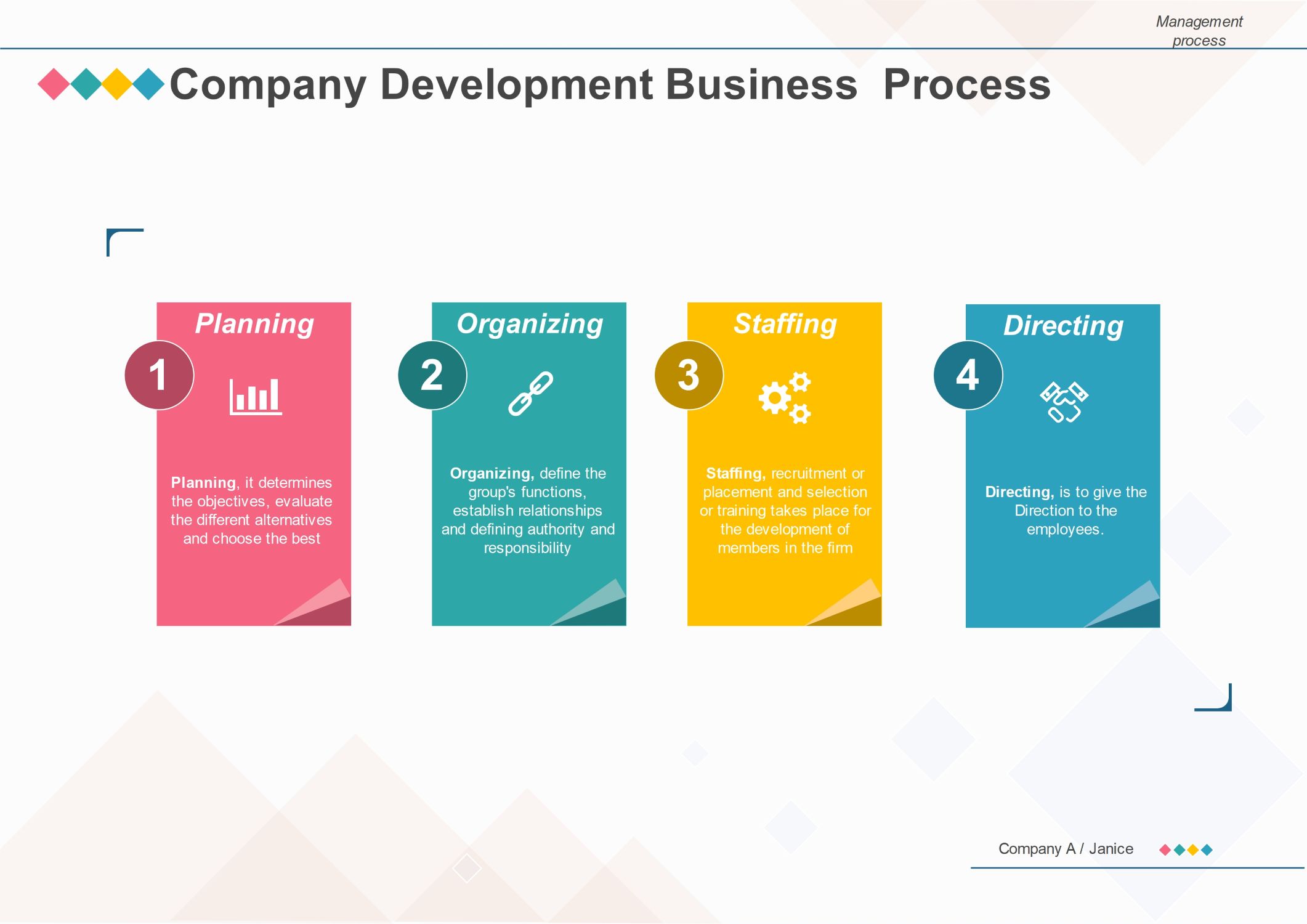
This template highlights the four fundamental stages of corporate management. It serves as a visual framework for leaders to plan strategy, organize structures, recruit staff, and direct operations. Use this professional layout to streamline your development process and improve overall team efficiency and clarity.
Planning
The planning phase serves as the foundation for all business activities. It focuses on identifying core objectives and analyzing various strategies to find the most effective path. Managers must evaluate all alternatives to ensure the company reaches its goals efficiently.
- Determine the objectives
- Evaluate the different alternatives
- Choose the best path
Organizing
Organizing focuses on building a functional internal structure for the firm. This stage involves defining group roles and establishing clear working relationships. It is essential for assigning authority and responsibility to the right people across the entire organization.
- Define the group's functions
- Establish relationships
- Defining authority and responsibility
Staffing
Staffing involves identifying and training the right talent for the company. This step covers the recruitment, selection, and placement of qualified members. Continuous development and training programs are vital to keep the workforce skilled and prepared for future tasks.
- Recruitment or selection
- Placement of members
- Training and development
Directing
Directing is the final step in the core management cycle. It involves leading and guiding employees to perform their tasks correctly. Strong leadership during this stage ensures the workforce remains motivated and works toward the company's long-term vision.
- Give direction to the employees
- Supervise daily operations
- Motivate team performance
FAQs about this Template
-
Why is the planning stage critical in company development?
Planning is critical because it sets the specific direction for the entire organization. Without a clear plan, teams may work on conflicting tasks, wasting valuable time and resources. By evaluating different alternatives early, leaders can identify potential risks and choose the most efficient path. This foresight helps the company stay resilient in competitive markets and ensures long-term operational stability.
-
How does organized staffing benefit a growing business?
Organized staffing ensures that every role is filled by individuals with the right skills and mindset. By focusing on recruitment, selection, and continuous training, a company builds a high-performing team. Well-trained employees are more productive and require less supervision over time. This professional development leads to higher job satisfaction, lower turnover rates, and a much more innovative workplace culture overall.
-
What role does directing play in daily operations?
Directing acts as the bridge between theoretical management plans and actual results. It involves motivating staff and supervising their daily activities to ensure they meet quality standards. Effective directing provides employees with the clarity they need to succeed in their roles. When leaders provide clear instructions and support, the company can execute complex projects more smoothly and achieve its growth targets.

 (AI & Web)