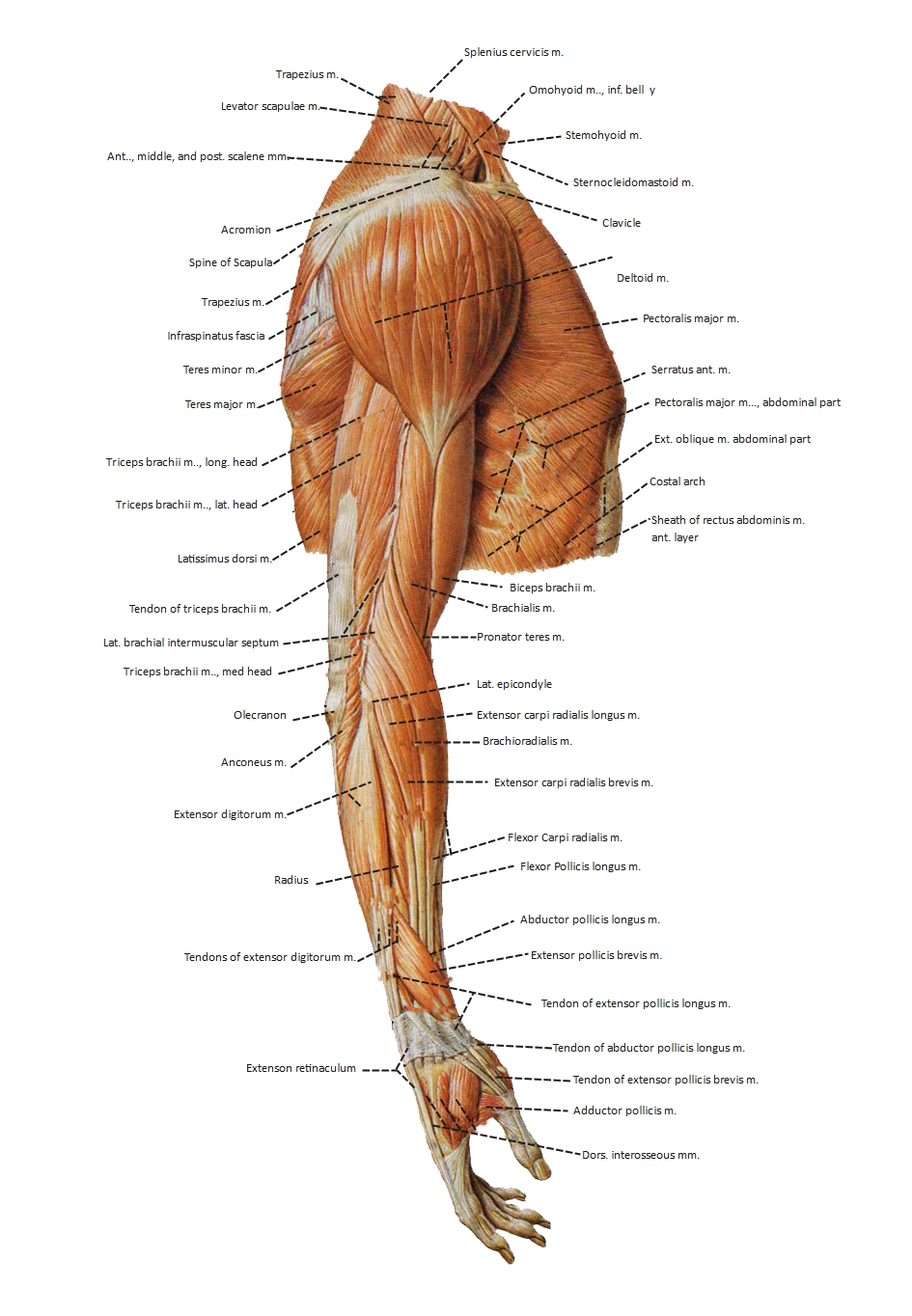
About This Labeled Arm Muscles Diagram
This editable anatomy diagram provides a visual reference for major muscles and related structures of the upper limb. In strict anatomical terminology, the arm is the region between the shoulder and elbow; this template also includes structures in the shoulder, forearm, wrist, and hand to support broader visual study.
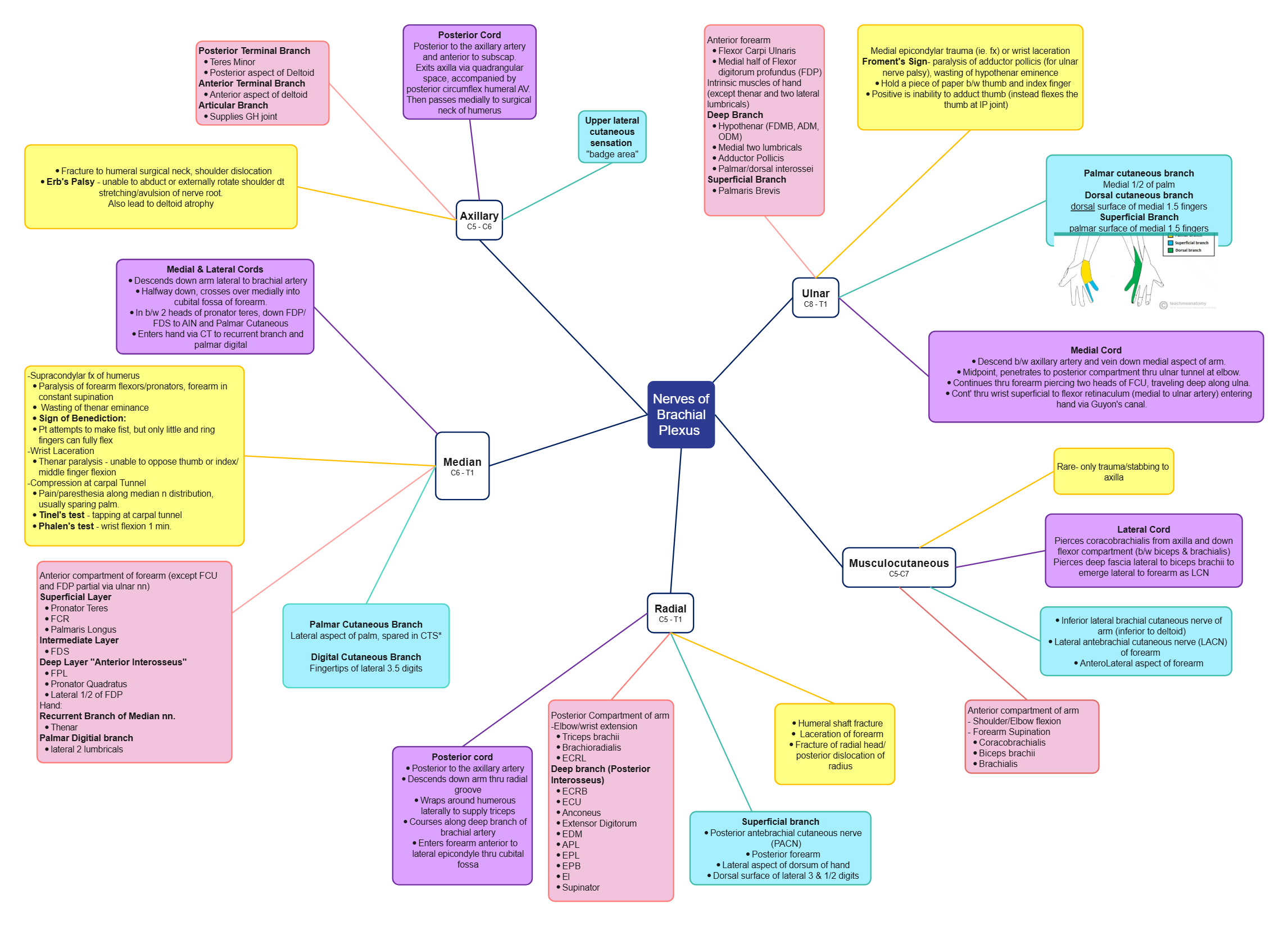
Upper Arm: Anterior Compartment
The anterior compartment of the upper arm contains the biceps brachii, brachialis, and coracobrachialis. These muscles are associated primarily with flexion at the elbow, while the biceps brachii also contributes strongly to forearm supination.
- Biceps brachii
- Brachialis
- Coracobrachialis
Upper Arm: Posterior Compartment
The triceps brachii forms the main muscle mass of the posterior upper arm and is the primary extensor of the elbow. Its long, lateral, and medial heads converge into a common tendon inserting at the olecranon of the ulna.
- Triceps brachii: long, lateral, and medial heads
- Triceps tendon
Forearm Flexors and Extensors
The forearm contains multiple muscle groups that move the wrist, hand, and fingers and contribute to pronation and supination. The template labels examples such as brachioradialis, flexor carpi radialis, extensor digitorum, extensor carpi radialis, pronator teres, and anconeus.
Wrist and Hand Structures
Tendons and intrinsic hand muscles continue the movement chain into the wrist and fingers. Labels in this region can help learners connect forearm muscle bellies with the tendons that cross the wrist and act on the hand.
How to Use This Diagram
Use the diagram for anatomy revision, labeling practice, classroom explanation, or visual reference. It is an educational illustration and should not be used by itself to diagnose an injury or plan medical treatment; clinical questions require appropriate professional evaluation.
FAQs about this Template
-
What are the main muscles of the upper arm?
The anterior compartment contains biceps brachii, brachialis, and coracobrachialis. The posterior compartment is dominated by triceps brachii. Anconeus is closely related functionally but is generally classified with the posterior forearm.
-
What do the biceps and triceps do at the elbow?
Biceps brachii contributes to elbow flexion and forearm supination, while triceps brachii is the primary elbow extensor. They therefore perform opposing actions at the elbow in many movements.
-
Are forearm muscles considered arm muscles anatomically?
In strict anatomical terminology, the arm is the region from shoulder to elbow, while the forearm extends from elbow to wrist. In everyday language, “arm muscles” often refers to muscles across the whole upper limb, which is why broader diagrams may include both regions.

 (AI & Web)