About this Blood components diagram template
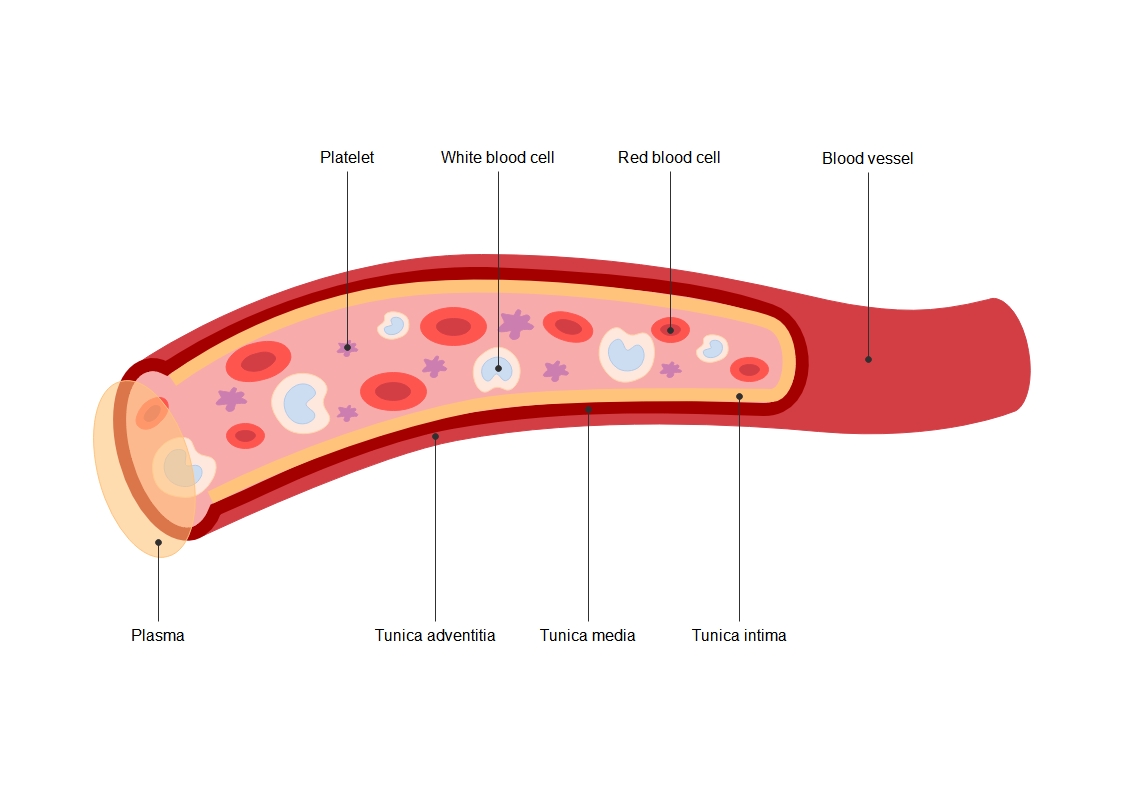
This diagram provides a clear visual breakdown of human blood and vessel anatomy. It is an ideal resource for biology students and medical professionals to understand the complex mixture of cells and tissues that sustain life.
Blood Cell Components
The blood contains specialized cells that perform vital life-sustaining tasks. This section identifies the cellular elements that circulate through our veins and arteries to protect the body, provide energy, and ensure that our injuries heal properly.
- Red blood cell: These biconcave cells carry oxygen to tissues and remove carbon dioxide.
- White blood cell: These immune system cells defend the body against infections and foreign pathogens.
- Platelet: Small cell fragments that stick together to form clots and stop bleeding.
Vessel Wall and Plasma
Blood travels through vessels composed of several distinct tissue layers. These structures protect the fluid and manage blood pressure. The liquid medium, called plasma, holds everything together while transporting nutrients and various waste products throughout the body.
- Plasma: The straw-colored liquid component that suspends blood cells and carries vital proteins.
- Tunica adventitia: The outer layer of connective tissue that supports and protects the vessel.
- Tunica media: The middle layer of smooth muscle that regulates vessel diameter and pressure.
- Tunica intima: The smooth inner lining that ensures efficient and frictionless blood flow.
- Blood vessel: The tubular channel through which blood and its essential components travel.
FAQs about this Template


 (AI & Web)