About this bird diagram template
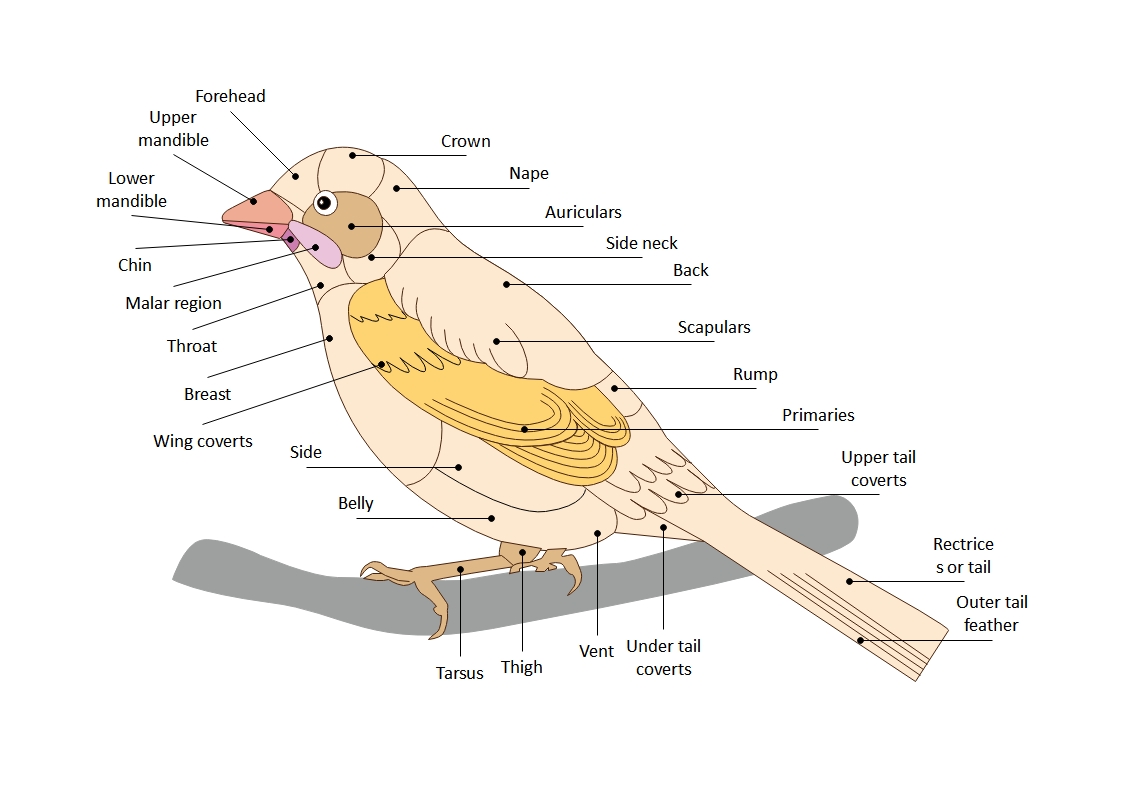
This labeled template provides a comprehensive overview of a bird's external anatomy. It identifies everything from the beak and crown to the wings and tail feathers. It is an ideal resource for biology classes, nature studies, and educational presentations.
Head and Beak Features
The head section includes the upper and lower mandible of the beak. It also identifies the forehead, crown, and nape. These regions are essential for sensory input and finding food in the wild.
- Upper mandible
- Lower mandible
- Forehead
- Crown
- Nape
- Auriculars
- Chin
- Malar region
Wings and Upper Body
This part focuses on the bird's flight structures and dorsal side. It highlights the back, scapulars, and rump. Understanding wing coverts and primaries helps explain how different species fly and stay warm.
- Back
- Scapulars
- Rump
- Wing coverts
- Primaries
- Side neck
Underparts and Lower Anatomy
The lower section covers the throat, breast, and belly areas. It also points out the thigh and tarsus of the leg. These parts are critical for digestion, balance, and perching on branches.
- Throat
- Breast
- Side
- Belly
- Thigh
- Tarsus
- Vent
Tail Structure
The tail section includes the rectrices and tail feathers. It also shows the upper and under tail coverts. These feathers provide stability during flight and help the bird steer or land safely.
- Upper tail coverts
- Under tail coverts
- Rectrices or tail
- Outer tail feather
FAQs about this Template
-
How does a labeled bird diagram help in birdwatching?
A labeled bird diagram serves as a foundational guide for identification. By learning specific parts like the crown, malar region, or wing coverts, birdwatchers can note subtle color patterns. These details distinguish between similar species in the field. This anatomical knowledge makes it easier to use field guides and contributes to more accurate observations of diverse avian populations.
-
What is the function of rectrices in avian anatomy?
Rectrices are the large feathers found in the tail of a bird. They play a crucial role in flight by acting as a rudder for steering and a brake for landing. On this diagram, they are shown at the rear. These feathers also help birds maintain balance while perching and can be used in complex courtship displays.
-
Why are wing coverts important for a bird's survival?
Wing coverts are the small feathers that overlay the base of the larger flight feathers. They create a smooth, aerodynamic surface on the wing, which reduces drag during flight. Additionally, these feathers provide a layer of insulation to keep the bird warm. They also help waterproof the wings, ensuring the bird can fly even in damp or rainy weather conditions.




 (AI & Web)