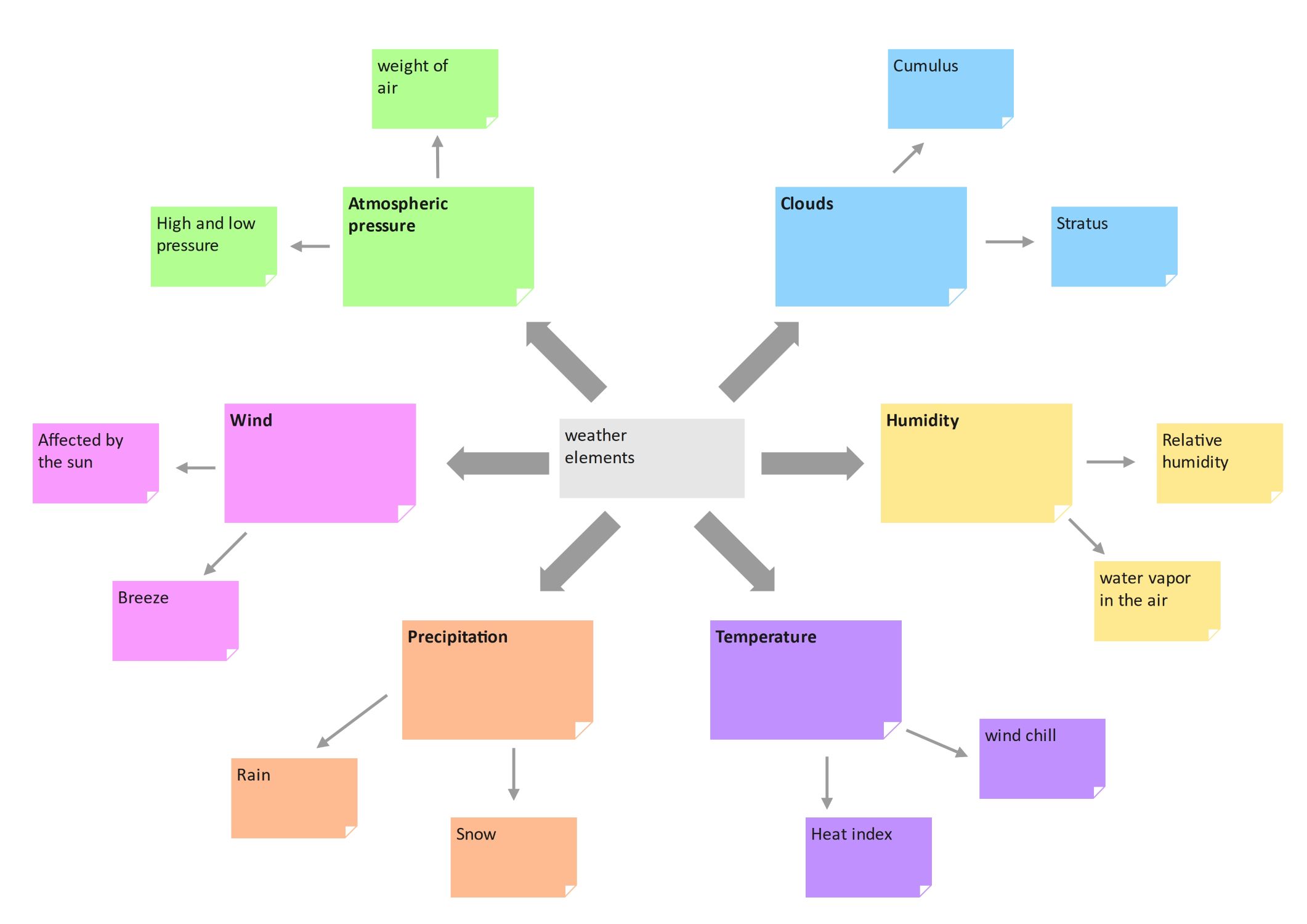
About this Concept Map Weather Elements template
This concept map provides a visual guide to the core components of meteorology. It breaks down complex atmospheric interactions into easy-to-understand categories. Use this template to teach or learn how different environmental factors influence daily weather conditions.
Atmospheric pressure
Atmospheric pressure refers to the force exerted by the weight of the air above a surface. It is a critical factor in determining weather changes and movement within the global atmosphere and environment.
- weight of air
- High and low pressure
Clouds
Clouds consist of tiny water droplets or ice crystals suspended in the atmosphere. They form when water vapor cools and condenses. Different cloud types indicate various weather states and upcoming changes in the sky.
- Cumulus
- Stratus
Humidity
Humidity measures the amount of moisture present in the air around us. It affects how we perceive temperature and plays a major role in the formation of precipitation and general atmospheric comfort levels.
- Relative humidity
- water vapor in the air
Temperature
Temperature is a measure of the intensity of heat present in the atmosphere. It influences everything from wind patterns to the type of precipitation that falls. Extreme temperatures can create significant environmental risks and hazards.
- wind chill
- Heat index
Precipitation
Precipitation occurs when water falls from the atmosphere to the Earth's surface in various forms. This process is vital for the water cycle and provides the fresh water needed for life on our planet.
- Rain
- Snow
Wind
Wind is the movement of air caused by differences in atmospheric pressure. It distributes heat and moisture across the globe. Solar energy is the primary driver of wind currents as it warms the Earth unevenly.
- Affected by the sun
- Breeze
FAQs about this Template
-
Why is atmospheric pressure important for weather forecasting?
Atmospheric pressure is a primary indicator of upcoming weather shifts. When pressure drops quickly, it usually signals that a storm system or low-pressure area is approaching. Conversely, rising pressure often brings clear skies and calm conditions. By tracking these changes, meteorologists can accurately predict whether you will need an umbrella or sunglasses for your commute or outdoor activities today.
-
How does humidity affect our daily comfort?
Humidity significantly impacts how our bodies regulate heat. High humidity prevents sweat from evaporating efficiently, making the air feel much hotter than the actual temperature. This is often measured using the heat index. In contrast, low humidity can lead to dry skin and respiratory irritation. Maintaining a balanced humidity level is essential for both personal health and overall indoor or outdoor comfort.
-
What causes different types of precipitation?
The type of precipitation depends on the temperature profile of the atmosphere. Rain occurs when ice crystals melt into liquid as they fall through warm air. Snow forms when the entire column of air remains below freezing, allowing crystals to reach the ground. Other factors, like updrafts and humidity, also determine if we see sleet, hail, or just a light misting rain.

 (AI & Web)