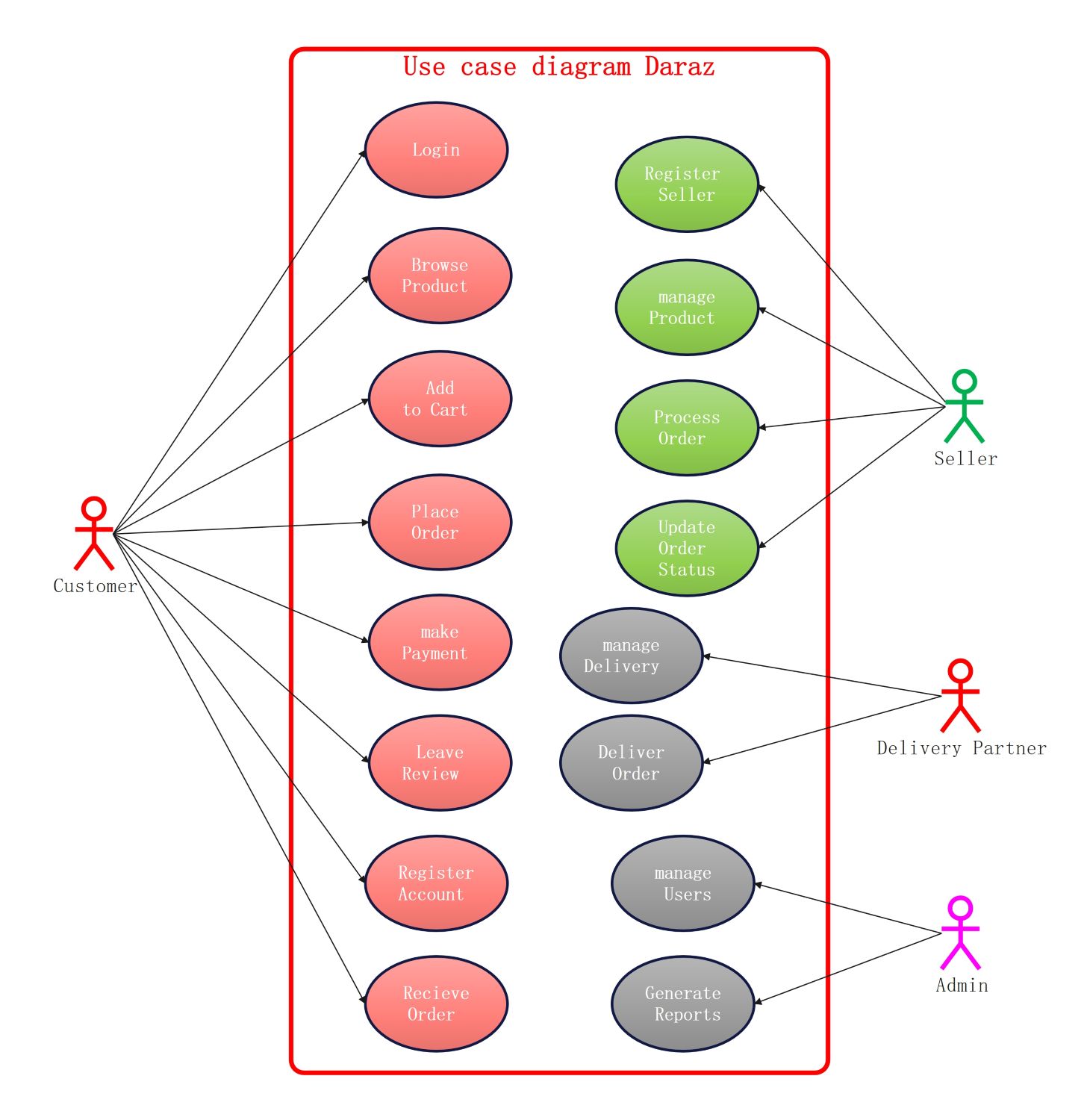
About this Use Case Diagram for Daraz template
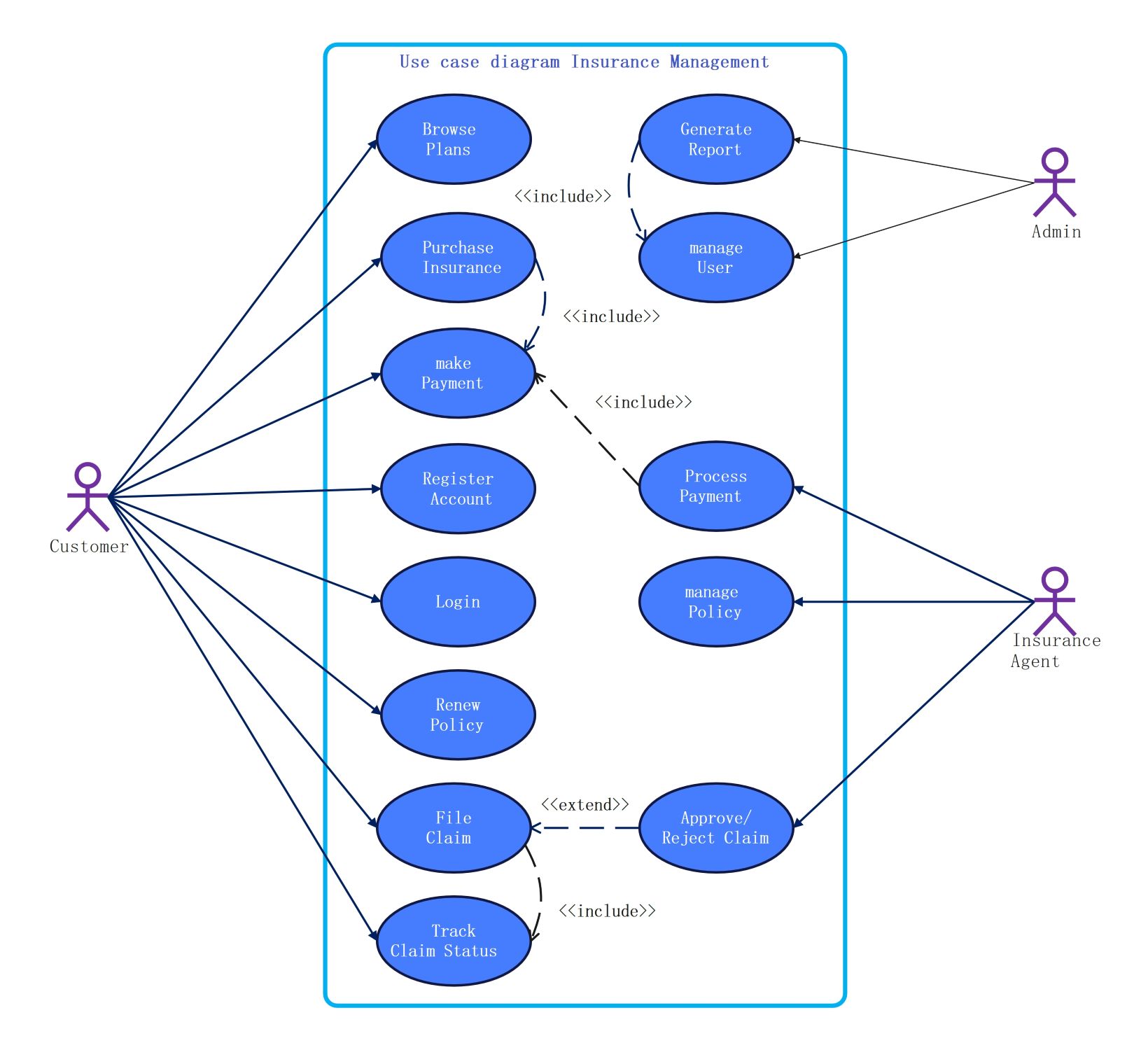
This template provides a clear visual map of the Daraz e-commerce ecosystem. It defines the relationships between various users and system functions. Use it to design better workflows for shopping, selling, and logistics management on a digital platform.
Customer Interactions
The Customer is the primary actor who uses the platform to purchase goods. This section details every step of the buyer journey, from initial account registration to the final receipt of their ordered products.
- Register Account
- Login
- Browse Product
- Add to Cart
- Place Order
- Make Payment
- Receive Order
- Leave Review
Seller Operations
Sellers are vital for maintaining the product inventory and fulfilling customer requests. This section highlights how merchants register on Daraz and manage their business operations, including product listings and order processing for buyers.
- Register Seller
- Manage Product
- Process Order
- Update Order Status
Delivery and Administration
The back-end of the system includes logistics partners and administrators. These roles ensure that orders reach their destination and that the entire platform remains secure, functional, and well-monitored through data-driven reporting.
- Manage Delivery
- Deliver Order
- Manage Users
- Generate Reports
FAQs about this Template
-
What is the purpose of a Use Case Diagram for an e-commerce site like Daraz?
A use case diagram serves as a blueprint for the platform's functionality. It identifies different actors, such as customers and sellers, and describes their specific goals within the system. By visualizing these interactions, developers can identify potential gaps in the user experience and ensure that every technical requirement is met before the actual coding or development phase begins.
-
How many actors are typically involved in a Daraz use case diagram?
A standard Daraz use case diagram usually features four primary actors. The customer handles the purchasing process, while the seller focuses on product management. The delivery partner manages the logistics and physical shipment of items. Finally, the administrator oversees the entire system, managing user accounts and generating business reports to monitor the platform's overall health and performance.
-
Why is it important to include the 'Leave Review' use case for customers?
Including the 'Leave Review' function is essential for building trust within an e-commerce ecosystem. It allows customers to share their feedback on products and seller performance. This data helps other buyers make informed decisions and provides sellers with valuable insights to improve their service. From a technical perspective, it defines the requirement for a feedback database and user interface components.

 (AI & Web)