






A warehouse process flow chart visualizes how goods and information move through the warehouse. Core warehouse process: most flowcharts organize receiving → inspection/check-in → putaway → storage/inventory control → picking → packing → staging → shipping, with returns and exceptions as separate branches. Choose a template by inbound flow, outbound fulfillment, inventory control, or end-to-end scope.
In this article
Part 1: What Is Warehouse Management
The warehouse is where the company’s goods inventory is stored, managed, and packed for shipping. A company receives goods daily that need to be stored properly to make it easy to find the intended product when a customer places an order. The maximized inventory storage not only spares space for the arriving material but also enhances communication with product suppliers & potential customers.
Warehouse management is about overseeing and controlling the daily operations within a warehouse.
Imagine trying to find a man named John from the US. You don't know his time and place of birth, address, family name, or other information. That's why managing a warehouse in the proper way matters.
Warehouse management ensures all products are efficiently stored, tracked, and shipped out as needed.

What Is a Warehouse Management System
We know the meaning and importance of managing a warehouse. Here comes the question: How can we manage the warehouse properly? The answer is to build a system for it.
This is where a warehouse management system (WMS) works.
A warehouse management system is the best tool to simplify warehouse operations. It helps keep everything in order by tracking inventory levels, managing storage locations, and ensuring that products move smoothly from one stage to the next.
You can locate any items and track their inventory in the shortest time.
Part 2: What Is a Warehouse Process Flow Chart
To improve warehouse management, a good system is a must. We can't just start a system from nowhere. A draft is important. Let's design the system on a file like a process flowchart. This is a great tool that people use to design and modify their management system for warehouses and other workflows.
We will start by making a process flow chart for the warehouse.
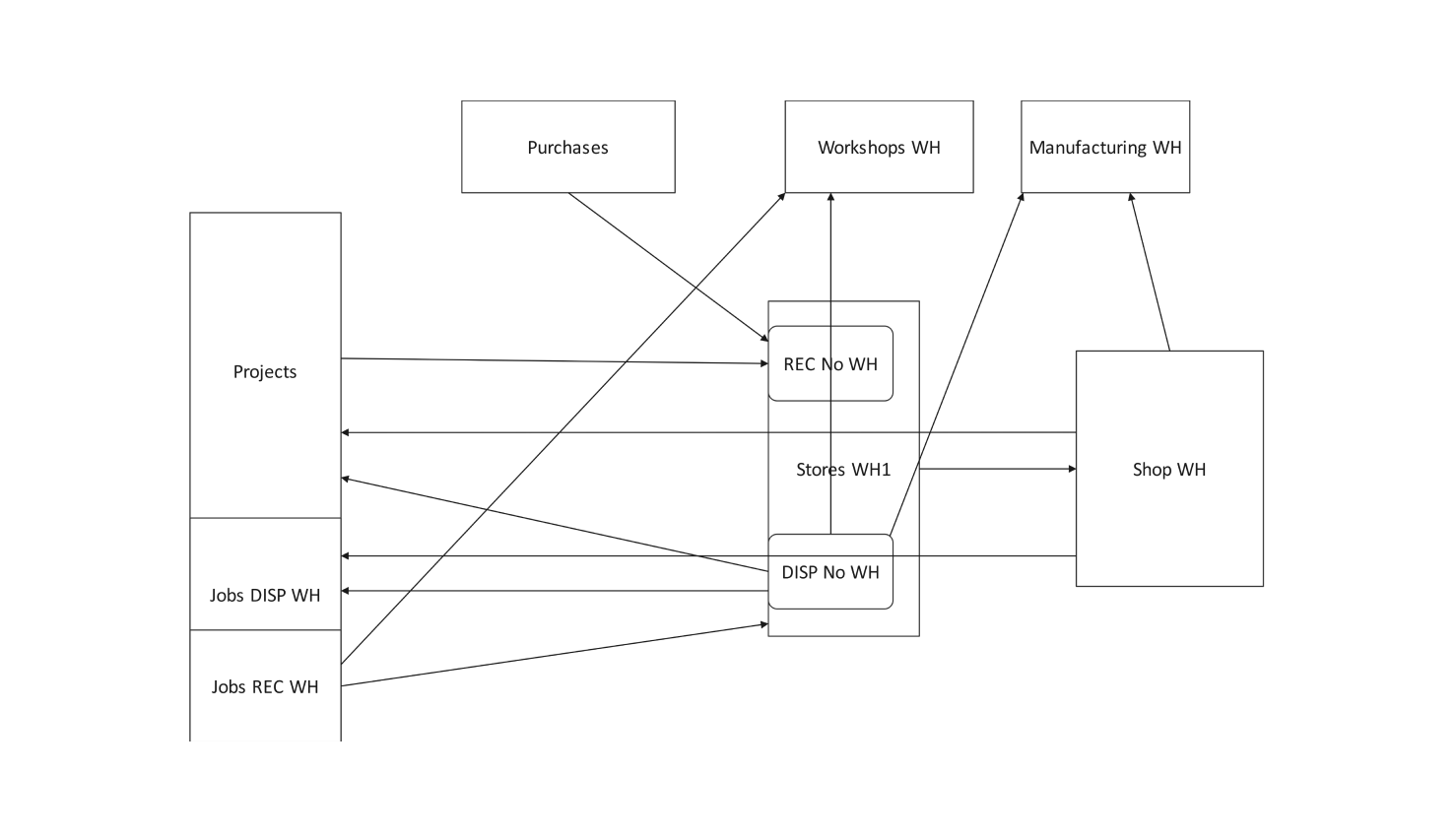


Warehouse process flow charts are the visualized technique to highlight the significant processes involved in efficient warehouse management. Such process charts depict the operational mechanisms of the warehouse visually:
- Demonstrating a new product’s arrival,
- Storing it properly in inventories,
- Finding a particular product for shipping, packaging, etc.
Additionally, the warehouse flow diagrams explain the day-to-day operations of warehouse management, such as hygiene management, timetable establishment, stock management, and more.
Part 3: Warehouse Process Flow Chart Templates in PowerPoint Formats
Using a well-built warehouse process flowchart template saves time & effort and imparts style consistency & professional outlook to your company’s warehouse process flowchart. We have presented some miscellaneous warehouse process flow chart templates below to decide which one may well suit your company’s needs:
Inbound and Outbound Warehouse Process Flow Chart PPT Template

- Source: https://www.slideteam.net/inbound-and-outbound-warehouse-operations-management-system.html
The warehouse process consists of two types of operational activities: inbound and outbound. Inbound logistics are those activities that are used to manage the goods coming inside the retail supply chain, whereas outbound logistics deal with activities that are involved in moving the retail goods out of the supply chain. For example, goods receiving, purchasing, and inventory management fall into inbound operations; in contrast, order management and shipping are included in outbound logistics.
Inventory Management Warehouse Process Flow Chart PPT Template

- Source: https://www.slideteam.net/warehouse-process-flow-to-manage-inventory-and-reduce-strategic-guide-to-manage-and-control-warehouse.html
Warehouse goods are managed using a methodized strategy, from receiving supplier’s order to the final delivery to the customer’s doorstep. The above warehouse inventory management process flowchart represents how you can efficiently manage the retail warehouse goods by storing them in particular inventory categories; additionally, quality inspection and proper storage will ensure seamless delivery.
Order Processing Warehouse Process Flow Chart PPT Template

- Source: https://www.slideteam.net/order-process-website-warehouse-drop-shipper-customer.html
On-time delivery is a key secret to every successful business, causing customer satisfaction and efficient order processing from the company’s end. The shipping and order delivery of a target customer involves two alternative procedures: by the company or the drop-shipper. The order is first placed on the website and processed by the company’s sales personnel; the shipping procedure may take two alternative routes. The order process closes when the customer receives the order at his threshold.
Part 4. Warehouse Process Flow Chart PPT Templates from EdrawMax
The EdrawMax flowchart maker entails user facilitation, time-saving, and cost-effectiveness, providing every amenity that customers want. We have presented below some exquisite warehouse process flow PPT chart templates from EdrawMax that will allow seamless warehouse flowchart creation:
 Get 500 free AI tokens
A warehouse logistics flowchart

 below.
 Fast-paced and organized outbound logistics are essential for better warehouse inventory management. The customer is the backbone of every industry, and it relies solely on timely delivery and harmless shipping.
- The customer places an order online by paying the invoice.
- His order is then posted to QB. the web-based tool to manage business invoices, expenses, and other accounting affairs.
- The material supplier packages the order, which is shipped to the customer through outbound logistics.
A cross-functional warehouse flowchart

This warehouse process flow chart comprehensively illustrates the entire process, from ordering-placing to shipping the product to the customer’s doorstep. The whole procedure is carried out in different categories, and managed by different departments.
- The process initiates when the customer places an order; the sales department prepares the sales invoice, including the customer copy, stock release, file copy, billing slip, invoice, and ledger copy.
- Afterward, the accounting department validates the customer’s credit card information; the order processing proceeds to the billing department if verified.
- The department prepares the final bill by calculating the shipping costs, taxes, & original product costs and sends the final invoice to the customer.
- The order details the next shift to the warehouse department, whose personnel pick up the ordered product, pack it, and send the order to the shipping department.
- The shipping tier attaches the packing slip, prepares the final bill, and ships the product to the customer’s doorstep.
A warehouse management process flowchart

Vertical flowcharts effectively express the process flows, highlighting the sequential procedure in a descending way. The warehouse order processing starts when the company receives an order from a customer; the warehouse staff tracks whether the requested item is in stock.
If yes, the item is picked and packed by the frontline laborers and then shipped to the customer using the outbound logistic strategy.
A warehouse loading and unloading flowchart

The above warehouse process flowchart demonstrates the entire warehouse management process, including the loading & unloading of goods, order processing, quality control & packing, and shipping & dispatch.
- The goods first arrive at the warehouse, where they are unloaded & organized into particular inventories and reserved for future customers’ orders.
- Afterward, the target product is selected from the inventory for order preparation; the product quality is tested, verified, and packed for delivery.
- After accomplishing the packaging formalities, the final product is dispatched to the customer.




 (AI & Web)