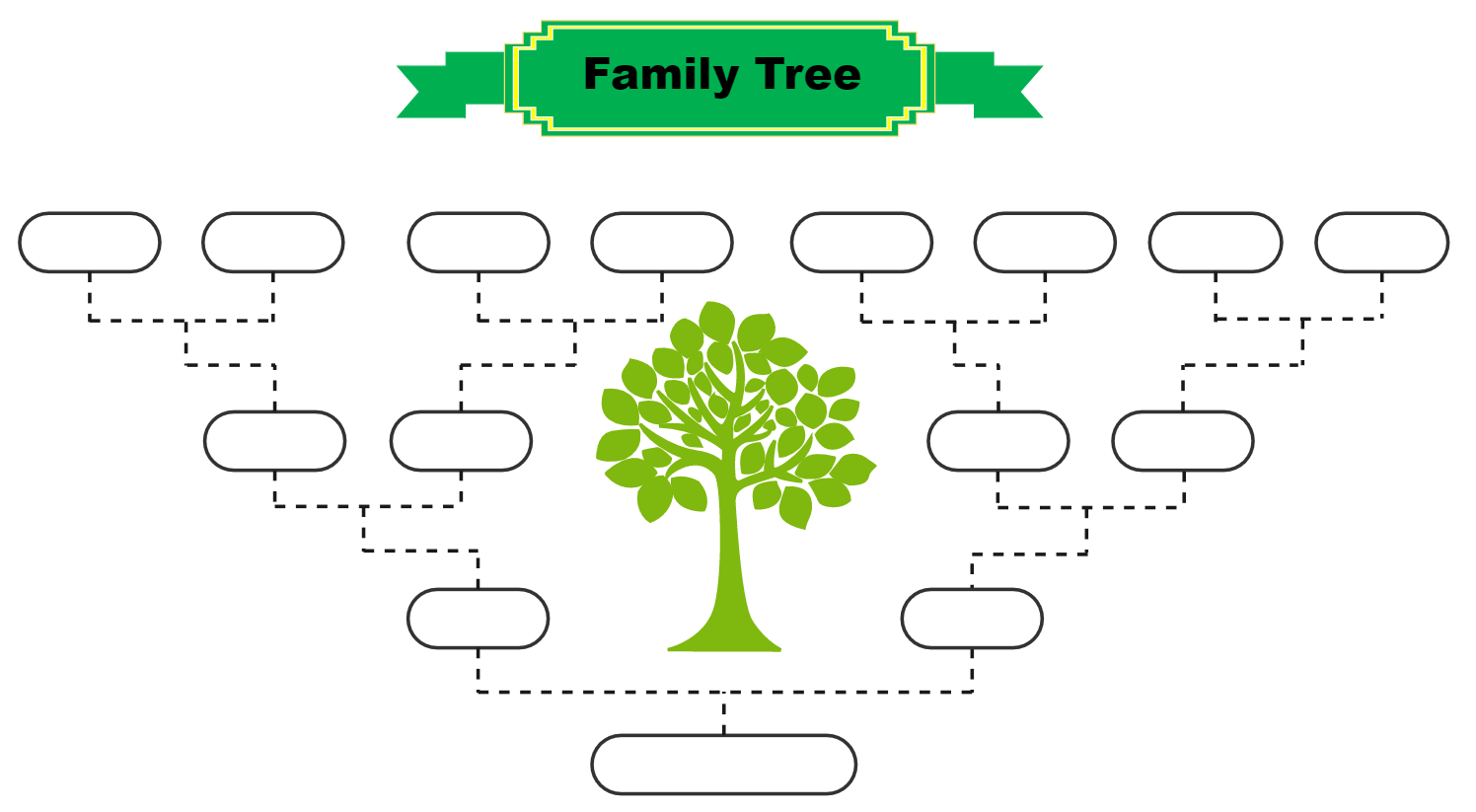




For children, the best family-tree template is usually the simplest one that fits the learning task. A 2-3 generation photo or name tree works well for younger learners; older students can handle more generations, maternal and paternal branches, dates, and short research notes. Use a flexible format when a conventional biological-only tree does not reflect the child's family.
In this article
What is a Family Tree?
A family tree is a simple chart that shows who belongs in your family. You place yourself or a chosen ancestor at the bottom or center. Lines connect you to parents above, grandparents above them, and so on.
Common Types
- Simple Tree: Shows you, your parents, and your siblings.
- Ancestor Chart: Focuses on your direct forebears in upward tiers.
- Descendant Chart: Starts with one person and tracks children, grandchildren, and further generations.
- Hourglass Chart: Combines ancestors above and descendants below one central person.
- Pedigree Chart: Shows only ancestors, often used for school projects.
Benefits of Family Trees for Kids
Family trees may seem like a fun activity to pass the time, but it also benefits kids. Many kids find it challenging to grasp the concept of a world beyond them. Thus, a family tree chart can help them see beyond themselves where they can learn about their roots and ancestors. Some of the benefits of family trees for kids are listed below.
Learning about Their Ancestors
Family trees give a detailed overview of the ancestors of a family. When kids learn about their ancestors, it boosts their sense of belonging and self-worth. It helps them understand the generations that passed before them.
Developing an Interest in History
Learning about your ancestors and the periods and eras that they lived in helps kids make a more personal link with history. It gives them a better understanding of the history and the circumstances of that time. Thus, most kids develop an interest in history when they see that their grandparents or great-grandparents lived during Nazi rule.
Creating a Stronger Bond
When kids understand the relations and links they have with a relative, it helps them create a stronger bond as they realize the similarities in their personalities and characteristics. These meaningful connections help the kids live a happier and more fulfilling life.
Making Informed Medical Decisions
There are a lot of medical diseases such as cancer, diabetes, heart and respiratory problems, and mental health issues that are genetic. Learning about the previous generations' health conditions can help children make informed medical decisions in the future.
6 Best Family Tree Templates for Kids
How to choose: Choose the family chart by audience and level of detail. Kids' templates should stay simple, while genograms or kinship charts can include medical, social, or relationship details.
The templates shown here come from EdrawMax. With clean layouts and colorful designs, they're a great fit for kids learning about their family background.
Blank Family Tree for Children
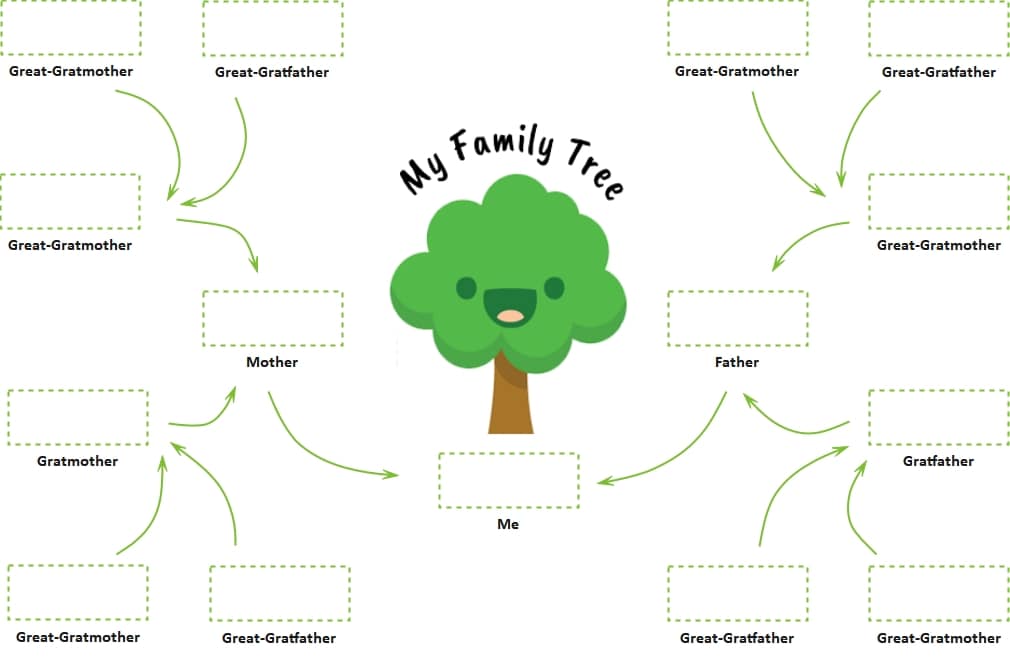
This family tree template uses a bright green tree as the center. Around it, clear rectangles show parents, grandparents, and great-grandparents.
Each box connects back to the trunk with arrows, so kids can easily trace each generation. Thanks to the clean layout, names and small photos stand out.
It's made for young students, ages 5 to 8. Teachers can use it in class, and parents can use it at home.
The labels are clear, and the icons are easy to understand. Children can focus on learning about their family instead of getting stuck drawing or figuring out how to organize it.


Extended Family Tree for Kids
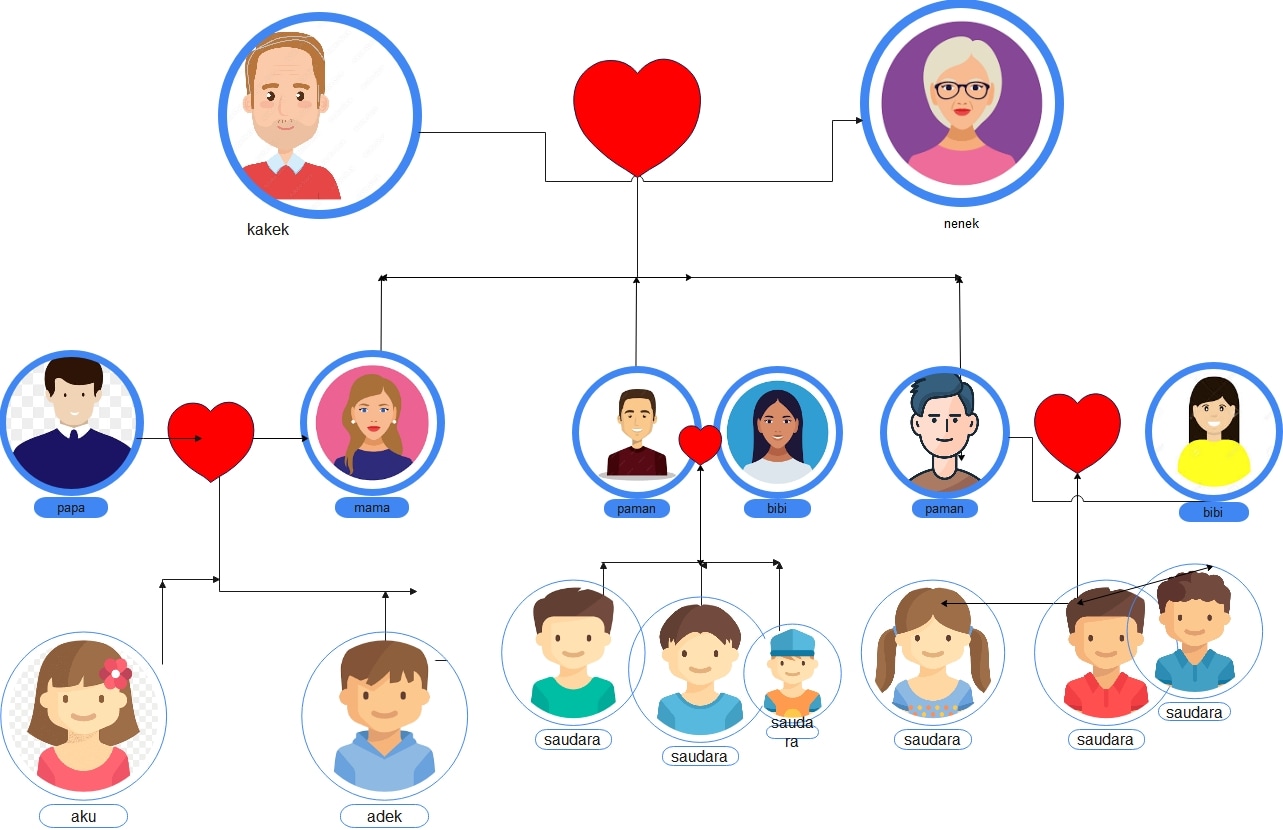
Made for kids between 6 and 10 years old, this family tree for kids starts with the children at the bottom. From there, it grows upward, parents first, then grandparents, and finally great-grandparents.
Each person has a circular photo space. Straight lines link each generation, and siblings are connected across horizontal lines. Blue and pink outlines help separate family sides. Red hearts show married couples.
Children can place real photos, follow their family line, and understand how siblings fit in. The clear visuals make everything easier to see and remember.
Cute Family Tree
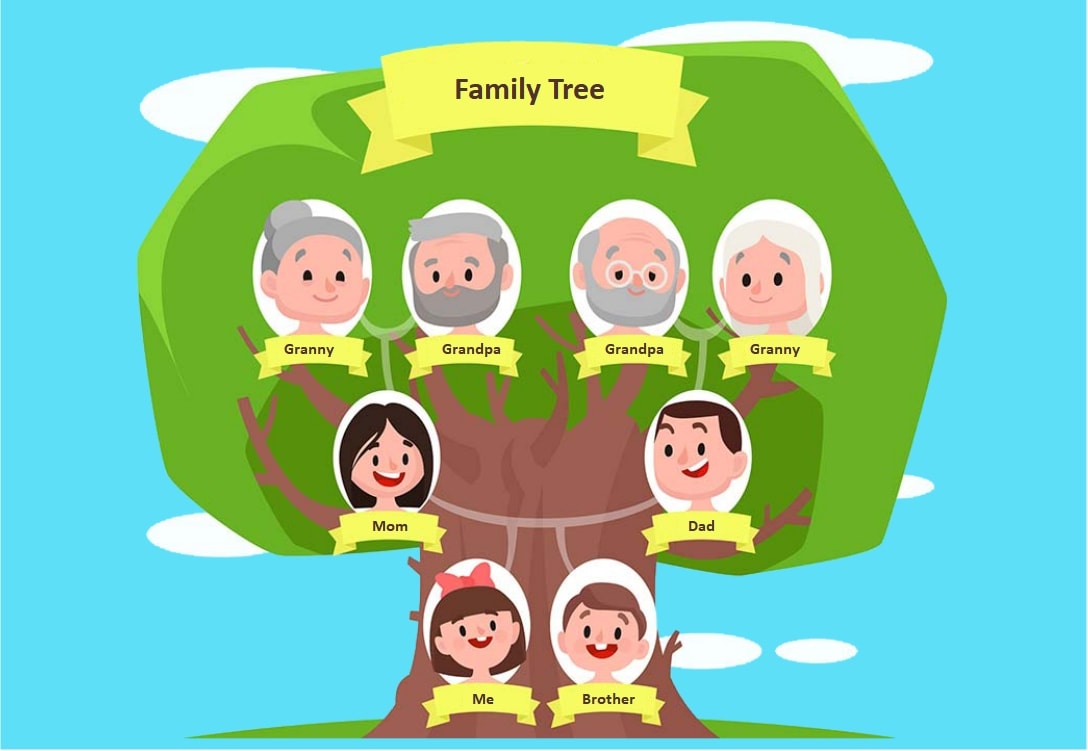
This template turns a family tree into a story kids can see and follow. A big green tree fills the page.
At the bottom, cartoon figures marked "Me" and "Brother" sit by the trunk. Just above it, "Mom" and "Dad" stand on wide branches. Higher up, "Granny" and "Grandpa" rest near the top. Each name is written on a yellow-style ribbon in soft letters.
Thanks to the bright colors and happy faces, toddlers and preschoolers (ages 2-5) can easily participate, even if they aren't reading yet.
Grown-ups can guide the activity, point to each character, say the name out loud, and explain their place in the family.
Cartoon Type Family Tree
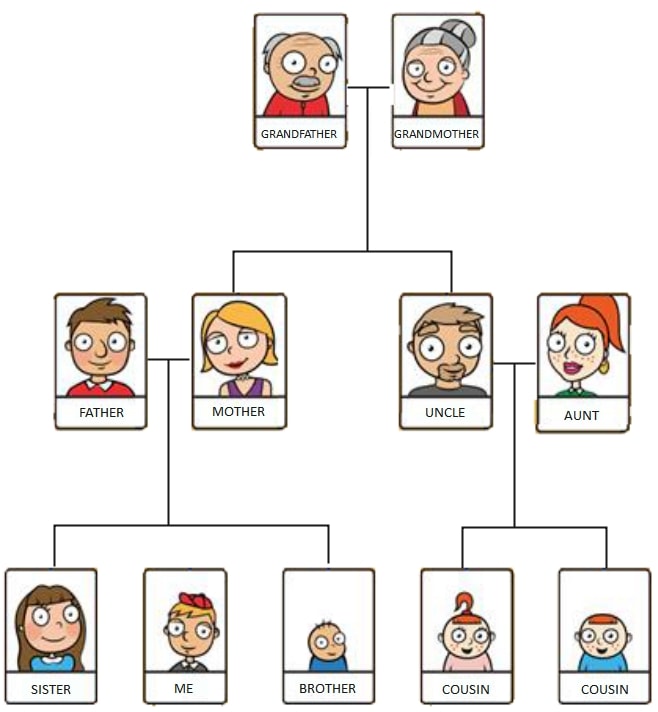
The cartoon-type family tree follows a top-down layout. It begins with Grandfather and Grandmother at the top. Below them are Father, Mother, Uncle, and Aunt. At the bottom are Sister, Me, Brother, and two Cousins.
Each family member is shown as a cheerful cartoon character inside a rectangle. Straight lines clearly connect everyone, showing how they're related.
Best for children aged 5 to 9, it's a great tool for teachers or parents to explain lineage without using real names.
Thanks to the clear drawings, kids can quickly spot where relatives like aunts, uncles, and cousins go. It's great for home or school and keeps things light.
Family Tree for Beginner Kids
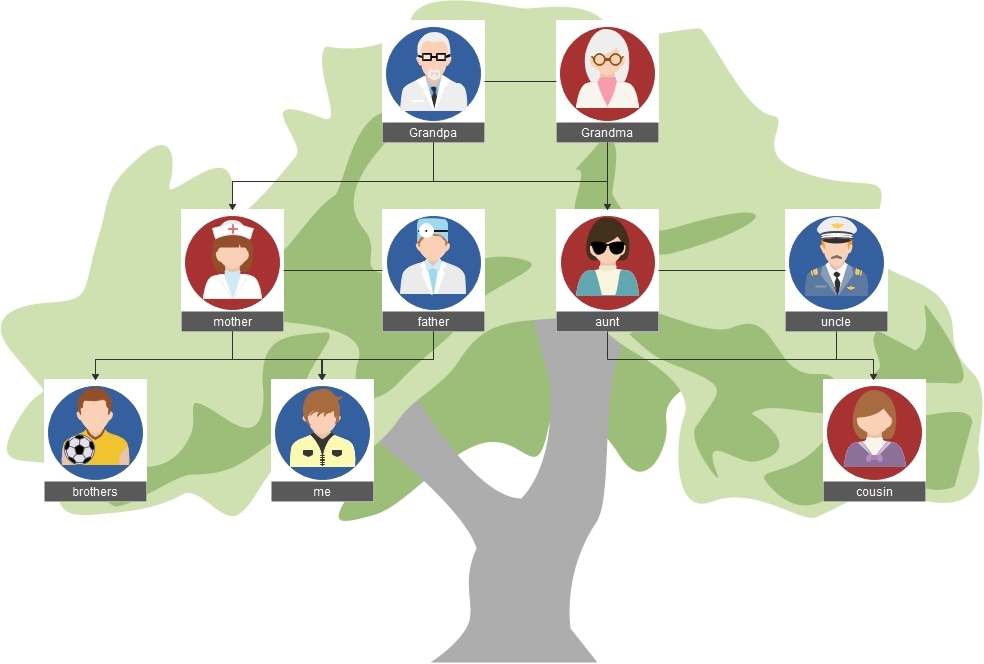
Again, Grandpa and Grandma sit at the top of this family chart. Their children, Mother, Father, Aunt, and Uncle, are just beneath. At the bottom, you'll find Brother, Me, and Sister.
The people are drawn with matching cartoon figures, so no one stands out more than another. Thick lines show who's related to whom. Kids follow those lines with their fingers, figuring it out right away.
Each name appears inside a basic shape, making it easier for younger kids to understand. Because the design is consistent, nothing draws attention away from the family layout.
The chart has clean, separate layers for each generation, making it easier for children to remember who's who and where they belong.
Simple Family Tree for Kids
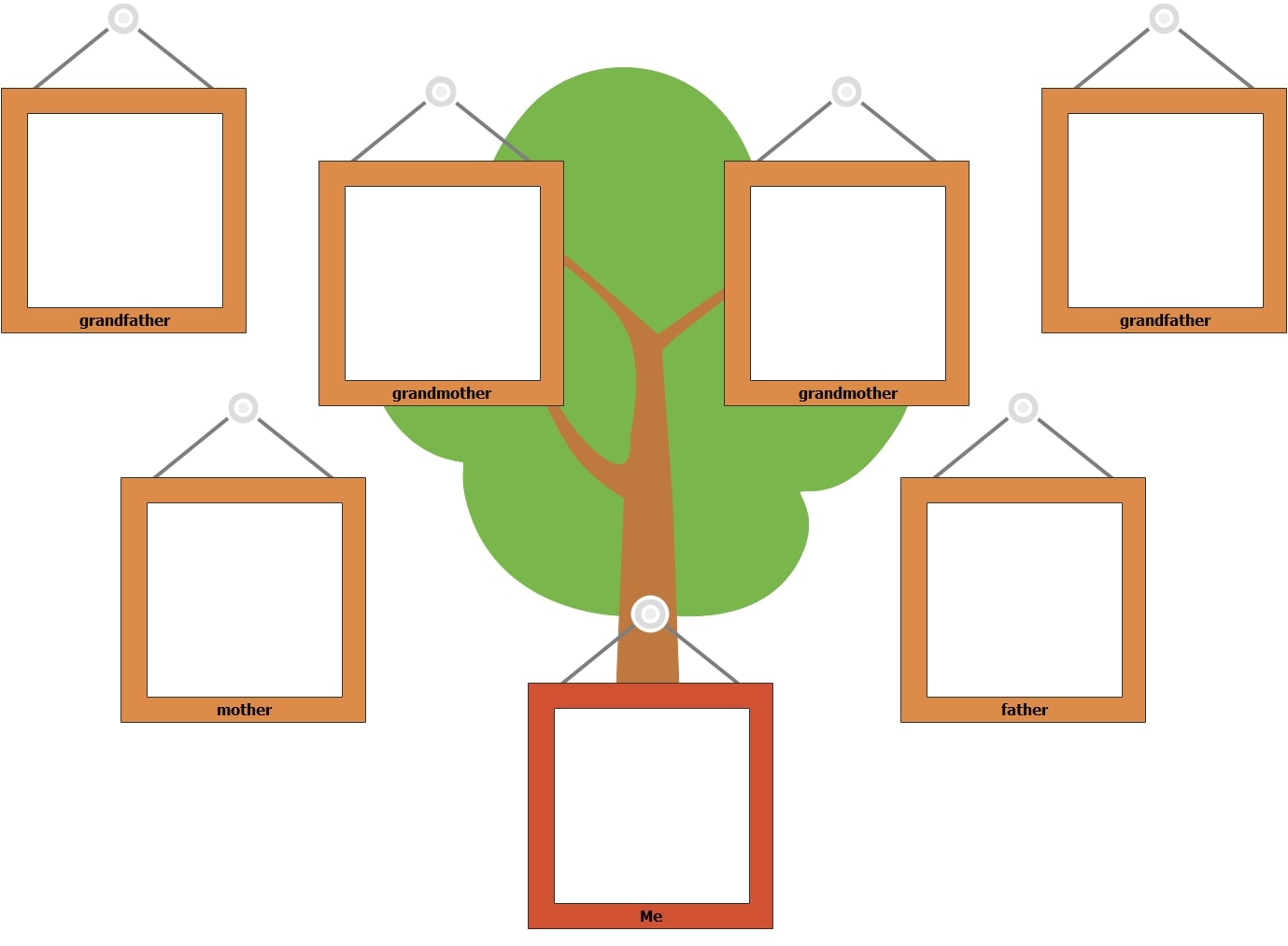
This family tree is just for little kids learning to recognize familiar faces. A big green tree sits in the background, and the child's photo starts at the base.
Parents and grandparents go above, tucked into brown-framed boxes. With minimum text required, you can print it out, cut the photos, and paste them in.
It's a fun weekend activity kids can do with an adult. Using real family photos makes it easier for children to connect names and faces in a way that sticks.
4-Generation Family Tree
This diagram is a free four-generation family tree that kids can use for their school projects or fun. The colors and the tree at the center give the family tree a bright look, making the whole thing engaging for kids. Furthermore, the arrows between each box show how each person is related to the other. Moreover, this family tree allows kids to go back 4 generations to their great grandparents, starting from themselves.