




A school floor plan organizes classrooms, administration, shared learning spaces, restrooms, circulation, entrances and exits, outdoor access, and support areas. The examples below help compare classroom distribution, preschool zoning, full-building operations, and campus-scale layouts before you customize a plan in EdrawMax.
In this article
Quick answer: A school floor plan organizes classrooms, administration, shared learning spaces, restrooms, circulation, entrances/exits, outdoor access, and support areas so students and staff can move safely and efficiently.
Choose an example by planning goal:
| Planning goal | Best example focus |
|---|---|
| Classroom distribution | Simple corridor or rectangular school plan |
| Early-learning zoning | Preschool plan with distinct activity and sensory areas |
| Full-building operations | Detailed plan with labs, library, clinic, canteen, offices, and circulation |
| Campus-scale planning | Multi-building plan with sports, transport, shared facilities, and access points |
For real projects, treat these diagrams as planning references: dimensions, accessibility, fire safety, egress, and local education/building requirements should be verified for the specific site.
Best School Layout Plan Examples on EdrawMax
Template 1: Simple School Floor Plan
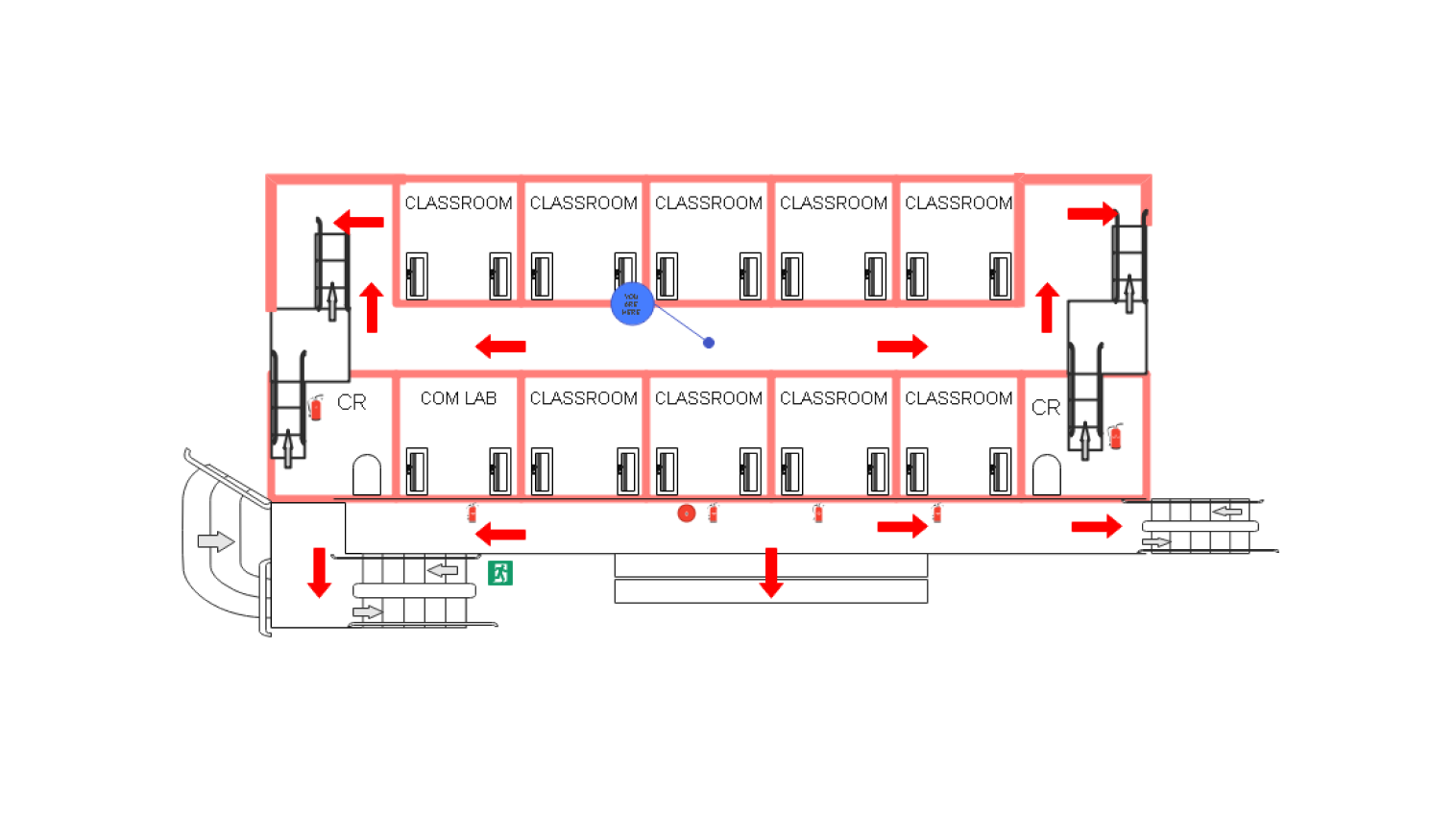
This simple school plan uses a central hallway to connect nine classrooms, a computer lab, restrooms, and multiple entrances/exits. It is useful for studying basic classroom circulation and emergency access.


Template 2: Florida School Floor Plan
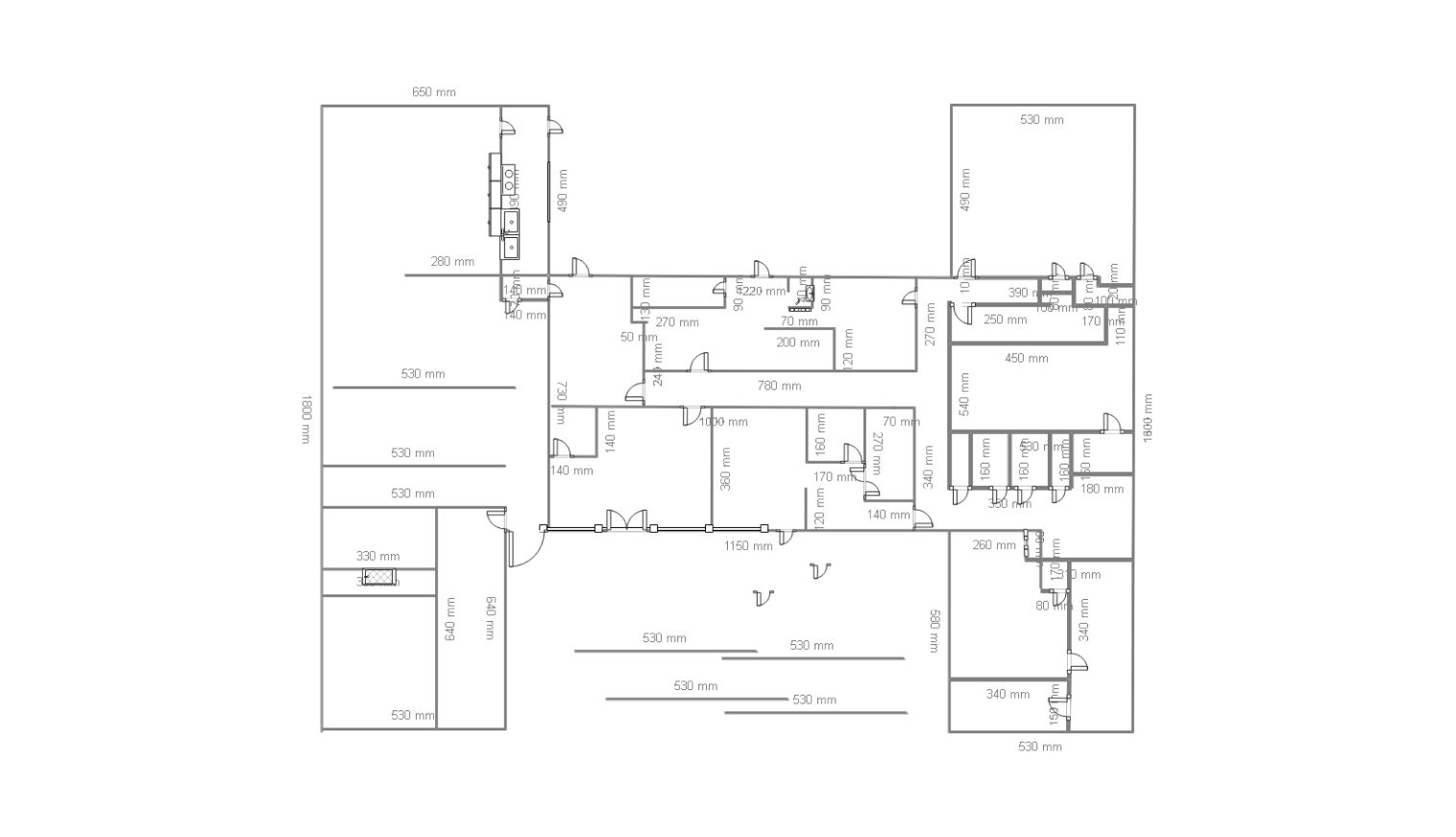
This corridor-based school layout groups classrooms along a central route, with restrooms and support offices positioned at the sides for clear movement between learning spaces.
Template 3: Rectangular School Floor Plan
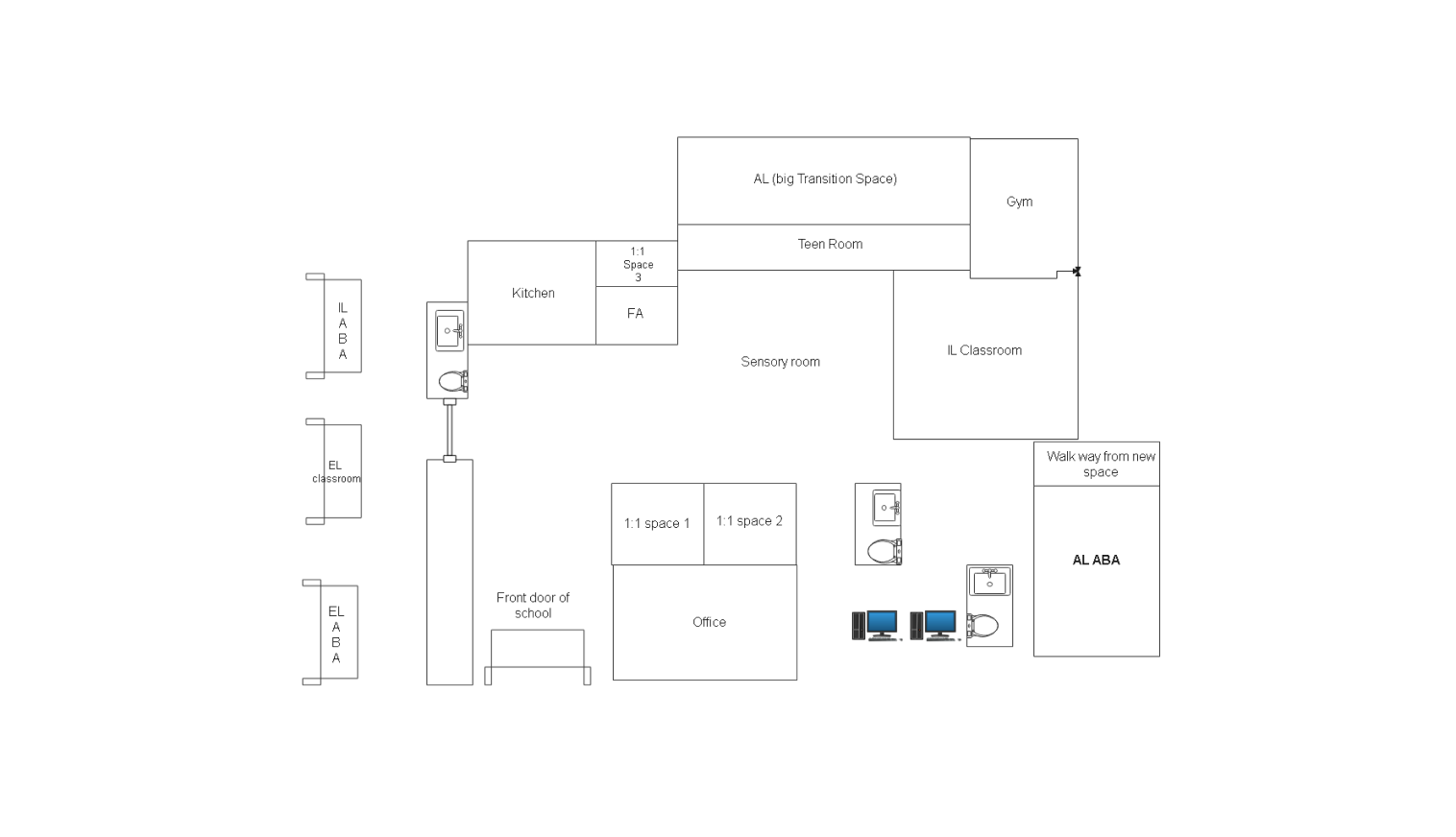
This rectangular layout combines classrooms with a computer lab, restrooms, kitchen and activity/support rooms, making it useful for comparing academic and shared-use zones.
Template 4: Presentable School Building Plan
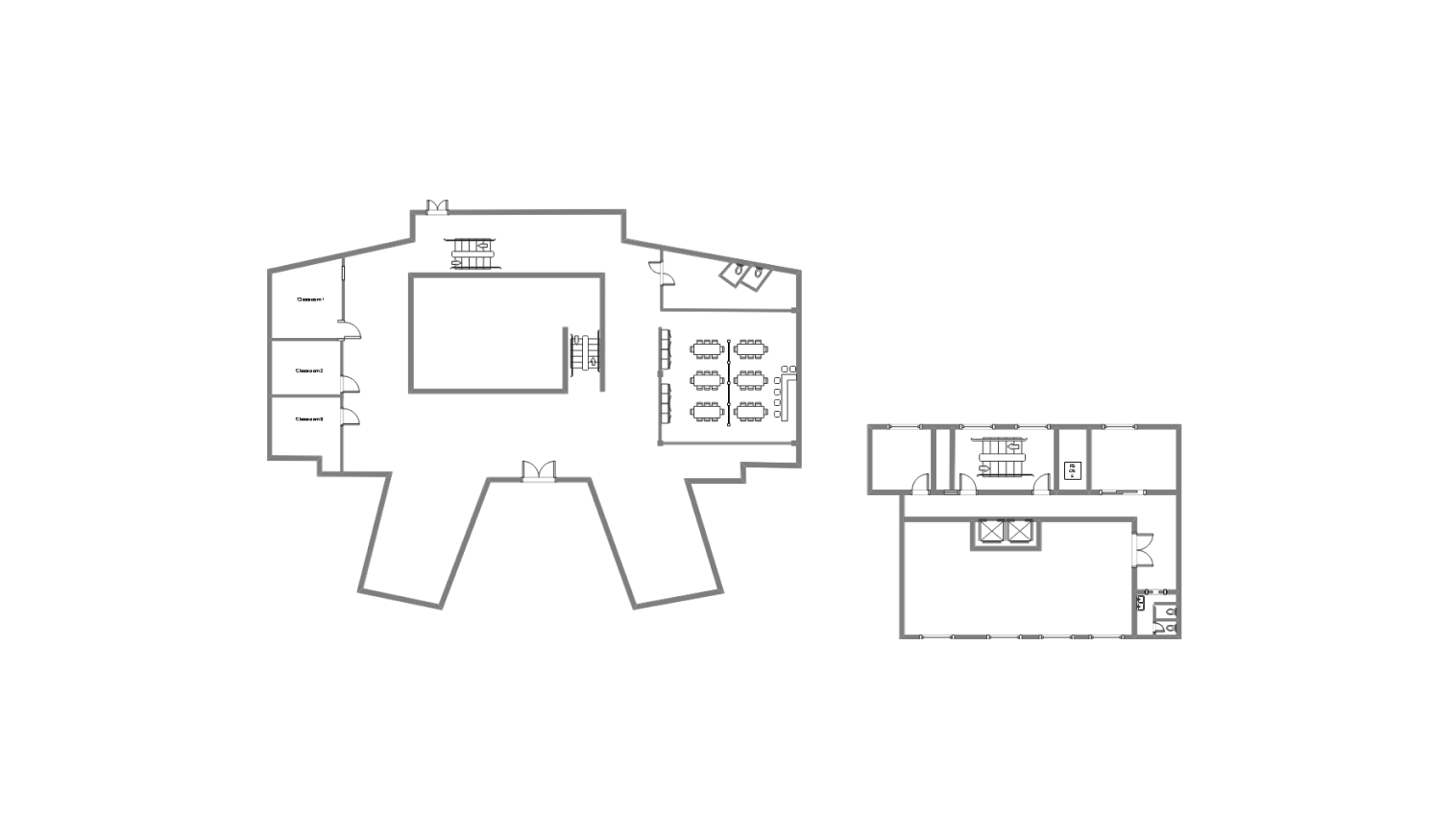
This two-story school plan separates classrooms and shared spaces across floors and uses a central hall and staircase to organize vertical circulation.
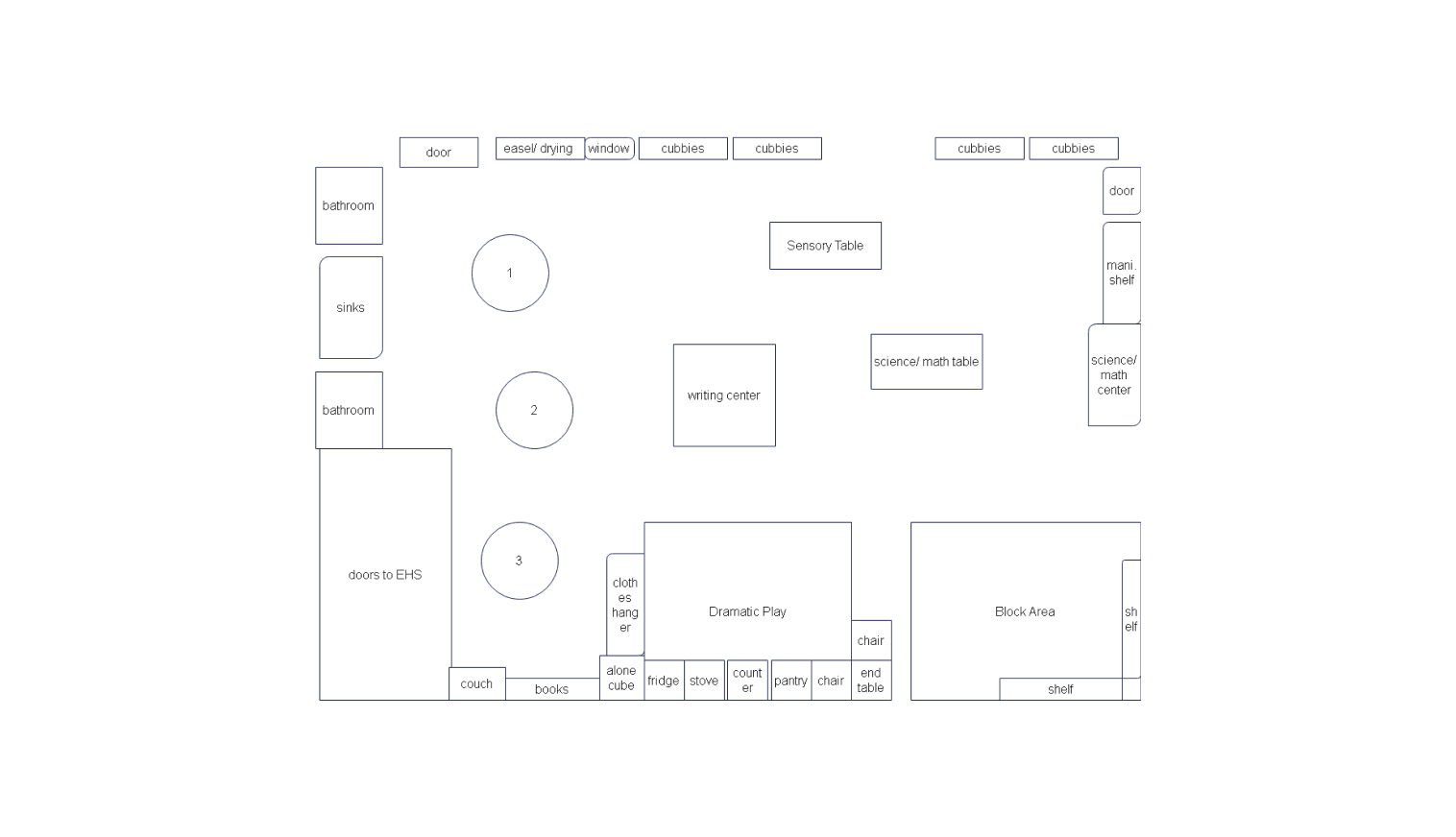
Template 5: Pre-School Layout Plan
This preschool layout organizes sensory, writing, dramatic-play, block, science/math, reading, bathroom, and sink areas into distinct learning zones.
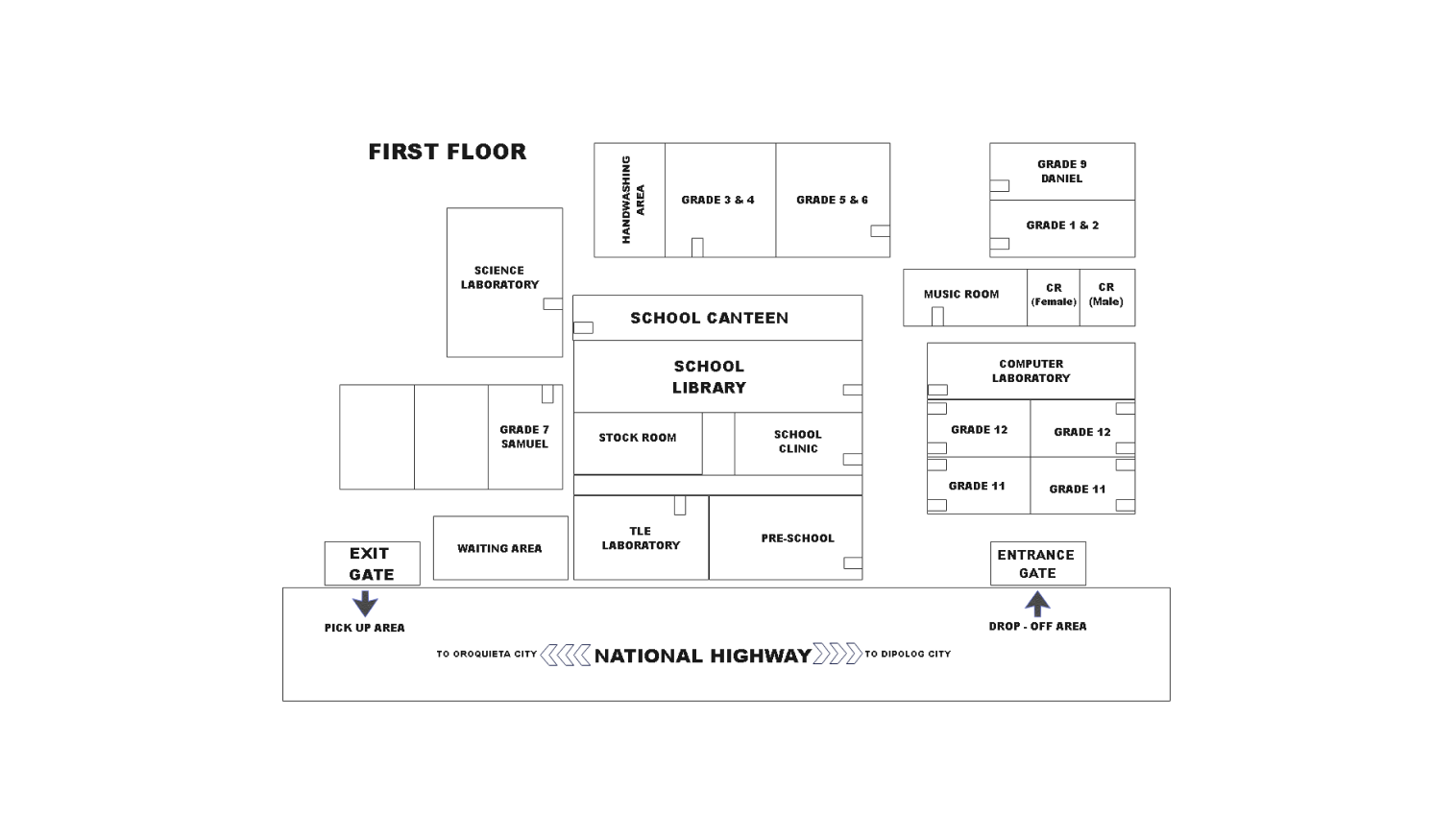
Template 6: First Floor School Plan
This detailed first-floor plan combines grade-level classrooms, labs, library, clinic, canteen, music room, support areas, and separate drop-off/pick-up access.
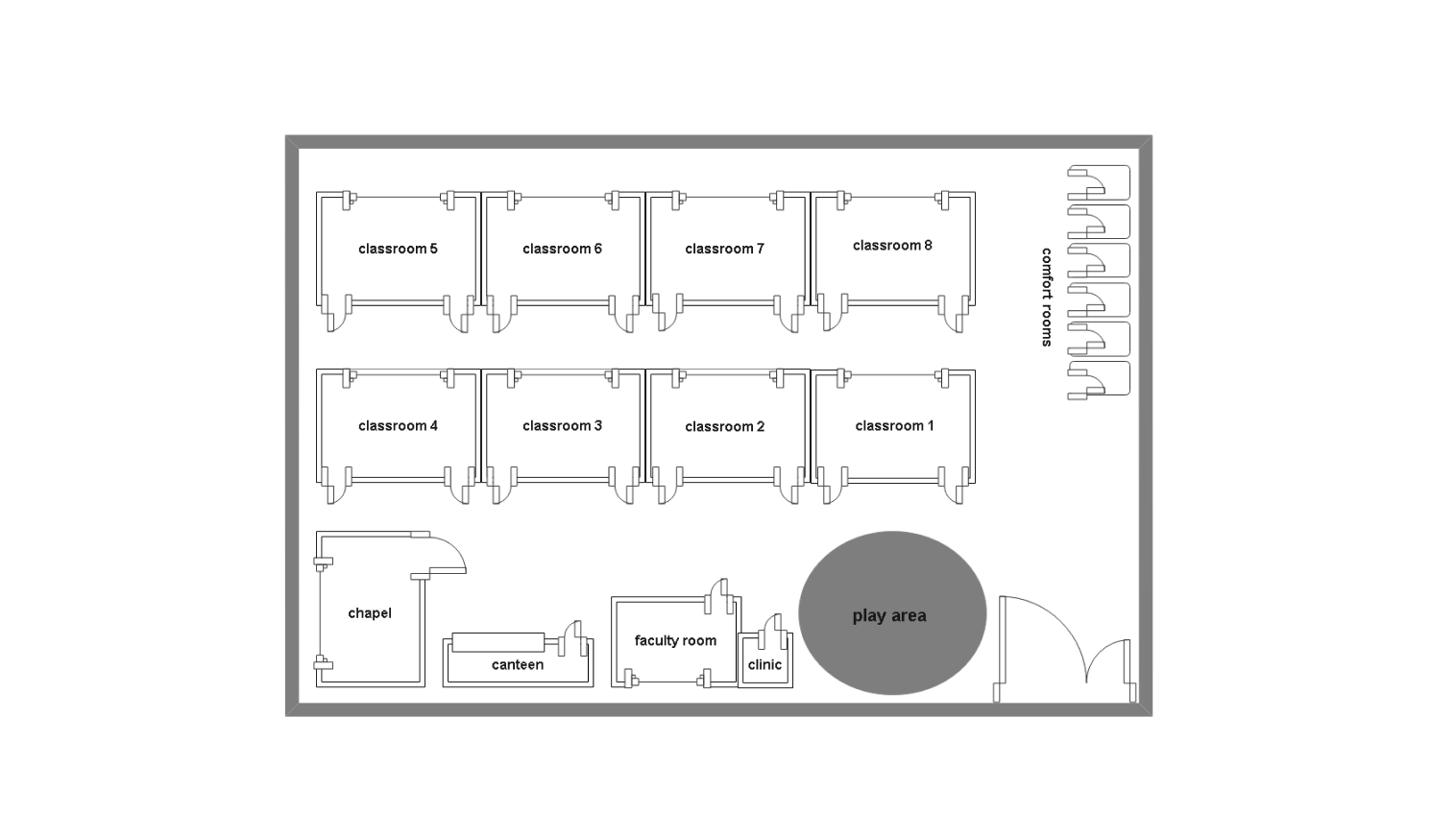
Template 7: Detailed School Layout
This school building plan connects classrooms, a play area, canteen, faculty room, clinic, and restrooms, showing how academic and support spaces share circulation.
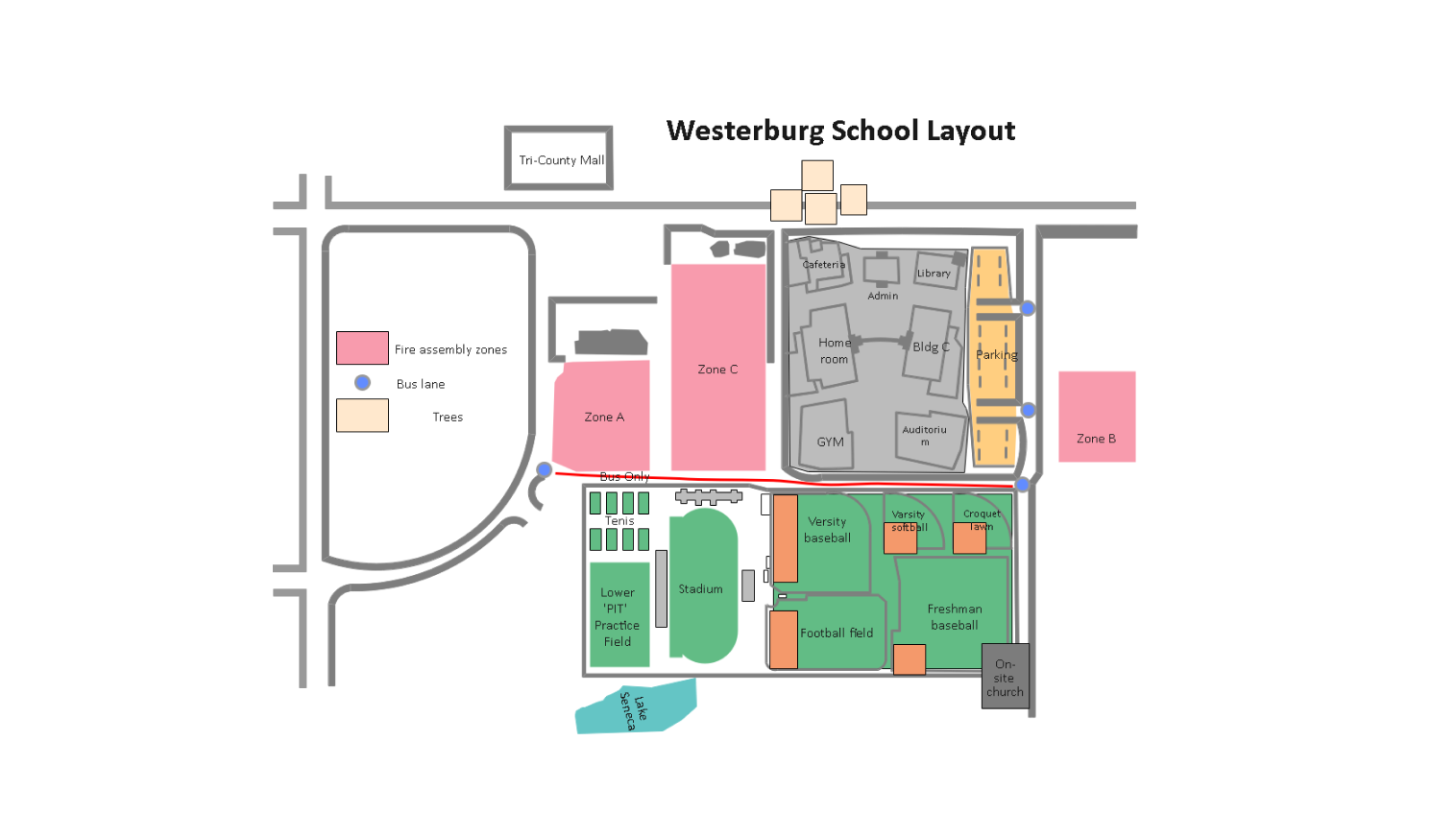
Template 8: Westerburg School Floor Plan
This campus-style plan includes classrooms, labs, library, gym, auditorium, administration, sports areas, bus lanes, and multiple access points.



What should a school layout include?
It should include classrooms, corridors, entrances, exits, restrooms, labs, offices, shared spaces, service rooms, and safety routes.
How do I choose a school floor plan example?
Choose based on the planning goal: classroom distribution, student flow, safety review, preschool planning, or full building presentation.
Can I edit school layout examples in EdrawMax?
Yes. EdrawMax lets you customize rooms, symbols, labels, colors, measurements, and exportable floor plan diagrams.



 (AI & Web)