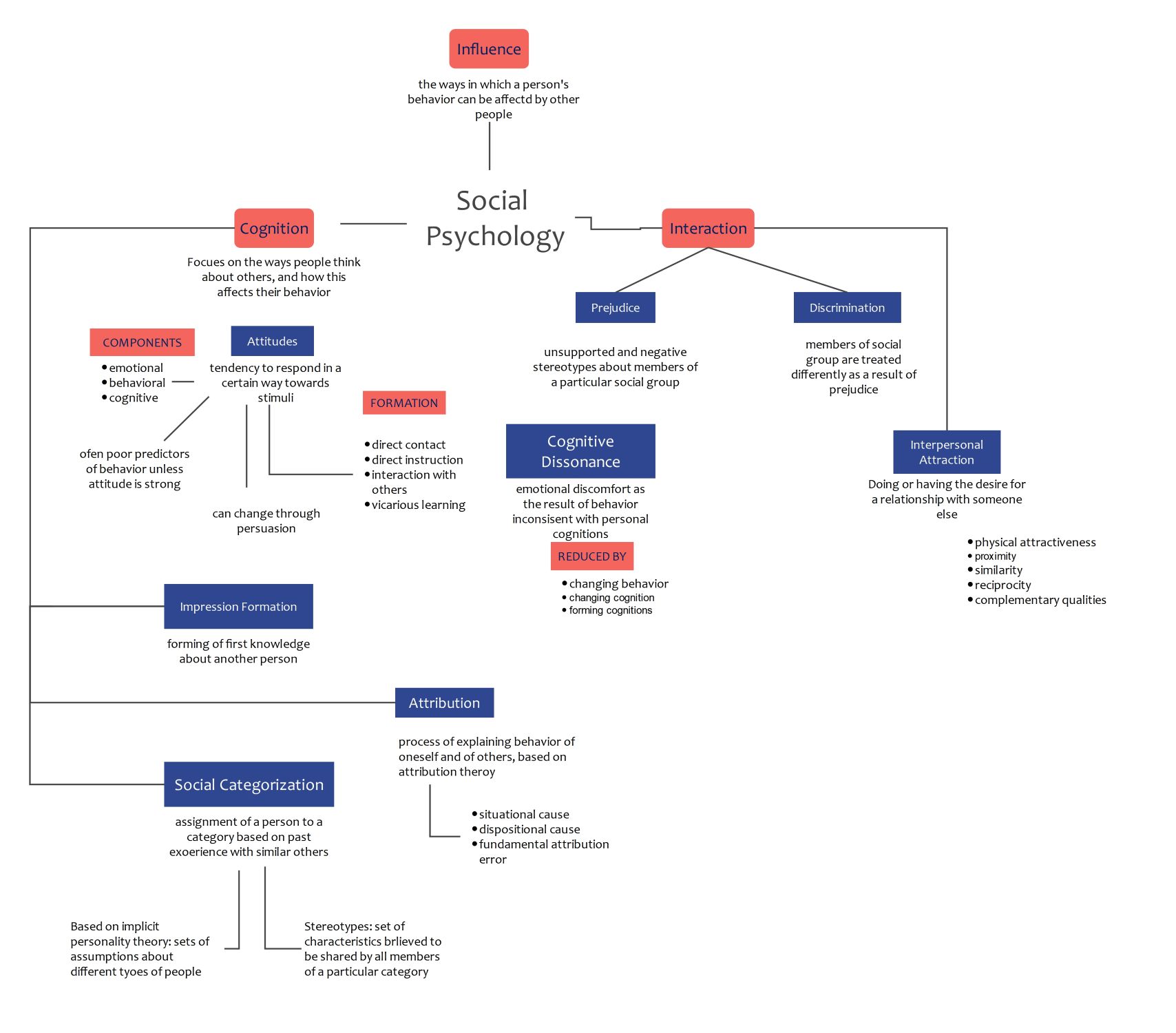
About this Social Psychology Concept Map template
This template provides a clear visual breakdown of social psychology. It organizes complex theories into three main categories: influence, cognition, and interaction. It is perfect for students or educators who need a structured overview of human social behavior.
Influence
Influence refers to how a person's behavior changes due to other people. This section examines the ways individuals adapt their actions in a group. It highlights the power of external factors on our personal choices and social conduct.
- Behavioral changes
- Social pressure
- Impact of others
Cognition
Cognition focuses on how we think about others and how those thoughts affect our actions. It looks at internal processes like attitudes and memory. This area helps explain how we process information about the people around us.
- Emotional components
- Attitude formation
- Impression formation
- Social categorization
- Attribution theory
Interaction
Interaction covers the dynamics between individuals and social groups. It explores how relationships form and why people treat others differently. This section addresses both positive bonds and negative social outcomes like prejudice or discrimination.
- Prejudice and stereotypes
- Social discrimination
- Cognitive dissonance
- Interpersonal attraction
- Relationship factors
FAQs about this Template
-
What is the primary focus of social psychology?
Social psychology primarily examines how the presence of others affects a person's thoughts and feelings. It looks at how social environments shape individual behavior. This field studies various topics like group dynamics, social perception, and leadership. By understanding these interactions, researchers can explain why people act differently when they are in a crowd compared to being alone.
-
How does cognitive dissonance affect our daily behavior?
Cognitive dissonance occurs when a person holds two conflicting beliefs or acts against their values. This creates emotional discomfort that forces the individual to make a change. People usually resolve this by changing their behavior or justifying their actions with new logic. It plays a significant role in decision-making and helps us maintain a consistent sense of self throughout our lives.
-
What factors contribute to interpersonal attraction?
Several key factors influence why we are drawn to certain people over others. Physical attractiveness and proximity are often the first triggers for a relationship. However, similarity in values and reciprocity also play vital roles. When people share common interests or feel that their feelings are returned, they are more likely to form deep, lasting connections with one another.


 (AI & Web)