About this Network Diagram for ICMP template
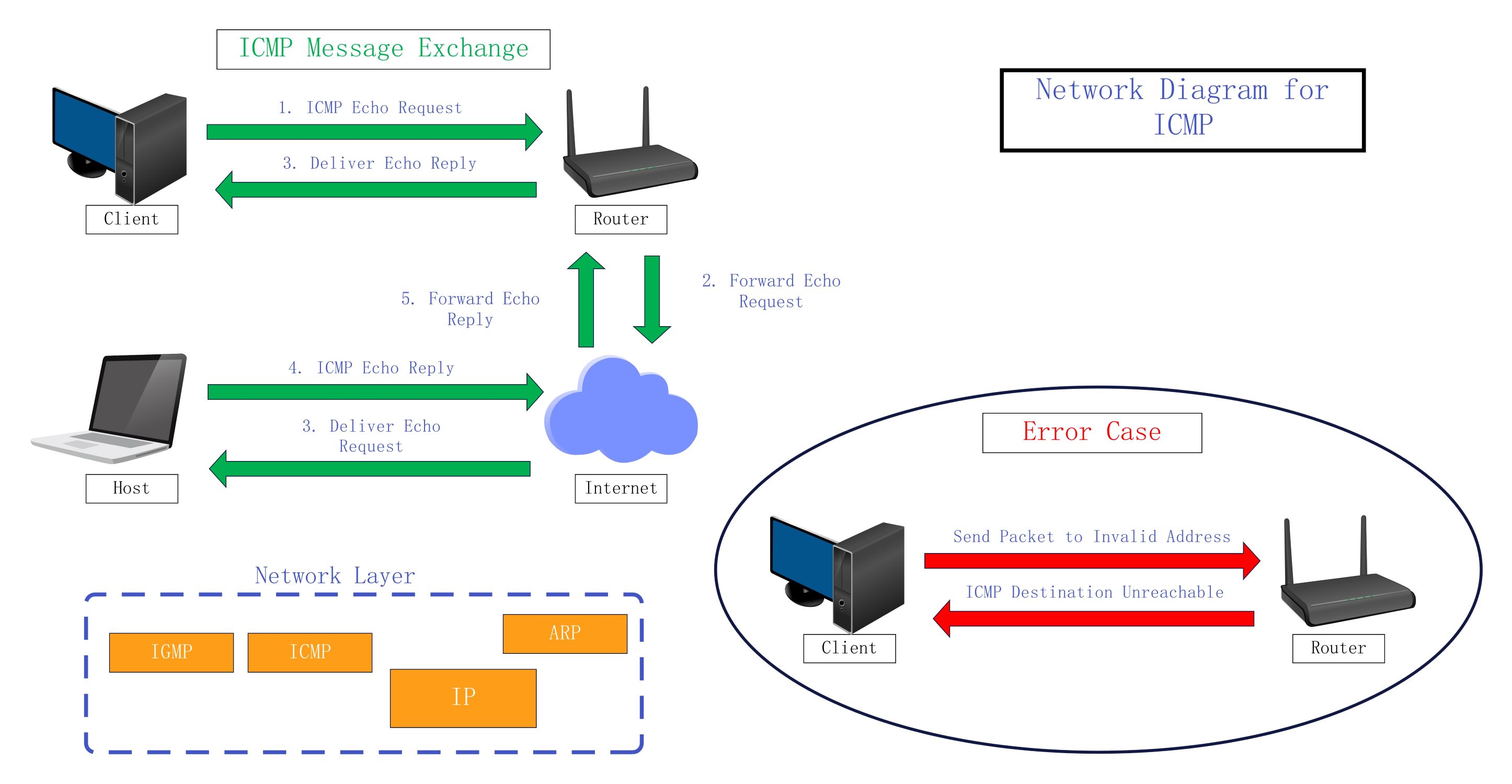
This template provides a clear visual map of the ICMP communication process. It illustrates the steps of message exchange between a client and a host. It also highlights how the protocol handles errors within the network layer of the TCP/IP suite.
ICMP Message Exchange
This section displays the sequential steps of a standard ping operation. It shows how requests and replies move between local and remote systems. This process helps verify if a specific host is reachable over the network.
- ICMP Echo Request initiated by the client
- Router forwarding the request to the internet
- Internet cloud routing data to the destination host
- ICMP Echo Reply sent back from the host
- Final delivery of the reply to the original client
Network Layer Protocols
The network layer includes several protocols that work together to manage data flow and addressing. This section maps the relationship between ICMP and other critical standards. These protocols ensure that packets reach their intended physical locations.
- ICMP for error reporting and diagnostics
- IP for logical addressing and packet routing
- ARP for mapping IP addresses to physical MAC addresses
- IGMP for managing group memberships in multicast networks
Error Case Analysis
Network errors occur when packets cannot reach their destination due to invalid addresses or blocked paths. This section visualizes the specific feedback loop used to notify senders. It identifies the exact point where the communication fails.
- Client sending a packet to an invalid address
- Router identifying the unreachable destination
- ICMP Destination Unreachable message generation
- Error notification delivered back to the source client
FAQs about this Template
-
What is the primary function of ICMP in a network?
ICMP is a core protocol used for network diagnostics and error reporting. It helps administrators identify if data reaches its destination. By sending specific control messages, it reveals connection issues between hosts and routers. Unlike other protocols, it does not transport user data. Instead, it provides vital feedback about the health and status of the entire network environment.
-
How does the ICMP Echo Request and Reply process work?
The process begins when a client sends an echo request to a target host. This request travels through routers and the internet to reach the destination. Once received, the host sends back an echo reply. This exchange measures latency and confirms that the remote system is active. It is the fundamental mechanism behind common networking tools like the ping command.
-
What happens when a router sends an ICMP Destination Unreachable message?
A destination unreachable message occurs when a router cannot deliver a packet to its intended target. This happens if the address is invalid or the path is blocked. The router sends this ICMP message back to the original sender to report the failure. It helps users understand why a connection failed and identifies exactly where the communication broke down.

 (AI & Web)