




Quick answer: A Porter's Five Forces diagram summarizes competitive pressure from rivals, suppliers, buyers, substitutes, and new entrants.
Best for: Use these examples for market analysis, business strategy, product planning, and classroom case studies.
- Evaluate all five forces before drawing conclusions.
- Use evidence-based notes instead of generic labels.
- Use EdrawMax to customize force labels, icons, colors, and presentation-ready diagrams.
In this article
1. What is The Porter's Five Forces
- Threat regarding new entrants
- The bargaining capabilities of suppliers
- Buyers' bargaining power
- Threats regarding services or substitute products
- Wary regarding existing industry rivalry
Porter's five forces examples are helpful for they reveal the root causes of a business's profitability. They help in effective and strategic decision-making and develop a competitive strategy for the better performance of an industry.
2. The Five Forces Diagram Examples
How to choose: Choose a five forces example based on industry depth. Use a simple diagram for quick strategy discussion and a detailed template when each force needs evidence and notes.
People use Porter's five forces examples in various industries to identify the threats and opportunities. Ultimately, it helps gain market share and analyze the product portfolio. It is also essential to determine the capital cost.
Below are Porter's five forces examples with necessary inputs that help industry people create their own.
 |  |  |
| Nike Five Forces Analysis | Five Competitive Forces | Porter Five Forces Model |
 |  |  |
| Five Forces Framework | The Five Forces Model | Porter's Five Forces Starbucks |
 |  |  |
| Five Environmental Forces | Porter's Five Forces PPT | Five Forces Analysis Template |
Example 1: Nike Five Forces Analysis
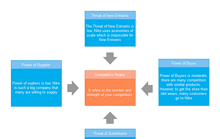
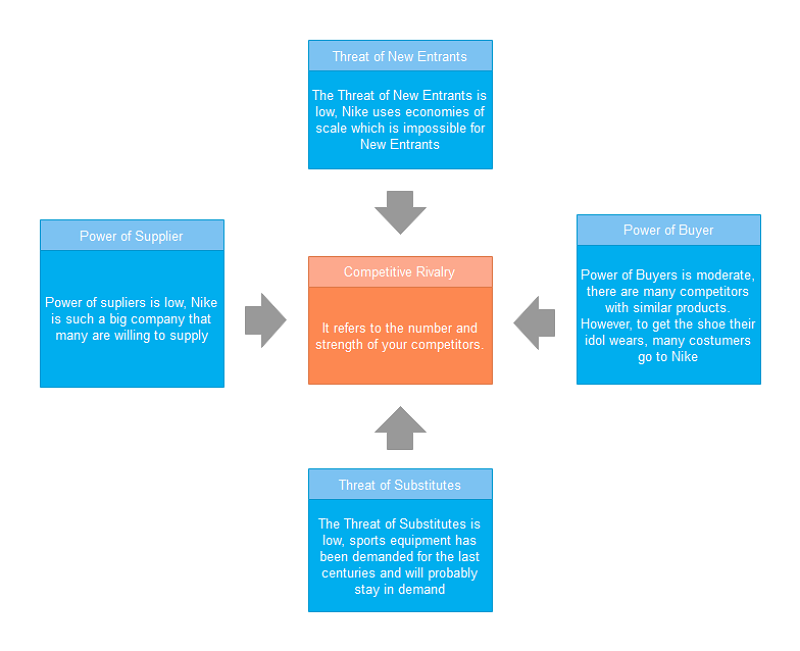
The given Porter's five forces example is about the Nike Five Forces analysis. According to this diagram:
1. The threats of new entrants in the market are pretty low, as the economies of scale that Nike follows is something a new entrant will never be able to follow.
2. The suppliers' power is also low as there are too many suppliers in the market, and Nike being a large MNC, can easily buy from any of the suppliers in the market.
3. The buyers' power is medium because Nike is not offering any unique product. However, one should not forget known personalities prefer Nike. As a result, people will also go for Nike as their idols wear them.
4. The threat of substitutes is again pretty low as the demand for sports products increasing since the last century.


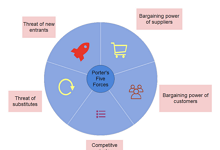
Example 2: Five Competitive Forces
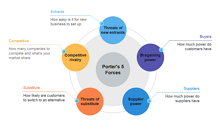
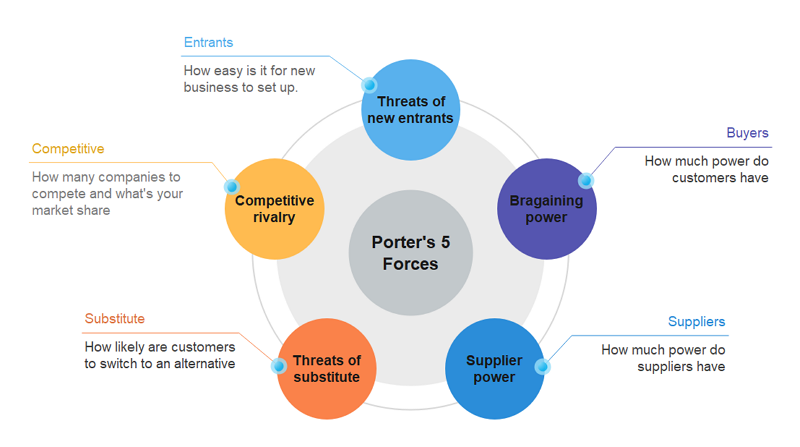
This Porter's five forces example is about the five forces analysis. The instance here talks about each of these forces. The EdrawMax template has helped in etching out all of the five forces. So, according to the diagram:
1. The threat of new entrants in the first force explains whether it will be easy for a new force to enter the market or not.
2. The next force includes the bargaining power of the supplier and what amount of power the supplier has in the present market scenario.
3. The next force states the bargaining power of the buyers and the amount of power enjoyed by the consumers.
4. The fourth force is the threat of substitutes. It helps in knowing how easily the consumer will switch to an alternative.
5. The last and final force talks about competitive rivalry in the market. Or rather about how many companies are there to compete for the market share.
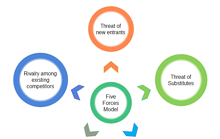
Example 3: Porter Five Forces Model
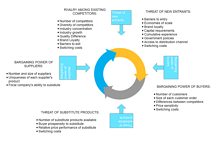
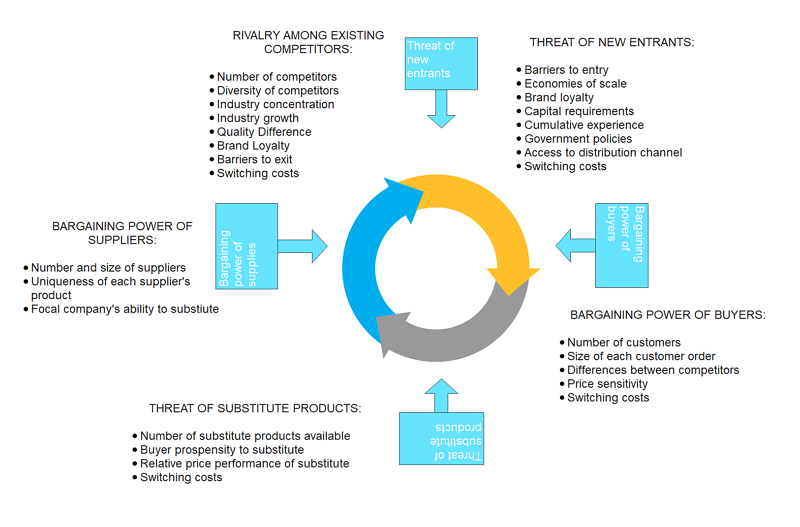
The example here provides an in-depth description of the five forces and those parameters that decide whether the power of these forces is high, low, or medium. For example, the threats of new entrants depend on barriers to entry, brand loyalty, economies of scale, cumulative experience, government policies, and other things.
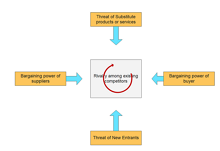
Example 4: Five Forces Framework
The example here provides an in-depth analysis of all the forces, with an in-depth analysis of all the parameters. Parameters help in deciding the power of these forces. The example here uses various companies such as Apple and Uber to explain things.
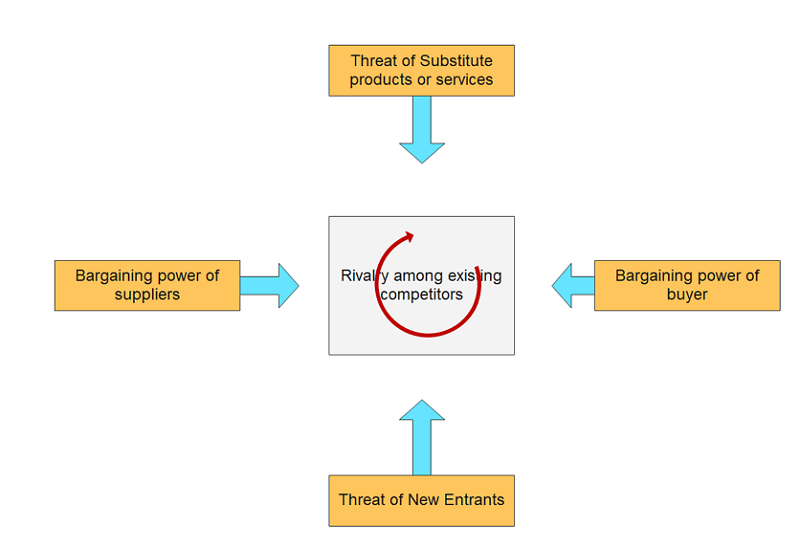
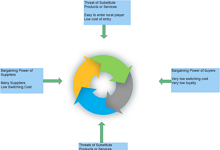
Example 5: The Five Forces Model
The given Porter's five forces example is about the supply-side industry economies of scale, differentiation degree, technical obstacles, profit potentiality, laws, and policies. They help to facilitate integration and improve the potentiality of the industry.
Another crucial aspect of this example is that it also shows how people doing the Porter Five Forces analysis can draw a visual image. A marketing presentation will lose its validation with it. EdrawMax ensures that a person's task becomes effortless with their template.
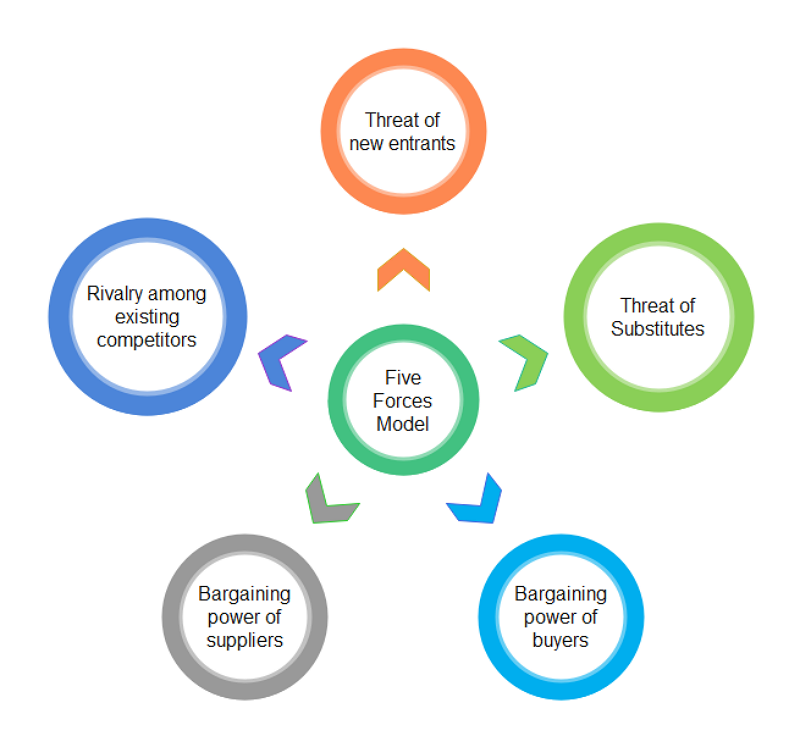
Example 6: Porter's Five Forces Starbucks
The given Porter's five forces example is about analyzing the competitive forces that drive an industry. They help attract new investments, help resolve problems cost-effectively by advancing technologies. The differentiated technology can enhance the supplier's bargaining power.
EdrawMax has various Porter's five forces diagrams templates like this. The example here provides the content that should be there on each slide. It is pretty beneficial as it will make the marketer's task of drawing the template effortless.
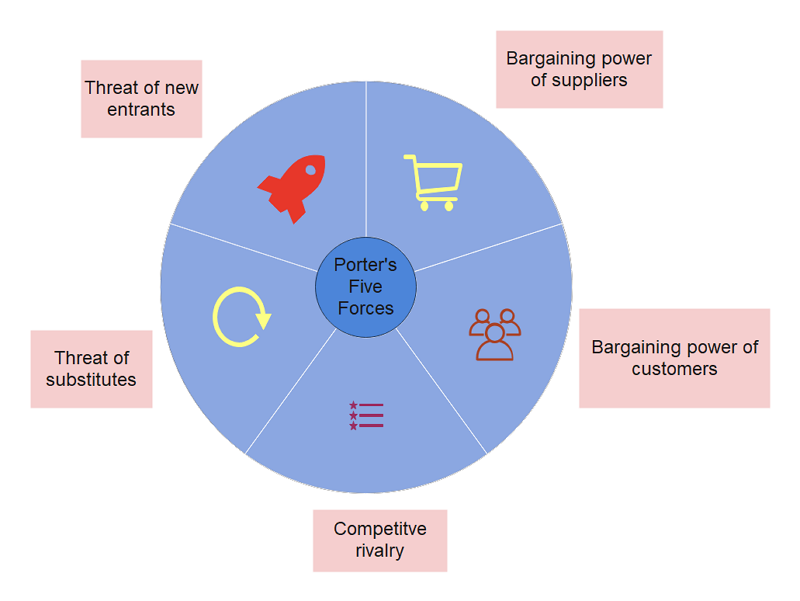
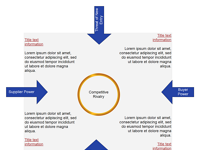
Example 7: Five Environmental Forces
The example here shows how the marketers can draw the slides for the Porter's Five Forces diagram. The shapes that they should use while making the presentation on the PPT. Other things also find their place in this example.
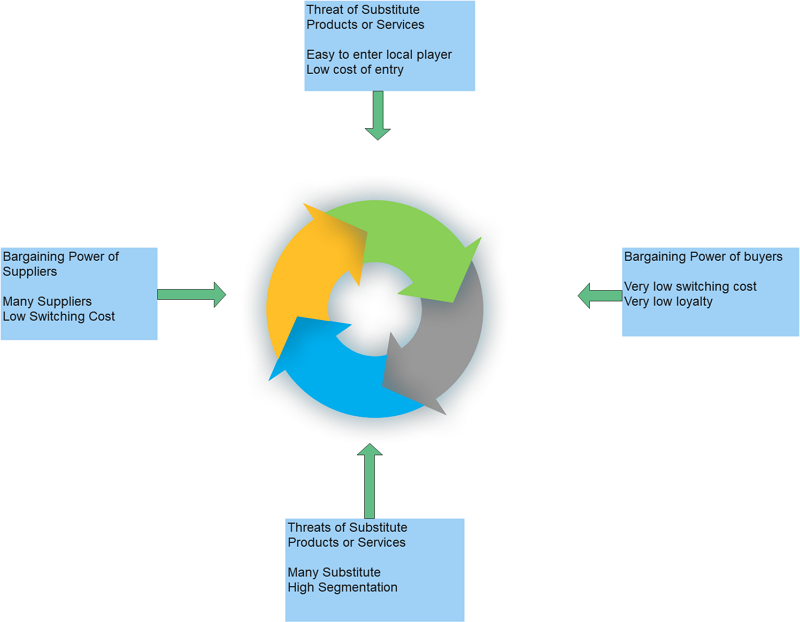






 (AI & Web)