




In This Guide
1. What Is a Supply Chain Diagram and What Does It Show?
What should a supply chain diagram include?
A useful supply chain diagram should identify the main entities, show the direction of material or product flow, mark important information handoffs, and include inventory, storage, or return paths when they affect the process.
- Process-flow diagram: best when sequence is the main question.
- Network diagram: best when supplier, facility, or partner relationships matter most.
- Logistics diagram: best when warehousing, transportation, fulfillment, or delivery is the focus.
A supply chain diagram visually maps how materials, products, information, and sometimes returns move between suppliers, manufacturers, distributors, retailers, logistics providers, and customers. Depending on the goal, the diagram may be a simple supply chain flowchart, a process-flow diagram, a logistics network, or an industry-specific map. A useful supply chain map normally identifies the main stages, the entities responsible for each stage, the direction of material or information flow, and any important handoffs, inventory points, or return paths. The examples below show how these elements can be represented across sourcing, production, distribution, fulfillment, reverse logistics, and supporting business functions.
2. 12 Supply Chain Diagram Examples by Industry and Use Case
These 12 editable supply chain diagram examples cover both generic process models and industry-specific scenarios. Use a process-flow diagram when you want to show sequence, a network diagram when relationships between multiple organizations or departments matter, and a logistics diagram when transportation, warehousing, or fulfillment is the main focus.
| Diagram type | Best for | Examples on this page |
|---|---|---|
| Process-flow diagram | Showing the sequence from sourcing to delivery | Pharmaceutical, food, coffee, Walmart |
| Supply chain network diagram | Mapping multiple organizations, departments, or flows | Supply chain network, supply chain management |
| Logistics / fulfillment diagram | Warehousing, shipping, delivery, and fulfillment | Amazon, logistics supply chain |
| Industry-specific diagram | Explaining sector-specific suppliers, processes, and customers | Automotive, Tesla, Coca-Cola, Starbucks |

Example 1: Pharmaceutical Supply Chain Diagram
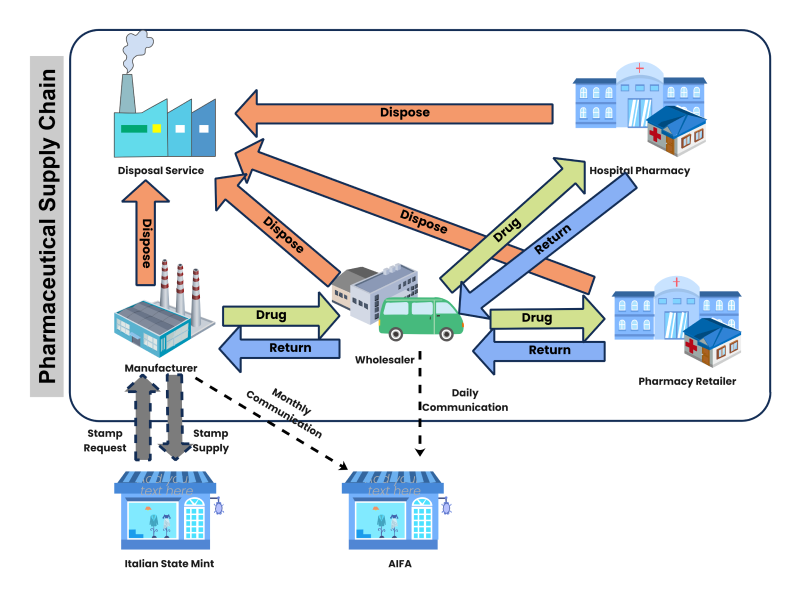
This pharmaceutical supply chain diagram maps the path from raw-material sourcing and manufacturing to distribution and delivery. It is useful when you need to show where quality checks, regulated handling, storage conditions, and handoffs occur across the process. For a real pharmaceutical operation, the exact controls and compliance steps should be adapted to the product, market, and applicable regulations.
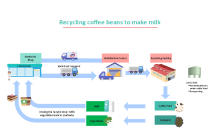
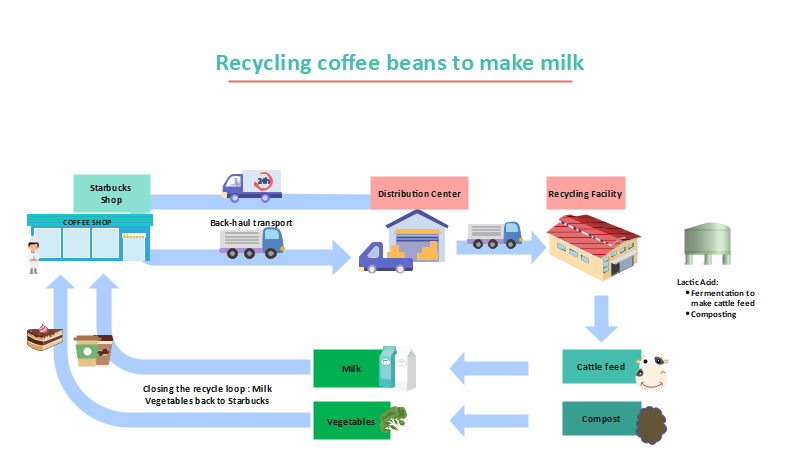
Example 2: Starbucks Supply Chain Diagram
This Starbucks-themed example illustrates how a supply chain diagram can be used to explain a circular or reverse-flow scenario in which by-products move into another production cycle. Treat it as an illustrative process map rather than a complete representation of Starbucks's current global supply chain. The format is especially useful for sustainability, recycling, and closed-loop supply chain discussions.
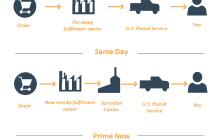
Example 3: Amazon Supply Chain Diagram
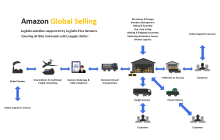
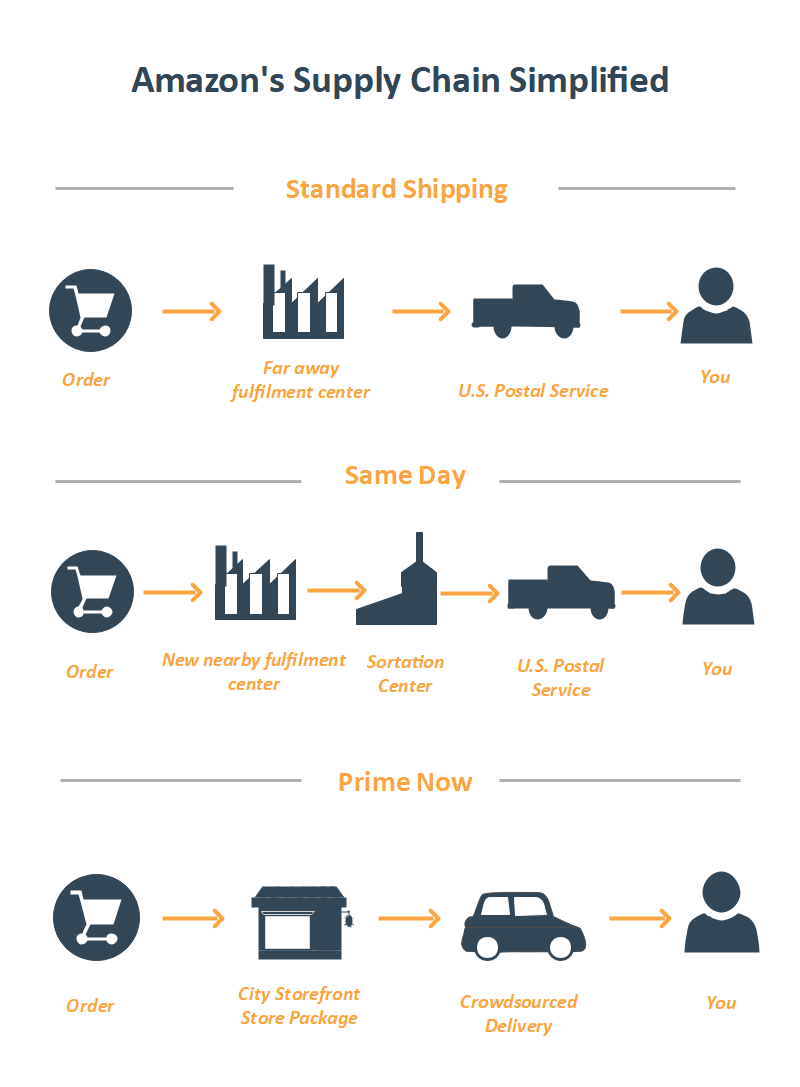
This Amazon-themed supply chain diagram focuses on fulfillment and shipping paths. It can be used to compare how orders move through different delivery options and where fulfillment steps differ. For SEO and planning use, the key lesson is the diagram structure: map order intake, fulfillment, warehousing, transportation, and final delivery as distinct stages rather than treating logistics as a single step.
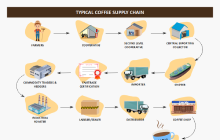
Example 4: Coffee Supply Chain Diagram
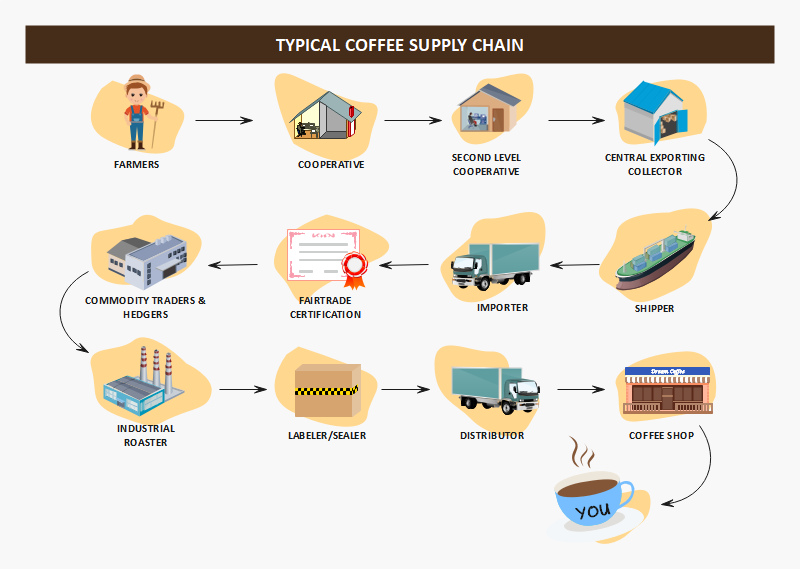
A coffee supply chain diagram typically maps the journey from growers and processors to exporters, roasters, distributors, retailers, and consumers. This type of process-flow diagram helps identify handoffs, lead times, cost points, and stakeholders. It is a useful model for agricultural products where production, processing, transportation, and retail are handled by different parties.
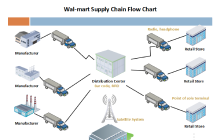
Example 5: Walmart Supply Chain Process Flow Diagram
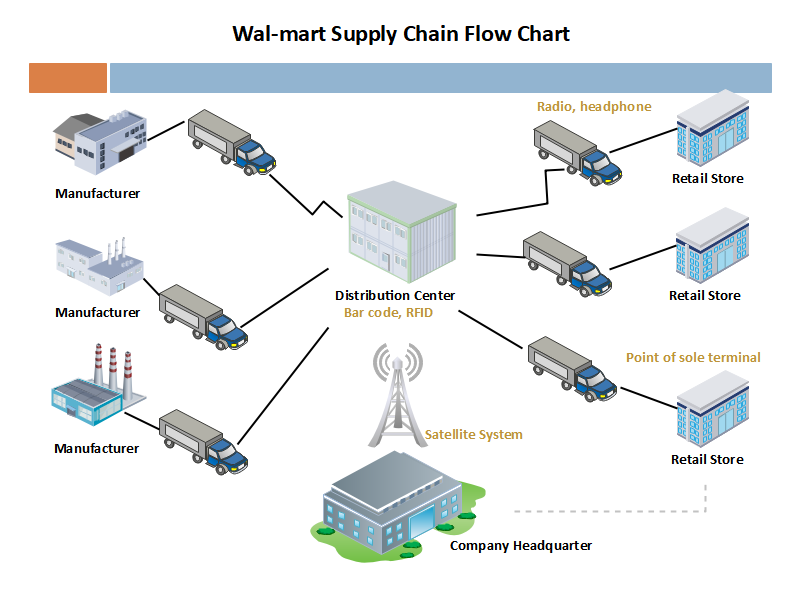
This Walmart-themed process-flow example demonstrates how a retailer's supply chain can be visualized around sourcing, inventory, distribution, and store replenishment. Use this type of diagram when the main goal is to explain the movement of goods and information through a large retail network. The exact operating model should be verified against current company information before using the diagram as a factual reference.
Example 6: Supply Chain Management Diagram
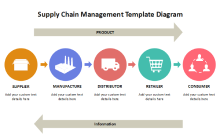
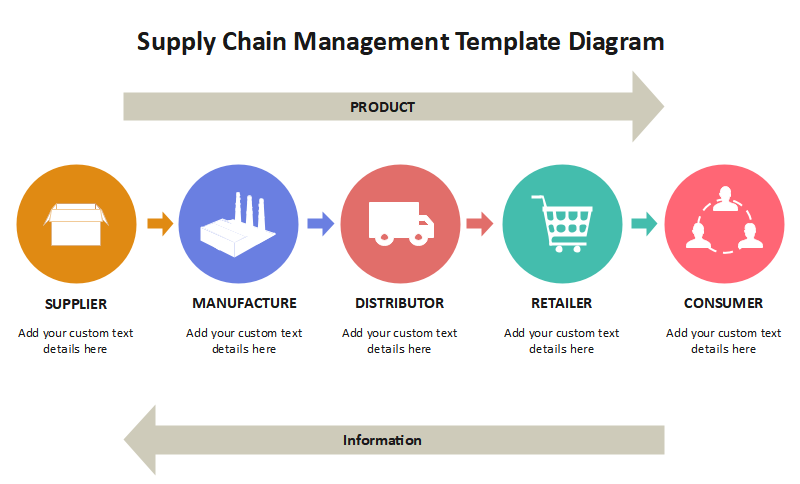
This generic supply chain management diagram shows both forward product flow and reverse or information flow. It connects suppliers, manufacturers, distributors, retailers, and consumers while leaving room for returns, feedback, and other reverse-logistics activities. It is a good starting point when you need a simple supply chain model that is not tied to a specific industry.
Example 7: Food Supply Chain Diagram
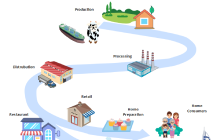
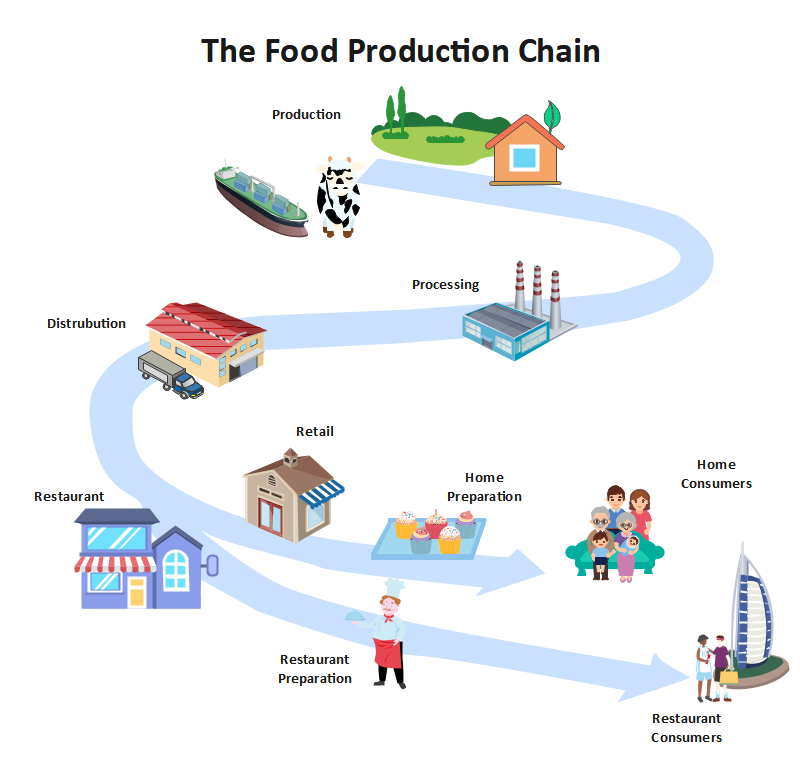
This food supply chain diagram maps the common sequence from production and processing to distribution and consumption. It can also show different final channels, such as restaurants and household consumers. When adapting it, consider adding cold-chain steps, storage, food-service distributors, retailers, or traceability checkpoints where they are relevant to the product.
Example 8: Coca-cola Supply Chain
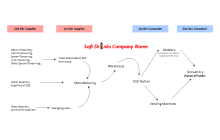
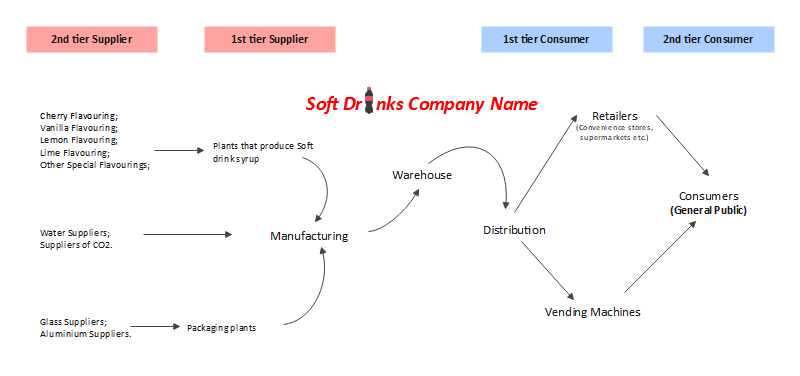
This Coca-Cola-themed example illustrates a beverage supply chain with separate material inputs, packaging inputs, production, distribution, retail, and end customers. It is most useful as a structural example of how a diagram can distinguish multiple supplier categories and customer tiers. Do not treat the simplified flow as a complete representation of Coca-Cola's current operations.
Example 9: Automotive Supply Chain Diagram
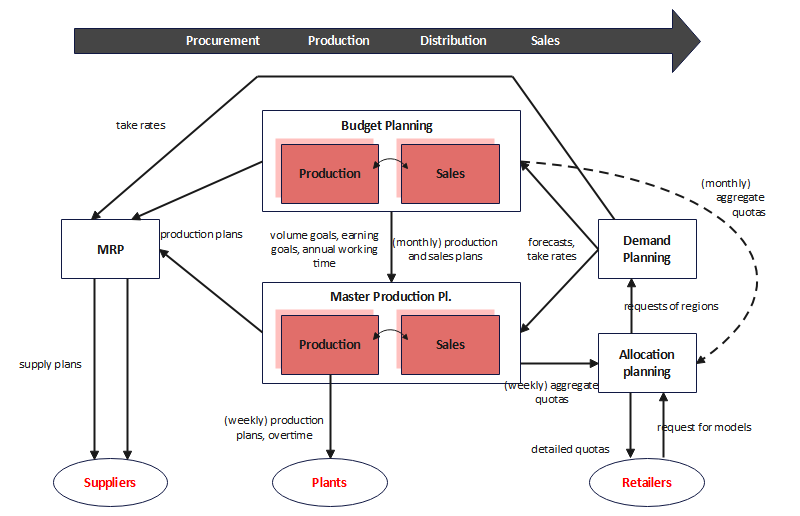
An automotive supply chain diagram can map multi-tier suppliers, component manufacturing, assembly, distribution, dealers or direct channels, and after-sales flows. Because automotive supply chains are complex, this type of network diagram is especially useful for showing dependencies between suppliers and production stages. Add actual companies, locations, or systems only when those details are verified for your use case.
Example 10: Tesla Supply Chain Diagram
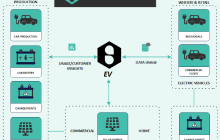
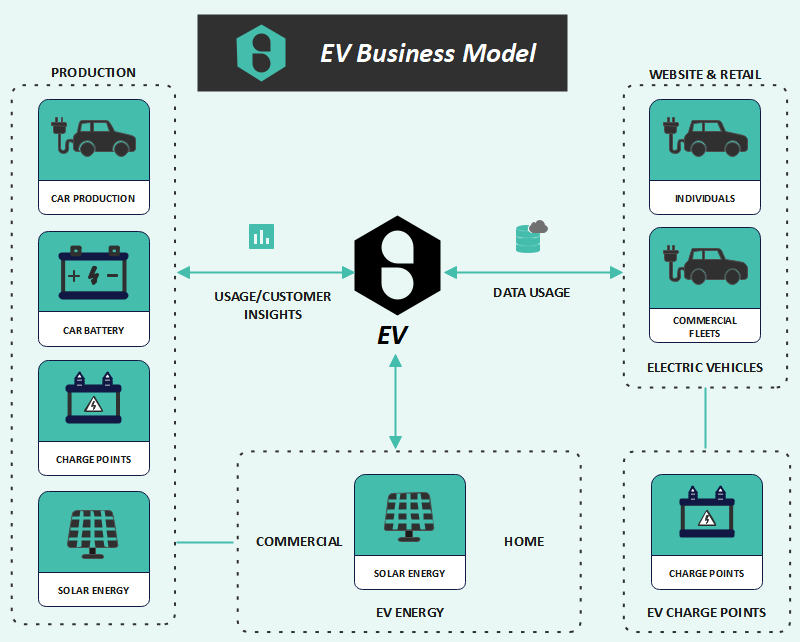
This Tesla-themed diagram focuses on a direct-sales relationship between the manufacturer and customers. It is useful for comparing a direct distribution model with a traditional dealer-based model, but it should not be read as a complete map of Tesla's sourcing, manufacturing, logistics, or sales operations. Use it as a simplified channel example and expand it if you need a full automotive supply chain.
Example 11: Supply Chain Network Diagram
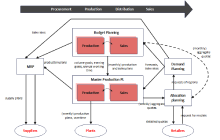
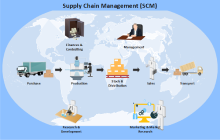
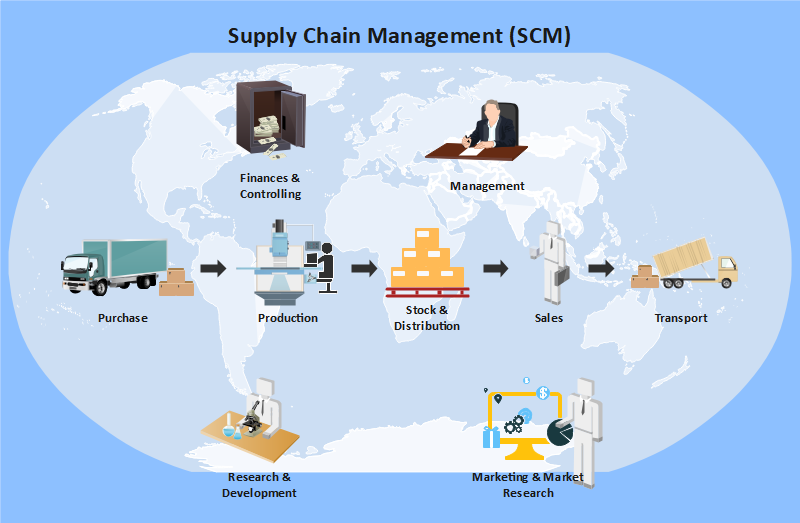
A supply chain network diagram emphasizes relationships rather than only sequence. This example connects core operational stages with supporting functions such as finance, management, research and development, and marketing. Use a network view when you need to explain how multiple departments, partners, or information flows support the movement of materials and products.
Example 12: Logistics Supply Chain Diagram
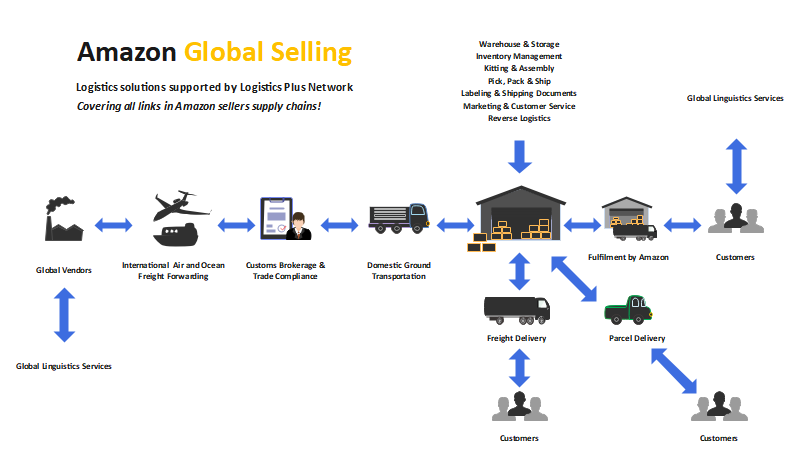
A logistics supply chain diagram focuses on how goods move through warehousing, transportation, fulfillment, and delivery. It is useful for e-commerce, retail, manufacturing, and distribution scenarios where physical movement is the main question. To make the diagram more actionable, label warehouses, transport modes, delivery points, lead times, or inventory handoffs that matter to your process.
3. How to Create a Supply Chain Diagram Online
To create a supply chain diagram, first define the scope: suppliers, production, inventory, distribution, logistics, customers, and any return or information flows that need to be visible. Choose a process-flow layout for sequence or a network layout for many-to-many relationships. In EdrawMax, you can start from an editable supply chain template, replace the sample entities with your own, connect the stages, label the flows, and export the finished diagram for reports or presentations.
 Get 500 free AI tokens
4. How to Choose the Right Supply Chain Diagram
Choose the diagram type according to the question you need to answer. Use a supply chain flowchart to show step-by-step movement, a supply chain network diagram to show relationships among multiple organizations or departments, and a logistics supply chain diagram when warehousing, transportation, or fulfillment is the main focus. For company examples, treat simplified diagrams as learning models and verify current operational details before using them as factual business documentation. You can also explore more editable supply chain diagram templates and adapt them to your own process.
AI Diagram Generator
Enter your prompt. Upload files if needed. Generate diagrams, charts, or slides instantly.





 (AI & Web)