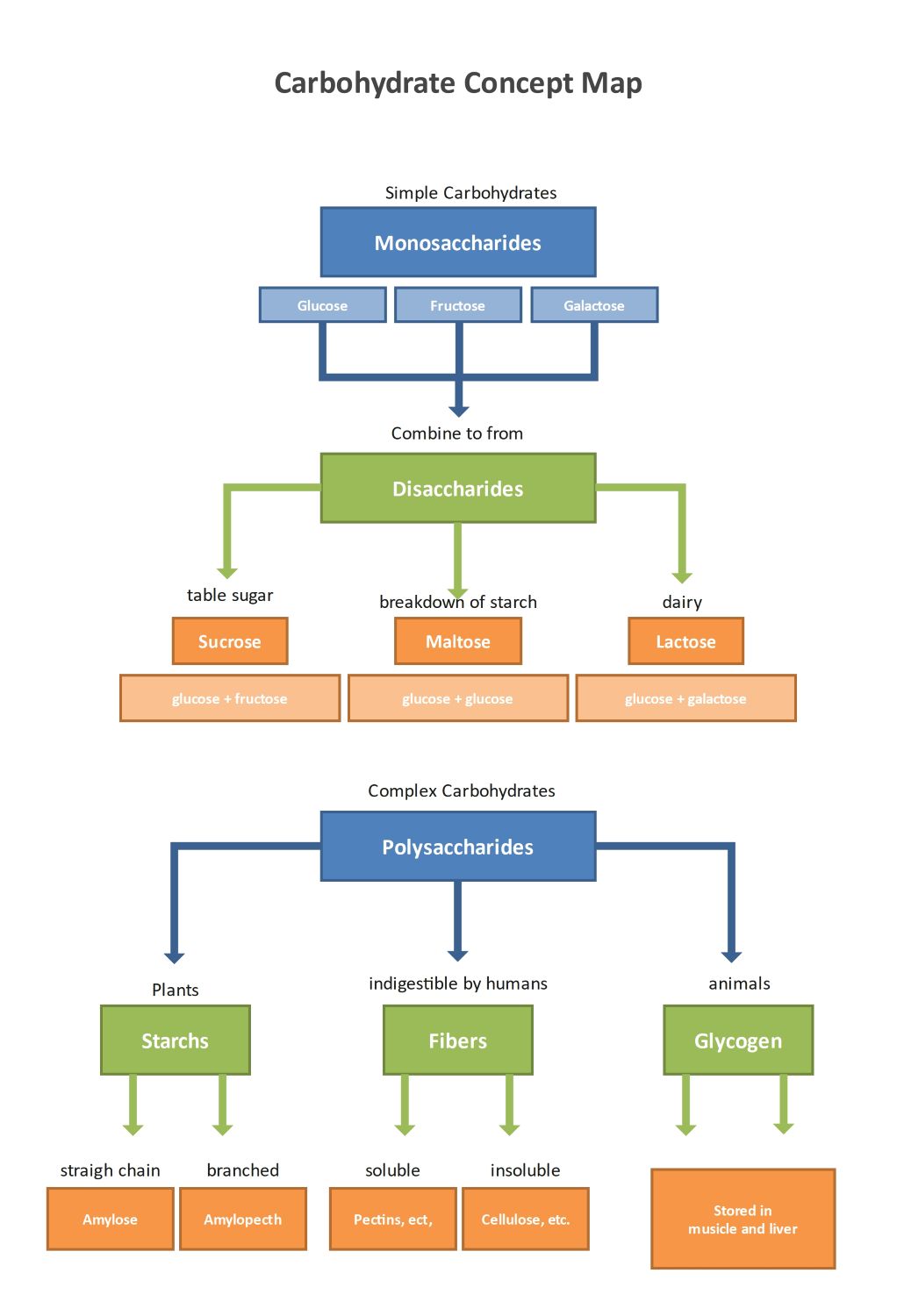
About this Carbohydrate Concept Map template
This template provides a clear visual guide to the different types of carbohydrates found in nature. It breaks down complex biological concepts into digestible sections for students. You can use it to study molecular structures and food sources efficiently.
Monosaccharides
Monosaccharides are the most basic form of carbohydrates and consist of single sugar molecules. They serve as the primary fuel source for cellular metabolism and are easily absorbed into the bloodstream for energy.
- Glucose
- Fructose
- Galactose
Disaccharides
Disaccharides form when two monosaccharides combine through a chemical bond. These double sugars are common in many household foods and dairy products. They must be broken down by enzymes before the body can use them.
- Sucrose (Table Sugar)
- Maltose (Starch Breakdown)
- Lactose (Dairy Sugar)
Polysaccharides
Polysaccharides are complex carbohydrates made of long chains of sugar units. They function primarily as energy storage or structural support in living organisms. These molecules take longer for the human digestive system to process completely.
- Starches (Amylose and Amylopectin)
- Fibers (Soluble and Insoluble)
- Glycogen (Stored in muscles and liver)
FAQs about this Template
-
What is the main difference between simple and complex carbohydrates?
Simple carbohydrates consist of one or two sugar molecules and provide a quick energy boost. Complex carbohydrates contain longer chains of sugars, which take more time for the body to break down. This slower digestion results in a steady release of energy over a longer period. Because they often contain fiber, complex carbohydrates are generally considered a healthier option for most balanced diets.
-
Why is fiber categorized as an indigestible carbohydrate for humans?
Fiber is a type of complex carbohydrate that the human body cannot fully digest. Unlike starches or sugars, our digestive enzymes are unable to break the chemical bonds in fiber molecules. This means fiber passes through the digestive tract relatively intact. It plays a crucial role in maintaining digestive health, regulating blood sugar levels, and helping people feel full after eating a meal.
-
How does the body store excess carbohydrates for later use?
When the body has more glucose than it needs for immediate energy, it converts the excess into glycogen. Glycogen is a polysaccharide stored primarily in the liver and muscle tissues. During periods of physical activity or fasting, the body breaks this glycogen back down into glucose. This process ensures that organs and muscles have a constant supply of energy even when you are not eating.



 (AI & Web)