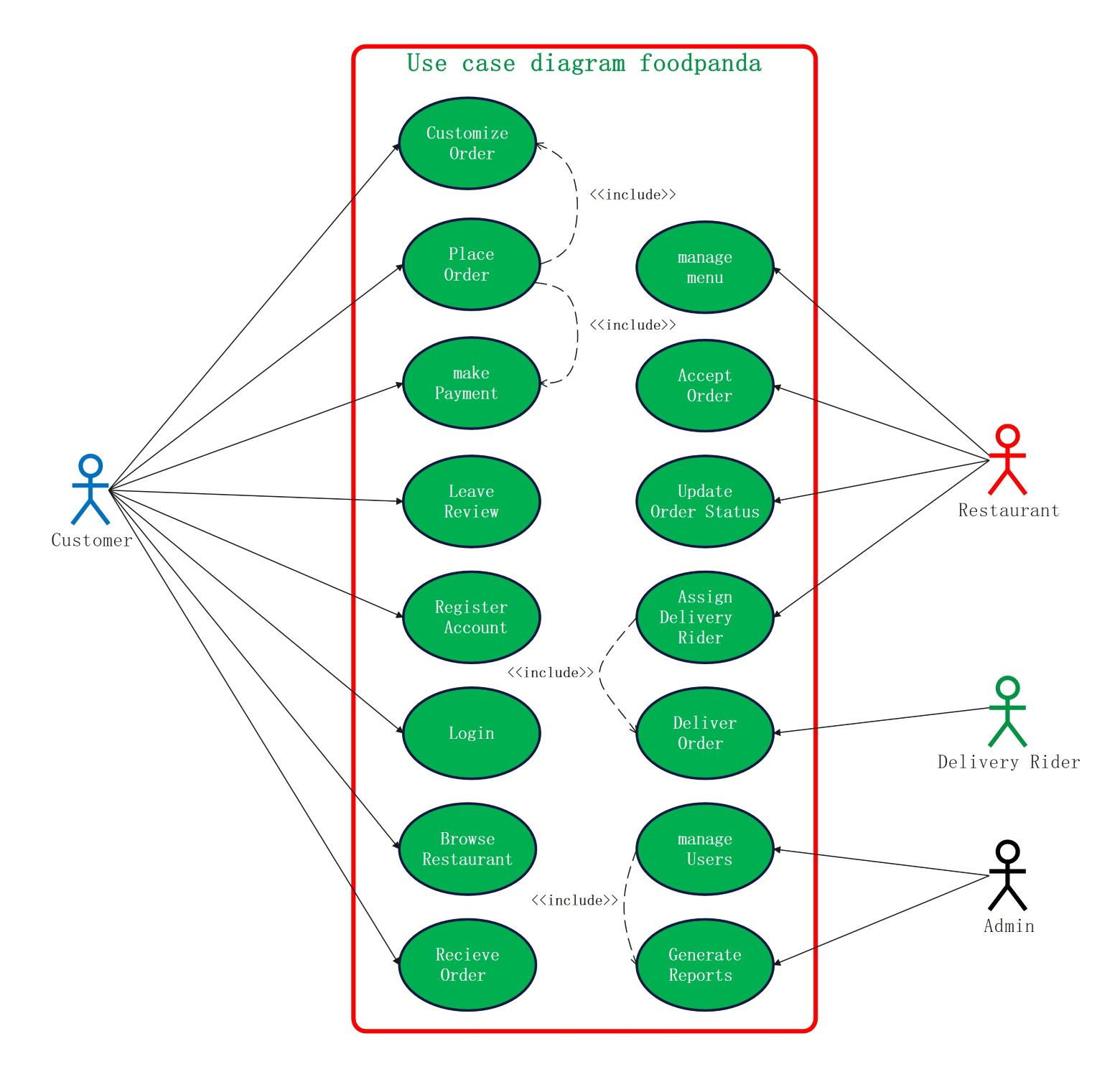
About this Use Case Diagram for Foodpanda template
This template provides a clear visual map of how a food delivery system operates. It captures the essential interactions between multiple actors. This helps teams design robust software architectures and improve overall operational efficiency within the platform.
Customer Interactions
The Customer is the primary user who initiates most system functions. They handle tasks from browsing local menus to completing transactions. These use cases ensure a smooth ordering journey from start to finish.
- Register Account
- Login
- Browse Restaurant
- Customize Order
- Place Order
- Make Payment
- Receive Order
- Leave Review
Restaurant Operations
Restaurant actors focus on the fulfillment side of the system. Their actions center on managing inventory and preparing orders for delivery. This ensures the kitchen stays organized and customers receive accurate meals.
- Manage Menu
- Accept Order
- Update Order Status
- Assign Delivery Rider
Delivery Rider Tasks
The Delivery Rider acts as the physical link between the restaurant and the customer. Their primary role in the system is to update the delivery status and ensure the food reaches the destination.
- Deliver Order
System Administration
Administrators maintain the integrity and health of the entire platform. They oversee user data and generate analytical reports to monitor business performance. These high-level functions keep the digital infrastructure running securely.
- Manage Users
- Generate Reports
FAQs about this Template
-
What is the primary purpose of a Use Case Diagram for Foodpanda?
A Use Case Diagram for Foodpanda serves as a functional blueprint for the delivery platform. It identifies the relationships between external actors, such as customers or riders, and specific system functionalities. By mapping these interactions, developers can identify technical requirements, design user interfaces, and ensure the software architecture supports every necessary action for a successful food delivery service.
-
How do include relationships work in this specific diagram?
In this Foodpanda diagram, include relationships signify that one use case is required to complete another. For example, placing an order automatically includes making a payment and customizing the meal. This logic simplifies the diagram by showing that specific subprocesses are mandatory parts of the larger task, ensuring the system logic remains consistent and developers don't miss essential steps.
-
Can this diagram be customized for other food delivery apps?
Yes, this diagram is highly versatile and can be adapted for any delivery service like UberEats or DoorDash. While the core actors remain the same, you can add specific features like loyalty programs or real-time GPS tracking. Since it was created in EdrawMax, users can easily modify the nodes and relationships to fit their unique business model or technical needs.

 (AI & Web)