About this Online Auction System template
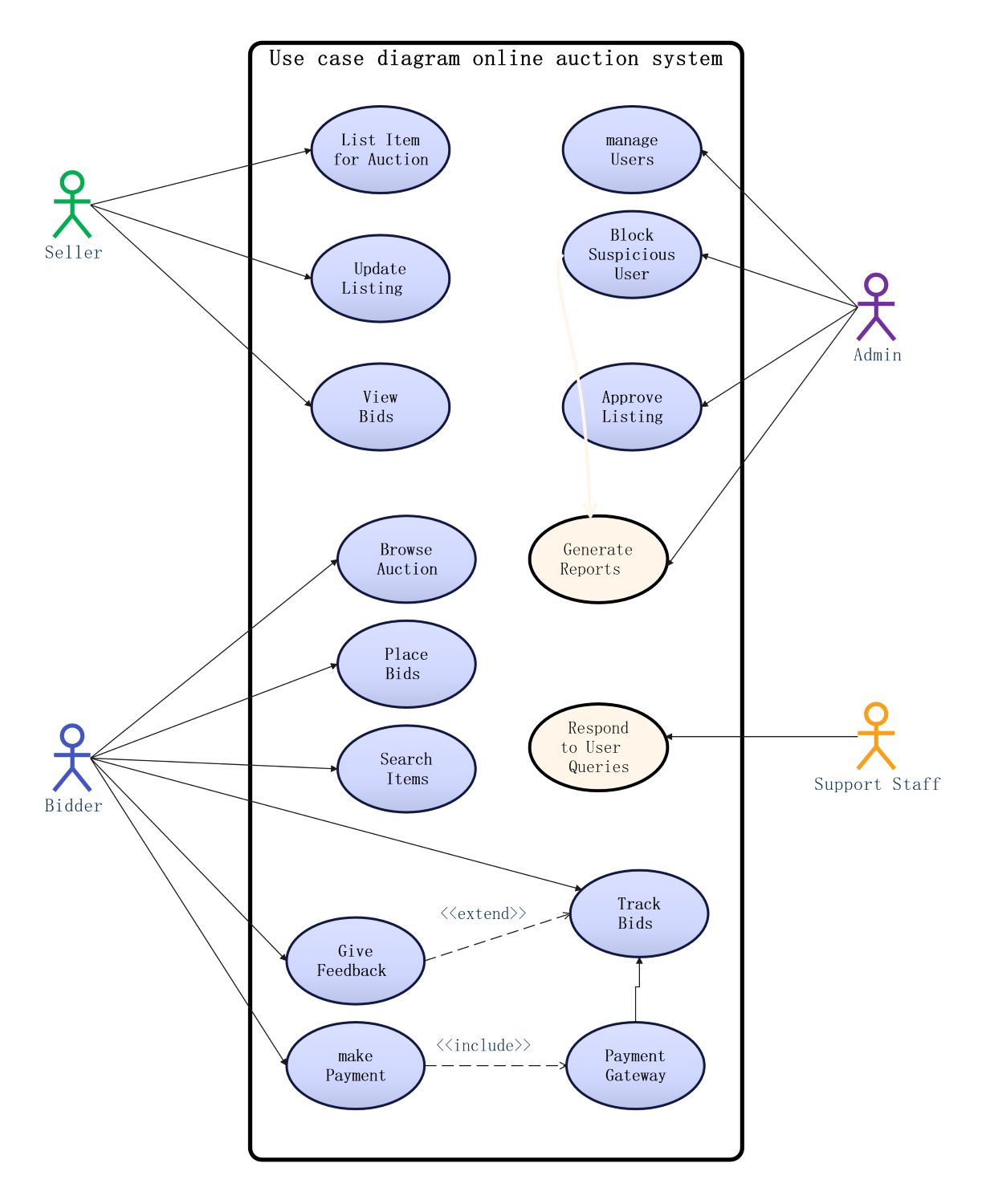
This UML use case diagram provides a clear blueprint for building a secure and efficient bidding platform. It highlights how different users interact with the system to manage listings, place bids, and ensure safe financial transactions.
Seller Interactions
The seller is responsible for providing the inventory and managing the product lifecycle. They use the system to reach potential buyers and monitor the interest in their items through various bidding tracking tools and updates.
- List Item for Auction
- Update Listing
- View Bids
Bidder Functionalities
Bidders are the active participants who drive the market value of items. They use search and browsing features to find products. Once found, they engage in competitive bidding and finalize purchases through integrated payment modules.
- Browse Auction
- Place Bids
- Search Items
- Track Bids
- Give Feedback (Optional Extension)
- Make Payment
Administrative Management
Administrators ensure the platform remains secure and trustworthy for all participants. They monitor user behavior to prevent fraud and manage the quality of listings. Their oversight is critical for maintaining high platform standards and operational integrity.
- Manage Users
- Block Suspicious User
- Approve Listing
- Generate Reports
Support and Payment Nodes
Support staff help users navigate technical issues and resolve queries quickly. The system also integrates a dedicated payment gateway. This ensures that every successful bid leads to a safe, encrypted, and verifiable financial transaction for users.
- Respond to User Queries
- Payment Gateway (Included in Payment)
FAQs about this Template
-
How does a UML diagram benefit the development of an auction system?
A UML use case diagram acts as a visual guide for the development team. It clearly defines the roles of sellers, bidders, and admins before any code is written. By mapping these interactions early, developers can identify potential security gaps or logic errors. This ensures the final platform is user-friendly, highly functional, and meets all business requirements.
-
Why is the administrator role crucial for an online bidding platform?
The administrator ensures the auction environment stays fair and free from fraudulent activity. They have the power to block suspicious accounts and verify new product listings for accuracy. By generating detailed performance reports, they help the business grow. Their oversight builds trust among users, which is essential for any platform where significant financial transactions occur between strangers online.
-
What is the difference between include and extend relationships in this diagram?
In this diagram, an include relationship means a task is mandatory. For example, making a payment must always use the payment gateway. An extend relationship indicates an optional feature. For instance, a bidder can choose to give feedback after tracking a bid, but it is not a requirement to finish the process. These distinctions help developers prioritize core system functions.
 (AI & Web)