




Have you ever wished you could see the entire story of the Bible laid out clearly from beginning to end? A Bible timeline chart makes that possible. It shows when key people lived, when major events happened, and how everything connects across time.
From Adam and Eve to the birth of Jesus, this biblical timeline helps you understand God’s plan as a single continuous story rather than a series of separate books. It’s a great way to explore your faith, study Scripture, and see how biblical history fits into the bigger picture of world events.
In this article
Biblical Timeline
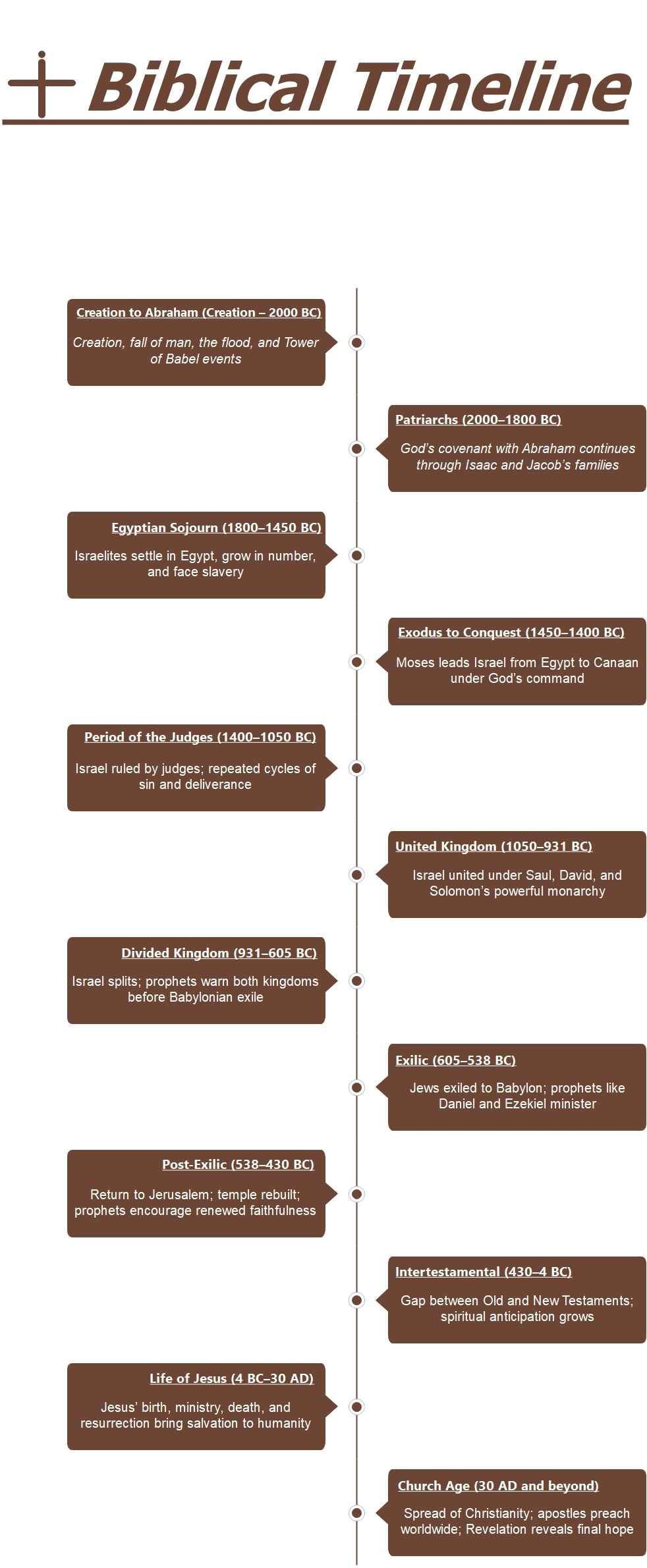


You're not the only one who has ever read the Bible and wondered how all the stories fit together. The stories go back thousands of years, from the beginning of time to the early Church, which can make them hard to follow.
A biblical timeline can help with that. It organises everything so you can see how one thing leads to another. You'll learn when the patriarchs lived, how the Old Testament fits into world history, and how God's plan came together piece by piece.
Let's look at the Bible's story in a way that is simple, visual, and easy to understand.
Creation to Abraham (Creation - 2000 BC)
It all begins when God creates the heavens, the earth, the light, the animals, and finally, people, Adam and Eve.
But things take a turn when Adam and Eve disobey God. That's when sin enters the world. From that moment, life becomes filled with struggle, pain, and distance from God.
Yet God doesn't turn away from His creation. We read stories like:
- Cain and Abel: The first family and the heartbreak of jealousy.
- Noah and the flood: It's where God renews the earth and saves Noah's family.
- The Tower of Babel: A place where people try to reach heaven on their own, and God scatters them by changing their languages.
These opening chapters (Genesis 1-11) reveal the main theme of the Bible: how God creates, humanity falls, and He keeps showing mercy. It's the start of His rescue plan, beginning with one man: Abraham.
The Patriarchs (2000-1800 BC)
Next comes Abraham, who is called the father of faith. God asks him to leave home and assures him of three things: land, family, and blessings.
That promise is the Abrahamic Covenant, which turns into a turning point in the story of God. The salvation plan of God will unfold through the descendants of Abraham.
Abraham's son Isaac and grandson Jacob (later renamed Israel) carry the promise forward. Jacob's twelve sons become the tribes of Israel.
Joseph is one of those who is betrayed by his brothers, but he rescues them all in a famine in Egypt. One of the surprising twists that shows how God can turn bad into good.
This whole period teaches us to keep trusting God even when we can't see the outcome.
The Egyptian Sojourn (1800-1450 BC)
At first, Egypt seems to be a safe haven for the family of Jacob due to his high position. But over time, things change.
A new Pharaoh rises who doesn't know Joseph, and the Israelites end up enslaved.
Nevertheless, God does not forget his people. He sends Moses to get them out, doing great signs and wonders, such as dividing the Red Sea.
In this case, God makes himself known by his name, I AM WHO I AM, indicating that he is always there.
Even when everything looks hopeless, God is quietly working to set His people free.
Exodus to Conquest (1450-1400 BC)
This section feels like an adventure story.
The Israelites flee from Egypt (the Exodus) and start their long walk to the Promised Land. Along the way:
- At Mount Sinai, God provides them with the Ten Commandments.
- He gives him manna to eat in the desert.
- He educates them on living like His people.
Joshua takes over the Israelites when Moses dies and guides them into Canaan. Consider the downfall of Jericho; those walls were brought down after days of loyal marching.
This era reminds us that trusting God can lead to victory, even when things look impossible.
Period of the Judges (1400-1050 BC)
After Israel occupied the land, they still had no king, so God appointed judges to guide them in times of trouble.
The pattern repeats over and over:
- The people turn away.
- Enemies rise up.
- They cry out to God.
- God sends a judge to save them.
You'll meet people like Deborah, Gideon, and Samson, ordinary people who did extraordinary things because of God's strength.
And right in the middle of all that chaos comes Ruth, a short but moving story about loyalty and love.
The United Kingdom (1050-931 BC)
Israel eventually desires a king. God grants their wish.
Saul is chosen first but disobeys God. Then comes David, the shepherd boy who defeats Goliath and writes many of the Psalms. His son Solomon builds the Temple and becomes known for his great wisdom.
This is Israel's peak. It is what is referred to as the golden age of worship, wisdom, and wealth.
However, when pride and sin begin to enter, they begin to crack, preparing the second fall.
The Divided Kingdom (931-605 BC)
With the death of Solomon, two countries were formed: the northern Israel, and the southern Judah.
Most of their kings led the people away from God. Prophets like Isaiah, Hosea, and Amos call them to turn back, but few listen.
Eventually, Assyria conquers Israel, and later, Babylon threatens Judah.
It's a reminder that turning from God always leads to ruin, yet even then, God keeps calling His people home.
The Exilic Period (605-538 BC)
This is one of the darkest times. Babylon destroys Jerusalem and takes the people captive.
Their temple and city are gone, but God is still near.
- Daniel stands firm in faith.
- Ezekiel sees visions of a future hope.
- Esther shows courage in the Persian court.
Even in exile, God's promises remain unbroken.
The Post-Exilic Period (538-430 BC)
Several years later, Babylon is conquered by Persia, and King Cyrus allows the Israelites to go back home.
They rebuild what was lost:
- The Temple, led by Ezra.
- The city walls were built under the leadership of Nehemiah.
- Prophets like Haggai, Zechariah, and Malachi remind them to stay faithful.
It is a time of reconstructions, not only of their land, but of their hearts, as they look forward to the coming Savior.
The Intertestament Period (430-4 BC)
After that, a long silence follows, 400 years with no prophets, still history is running.
- Empires rise and fall: Persia, Greece, Rome.
- Greek has become a common language, making it easier to spread ideas.
- Rome builds roads and trade routes, connecting the world like never before.
God might appear to be silent, although He is preparing the arrival of Jesus at the right time.
The Life of Jesus (4 BC-30 AD)
This is the center of the whole story.
Jesus was born in Bethlehem as it was predicted by the prophets. He grows up, teaches about God's kingdom, heals the sick, and shows love that changes lives.
Then comes the cross, the moment that changes everything. Jesus dies for humanity's sins and rises again, breaking the power of death.
The Gospels, Matthew, Mark, Luke, and John, each tell His story from their own view, but all share the same truth: God came down to save us.
The Church Age (30 AD - Today)
After Jesus returns to heaven, the Holy Spirit fills the believers at Pentecost, and the Church begins.
The apostles, like Peter and Paul, carry the message far and wide, often at great cost.
The rest of the New Testament helps believers live with faith, unity, and hope as they wait for Jesus' return.
And that's where we come in, still living in the story God began long ago.
How to Make a Similar Timeline?
Creating a biblical timeline chart helps visualize how key events connect over time. You can use the same idea to make any kind of timeline for a country, a person, a story, or even an era in history. Here’s how to make one:
- Research the background: Start by collecting key facts like important dates, names, and major events related to your topic.
- Arrange chronologically: Put everything in order from the earliest to the latest. This helps the timeline flow naturally.
- Plan your structure: Decide what kind of layout you want, a straight line, a mind map, or a circular design. Sketch a quick outline before you start.
- Add events and dates: Begin entering the information on your timeline. Use boxes or nodes for each event, and connect them with lines or arrows.
- Use colors and images: Add color codes for different periods or themes. Include small pictures or icons to make your timeline more visual and engaging.
- Review everything: Check that every name, date, and detail is accurate and properly placed.
- Export and share: Once you’re done, save your timeline in your preferred format (PDF, PNG, etc.) or print it for display.
Steps to Make a Biblical Timeline in EdrawMax
Instead of sketching timelines by hand, why not make one online? I decided to use EdrawMax to create a Biblical Timeline, showing how each part of the Bible connects from the beginning to now. It turned out neat and simple! Here’s how you can make one too.
Step1 Start with a Blank Canvas
- Open Wondershare EdrawMax on your computer.
- Sign in or make an account if you don’t have one.
- Start with a blank page to make your timeline.

 Get 500 free AI tokens
Step2 Add a Timeline Title
- Write a title for your timeline, like “Biblical Timeline.”
- You can also add small icons or pictures to make it look nice.
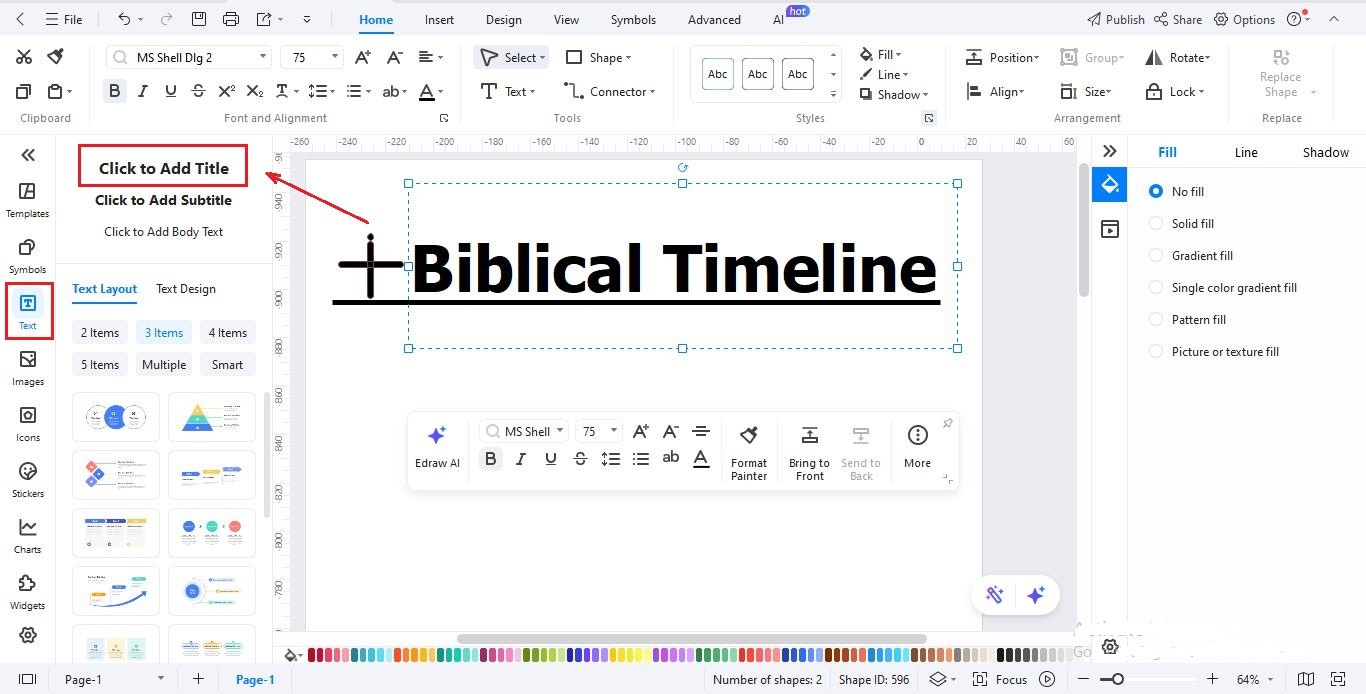
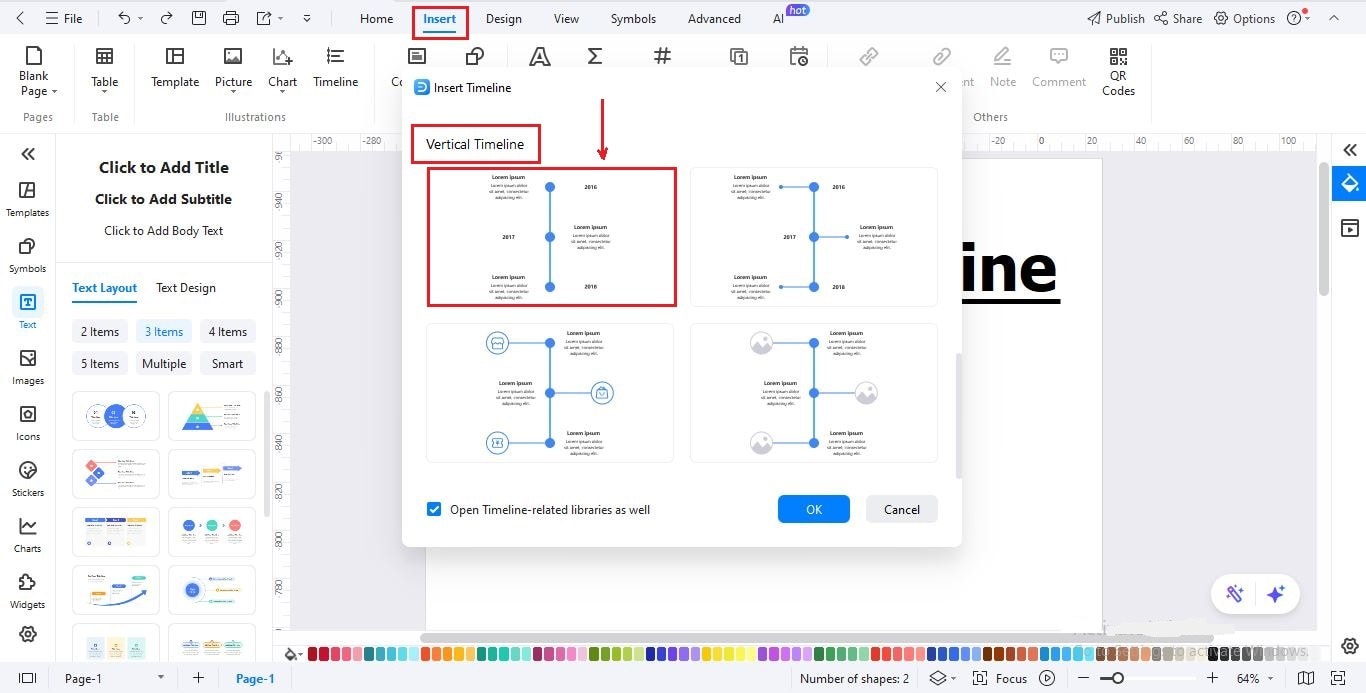
Step3 Insert the Timeline Layout
- Select a timeline on your page.
- Pick vertical, and move or resize it so it fits your page.
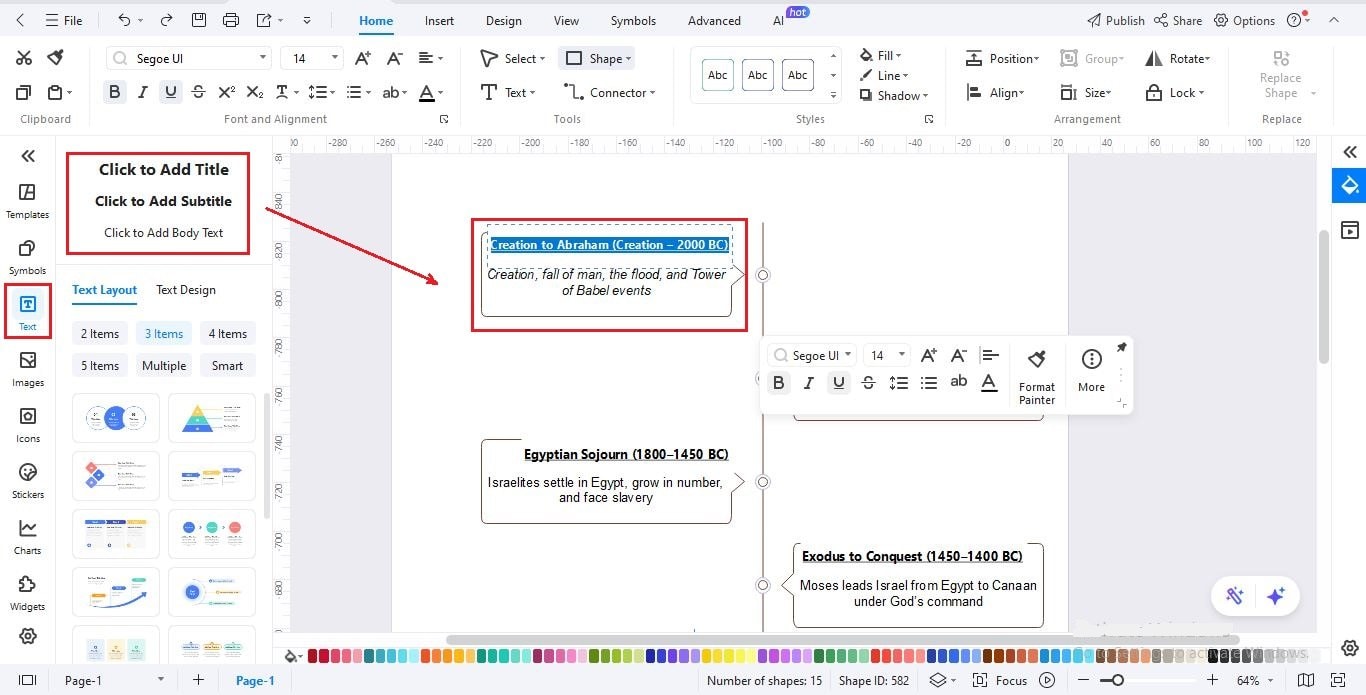
Step4 Add Biblical Events
- Add the main periods or events.
- Keep each entry short and clear.
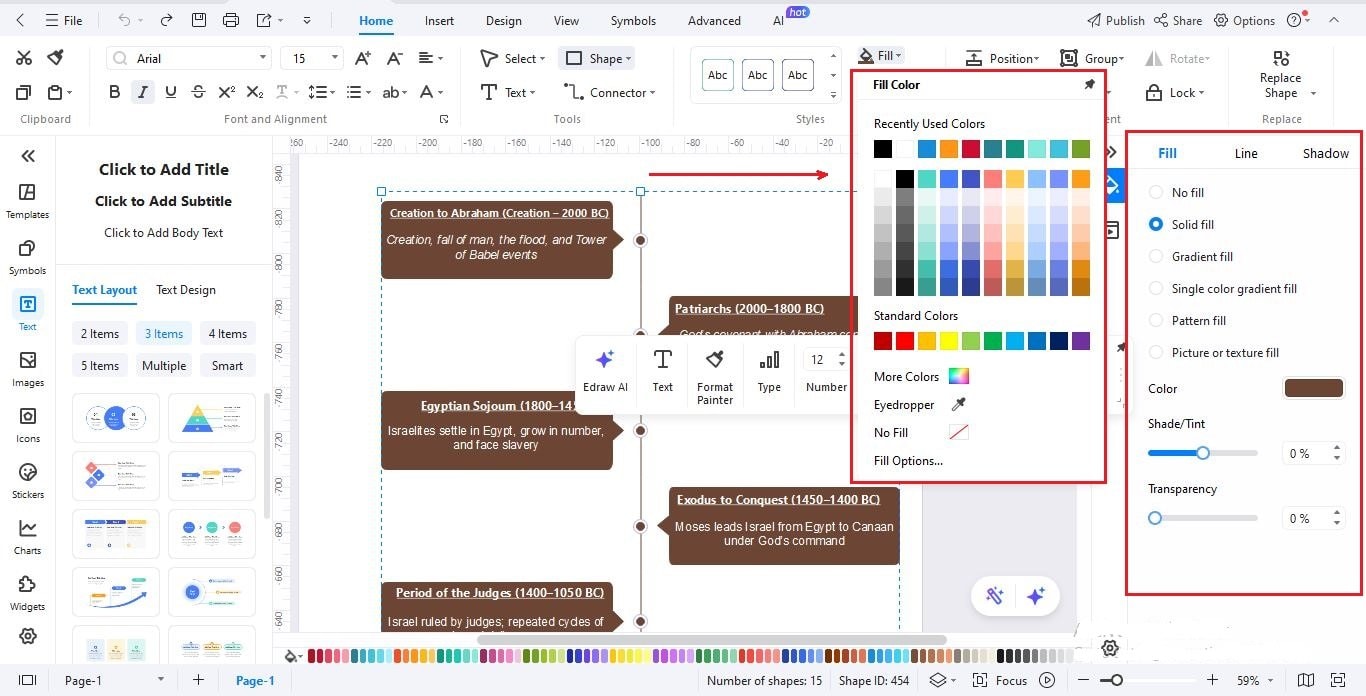
Step5 Customize the Design
- Customize your timeline using the top menu bar or the right panel to change colors and fonts.
- Add icons, symbols, or shapes if you want to highlight key events.
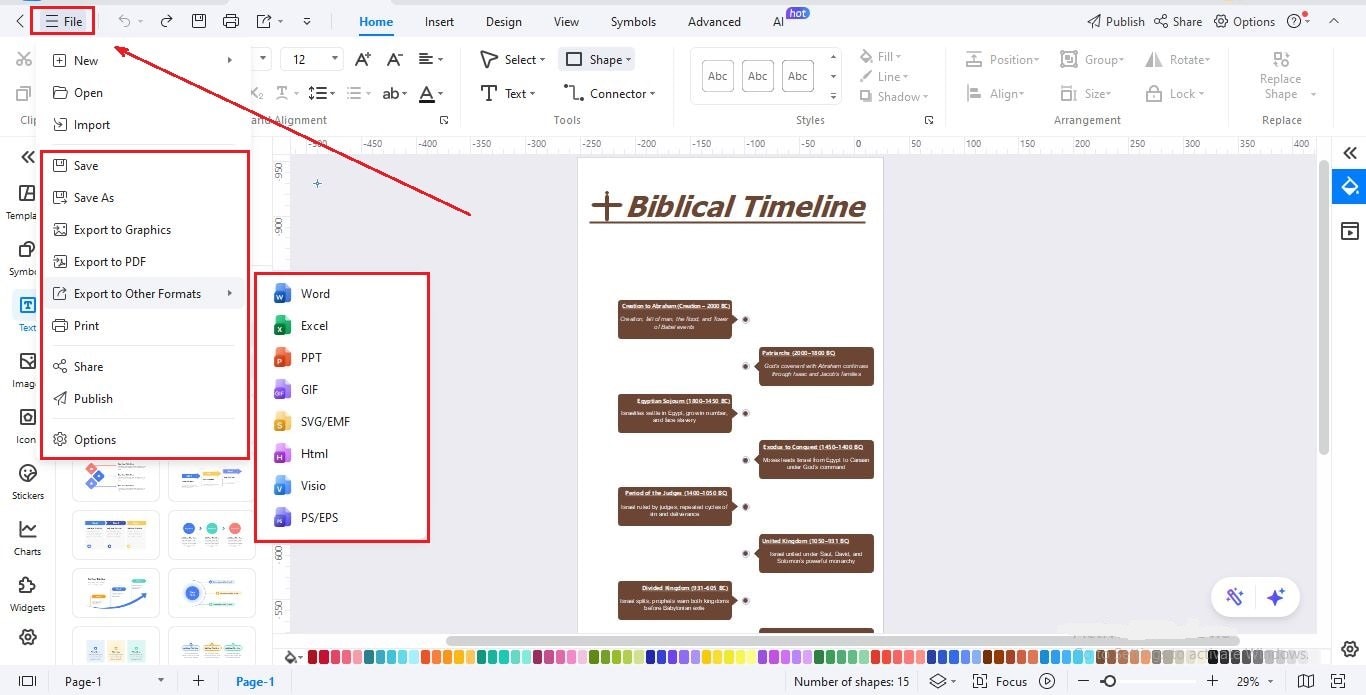
Step6 Save and Export
- Save your timeline so you can edit it later.
- Export it as PNG, PDF, or other formats to share or print.
- You can also share it online for others to see.
Final Thoughts
The Bible is one long story of God's love, human mistakes, and redemption through Jesus. From the very start until now, it's the story of a God who keeps reaching out to bring His people home. And our part isn't over yet. We're still living in the Church Age, waiting for the day when God's story finally comes full circle.
If you want to visualize this amazing journey, try creating your own Bible timeline chart using EdrawMax. With its ready-made templates and simple drag-and-drop tools, you can map out the chronology of the Bible and see how every event fits beautifully into God’s plan..
AI Diagram Generator
Enter your prompt. Upload files if needed. Generate diagrams, charts, or slides instantly.





 (AI & Web)