




A SWOT analysis lets you see where you stand. You break things down into strengths, weaknesses, opportunities, and threats. It’s a straightforward way to spot what’s working and what needs more work. People ask for SWOT when they want to plan smarter. It shows you what you’re good at and what’s holding you back.
SWOT analysis isn’t just for business meetings; you can use it for school projects or even sorting out your own plans. Plus, you get to stack up what you’re good at against the stuff that trips you up. That way, you make decisions with a bit more confidence and know when it’s time to switch things up.
In this article
Part 1:What is SWOT Analysis?
A SWOT analysis lets you see where you stand. You break things down into strengths, weaknesses, opportunities, and threats. It’s a straightforward way to spot what’s working and what needs more work. People ask for SWOT when they want to plan smarter. It shows you what you’re good at and what’s holding you back.
SWOT analysis isn’t just for business meetings; you can use it for school projects or even sorting out your own plans. Plus, you get to stack up what you’re good at against the stuff that trips you up. That way, you make decisions with a bit more confidence and know when it’s time to switch things up.
Part 2: When to use SWOT Analysis?
SWOT analysis is like your go-to gut check before any big decision. When your plans feel fuzzy and you need clarity, it cuts through the noise fast. That’s why people lean on it for everything, like business strategy, marketing, finance, planning, and scoping out the competition. It strips things down and shows you what’s actually important.
Business strategy
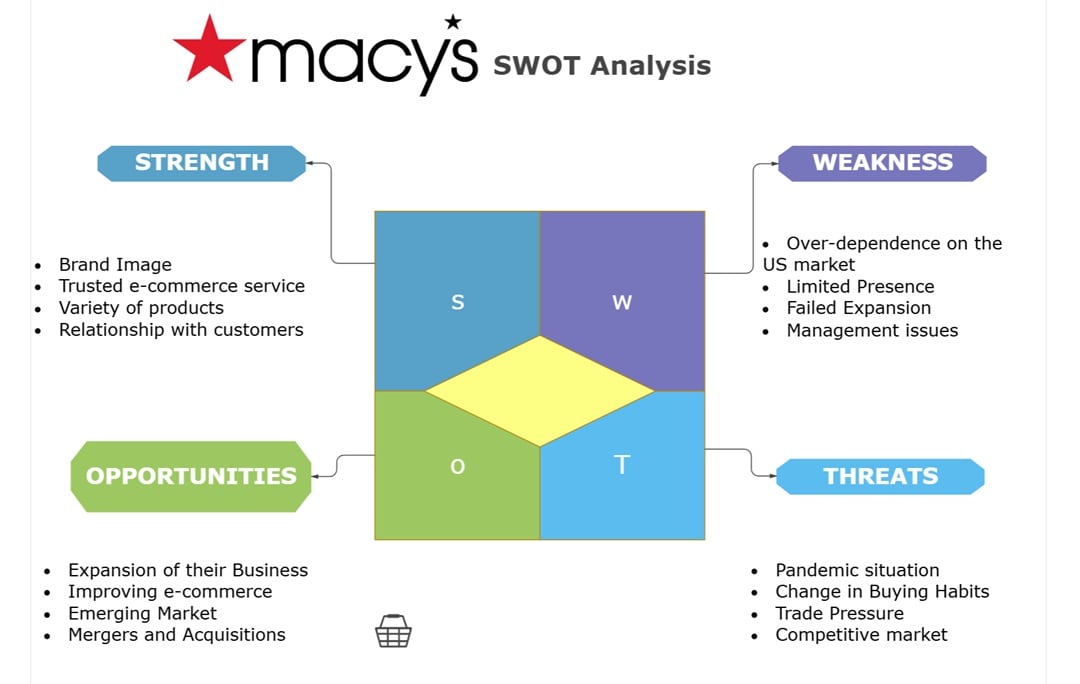
A SWOT analysis gives you a clear picture of where your business stands. It helps you figure out which products to focus on and spot risks you should steer clear of. Plus, it points out your competitors’ weak spots. In the end, every big decision feels more deliberate, and you’ve got good reasons to back it up.


Marketing
It gives your marketing plans real direction. It shows you which customers connect with your brand and who you’re not reaching yet. You’ll spot weak areas in your campaigns, catch new market trends as they pop up, and stay on top of what your competitors are doing.
Financing
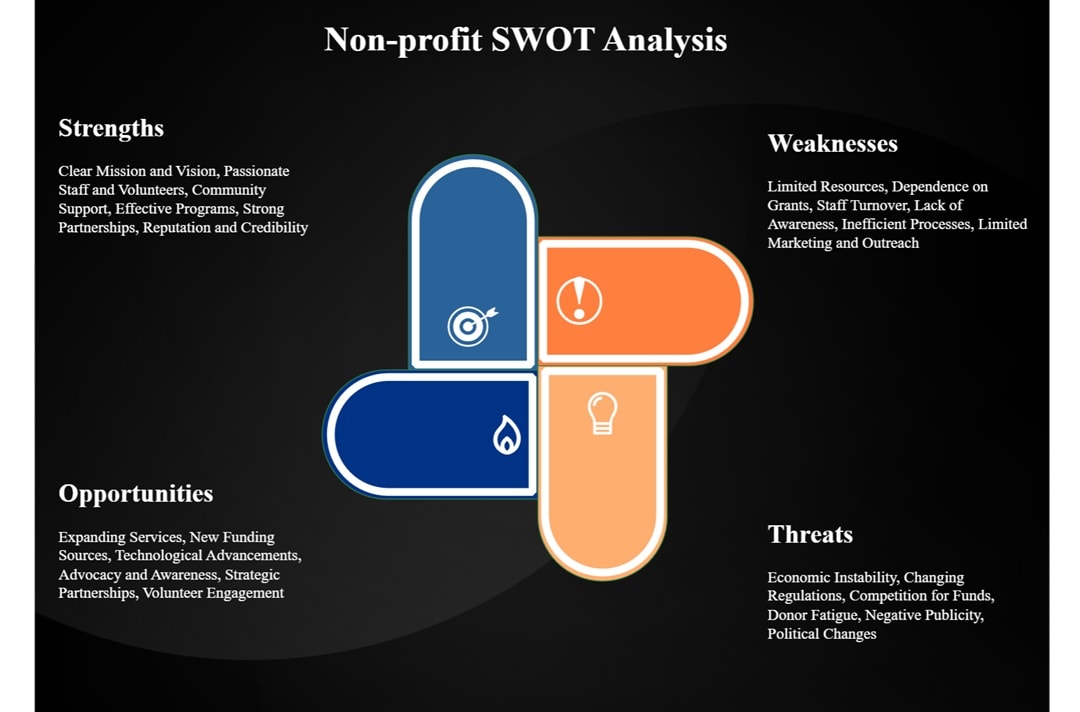
A SWOT analysis presents a clear picture of where your money works best. It depicts which projects really stand out and which ones might just eat up your budget. You’ll spot chances to boost your returns. In the end, it helps you make more grounded decisions about where to put your money.
Corporate planning
A SWOT analysis lets you figure out your long-term business plans and nail down what matters most. It also points out what’s not working, so you know what you need to fix before you try to expand. Plus, it makes future opportunities and outside risks easier to spot, so you end up with goals that actually make sense.
Competitor Analysis
A SWOT analysis displays a clear way to size up your competition. You look at what they do well and how that shapes the playing field, but you also spot their weak points. At the same time, you line up your own weaknesses against their strengths, so you know exactly where you need to step up.
Part 3: Benefits of SWOT Analysis
Here are some of the benefits of SWOT analysis:
- Complex problems become easier to tackle
SWOT takes a complicated problem and chops it into four manageable pieces. Things don’t feel so overwhelming. You see what’s really going on, one part at a time, and that makes it way easier to decide what to do next. - It applies to nearly any business challenge
You can use SWOT for just about anything in business. Product launches, team choices, sizing up the market, setting big-picture goals, you name it. The same approach fits all kinds of challenges. - It handles diverse data inputs
You can throw in numbers, feedback, trends, and even your own notes, all in one spot. Comparing everything gets way easier. - It’s relatively affordable to conduct
You don’t need fancy software or a big team to get started. Even small companies can handle this without breaking the bank. - Pinpoints opportunities
It helps you spot chances to grow. It assists in highlighting stuff that usually slips through the cracks when you’re caught up in the daily grind. - Pinpoints improvement areas
It also shows you where things aren’t working so well, so you can jump in and fix problems before they get worse. - Pinpoints potential risks
You’ll catch potential risks early. This gives you more time to plan and protect your business before anything goes wrong.
Part 4: Components of a SWOT Analysis
Strengths
Strengths are the things you’re already good at. Think about the skills you have, the resources you can count on, or the systems that give you an edge. Maybe your customers really trust you, your team knows what they’re doing, or your product actually fixes a real problem.
When you list out your strengths, you spot what you can lean on right away to push your plan ahead. It just makes sense to build your strategy around whatever’s already working for you.
Weaknesses
Weaknesses show you what’s holding you back. Maybe your team’s missing a key skill, the process drags, or nobody really knows what the goal is. Sometimes you just don’t have the right tools.
You have to look at these things head-on if you want to know where to put your energy. Spotting weaknesses early saves you trouble down the road. You can tackle the problems before they mess up bigger plans.
Opportunities
Opportunities are those moments that can actually push your results higher. Maybe it’s a shift in the market, a change in what customers want, or some new tool that just hit the scene. Sometimes, it’s just the right timing.
These little signals point to where you can grow without running into too many walls. When you lay out your opportunities in plain sight, it’s easier to spot ways to expand, launch something new, or sharpen your edge. Plus, you’re ready to jump when something good pops up.
Threats
Threats are the risks that can mess up your plan if you ignore them. Stuff like tough competitors, higher costs, sudden market changes, or new regulations. These can all throw you off track.
Spotting these threats early works like an effective warning system. You get the chance to build backup plans and deal with problems before they hit you. That way, you can keep things steady, even when everything around you changes fast.
Part 5: SWOT Analysis Examples
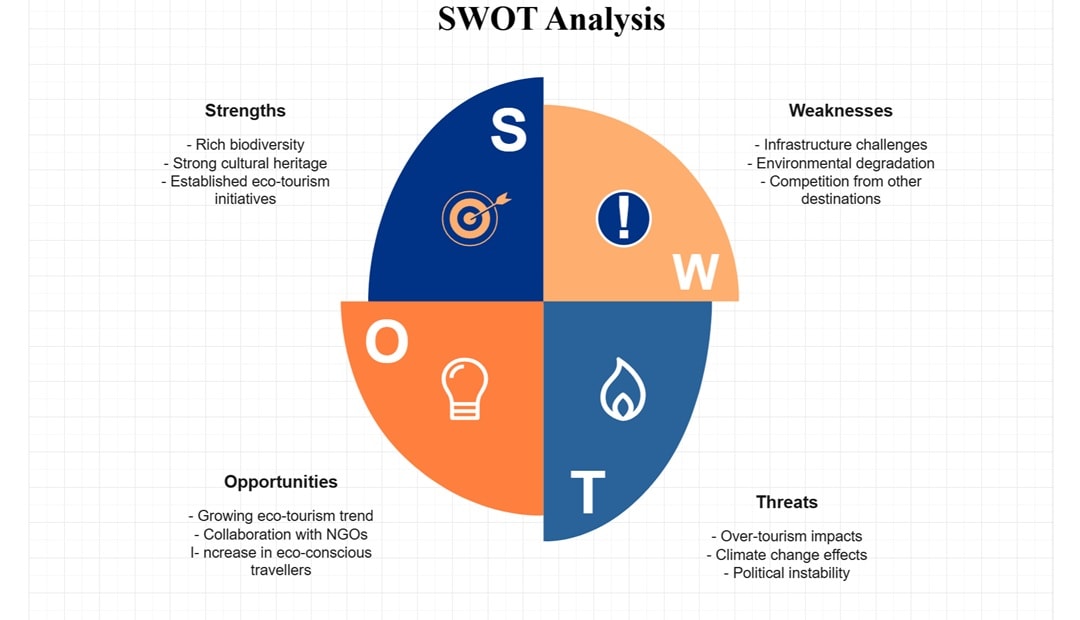
Eco-Tourism SWOT Analysis
The Eco-Tourism SWOT analysis shows how a nature-focused destination can assess its position. The good stuff? Tons of biodiversity, deep cultural roots, and plenty of eco-friendly programmes already running. But there are rough spots, too. On the bright side, more people care about the planet now, NGOs are getting involved, and travellers are looking for greener options.
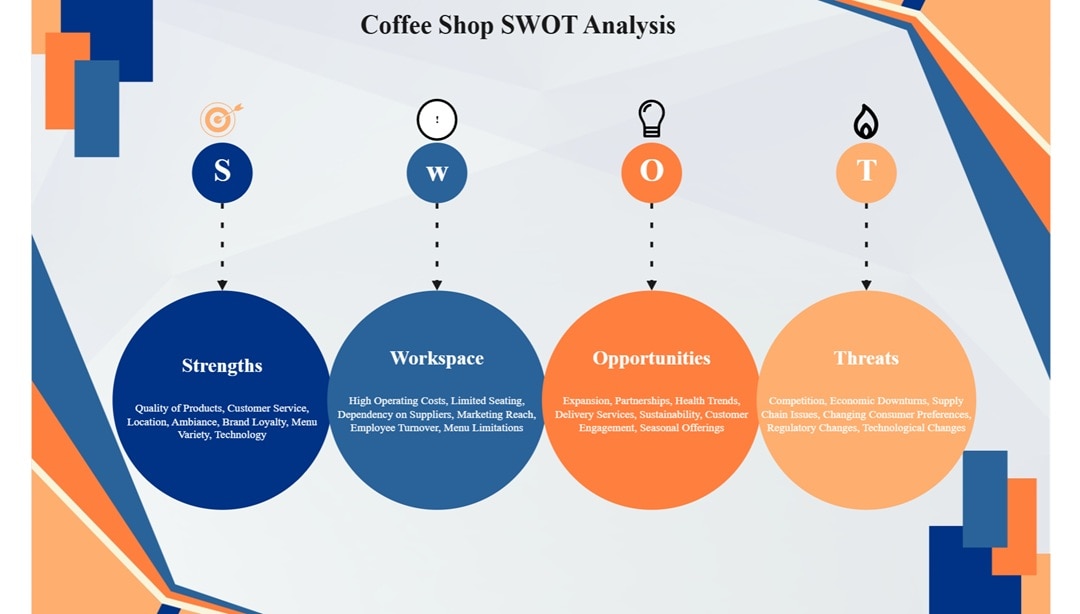
Coffee Shop SWOT Analysis
A coffee shop SWOT analysis is really just a snapshot of everyday life behind the counter. The shop shines when it nails great coffee, friendly service, and makes regular customers. But things get tricky when bills pile up. Moreover, fresh menu ideas, some healthier options, and smoother delivery could all help.
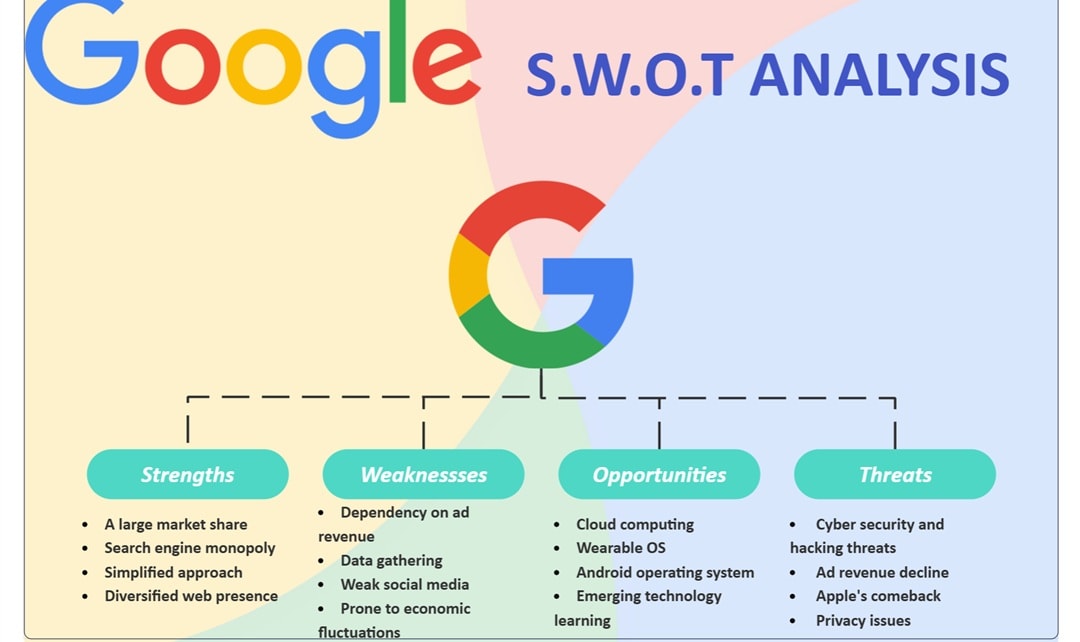
Google SWOT Analysis
Google takes a hard look at where it stands in the world with a SWOT analysis. Its biggest strengths? Massive scale and a user experience that works fast, clean, and fuss-free. Google depends a lot on ad revenue, and its social products never really took off. Still, there’s plenty of room to expand.
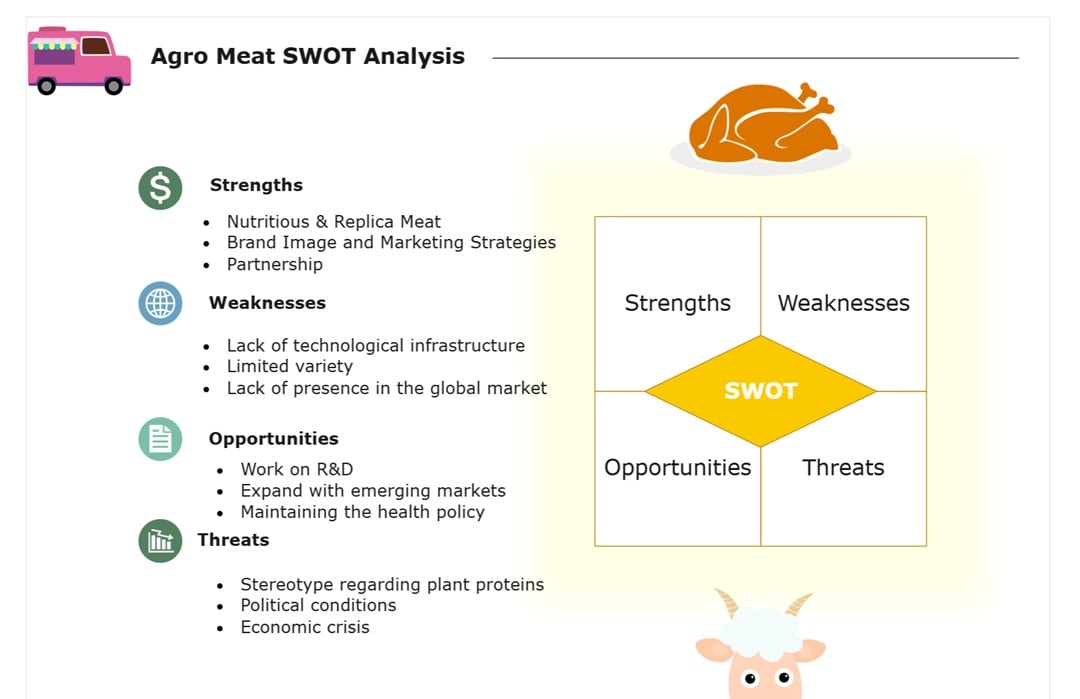
Agro Meat SWOT Analysis
The Agro Meat SWOT Analysis gives a real look at how the upcoming meat alternative brand checks its own progress. The brand stands out for its healthy products and solid partnerships. However, they have to deal with sceptical customers, unpredictable politics, and a bumpy economy.
Microsoft SWOT Analysis
Microsoft knows how to keep up in a tech world that never sits still. People trust the brand, millions use its products, and its cloud services just keep getting bigger every year. Still, some products start to feel a bit old, and the price tag can turn people away. The real headaches come from tough rivals.
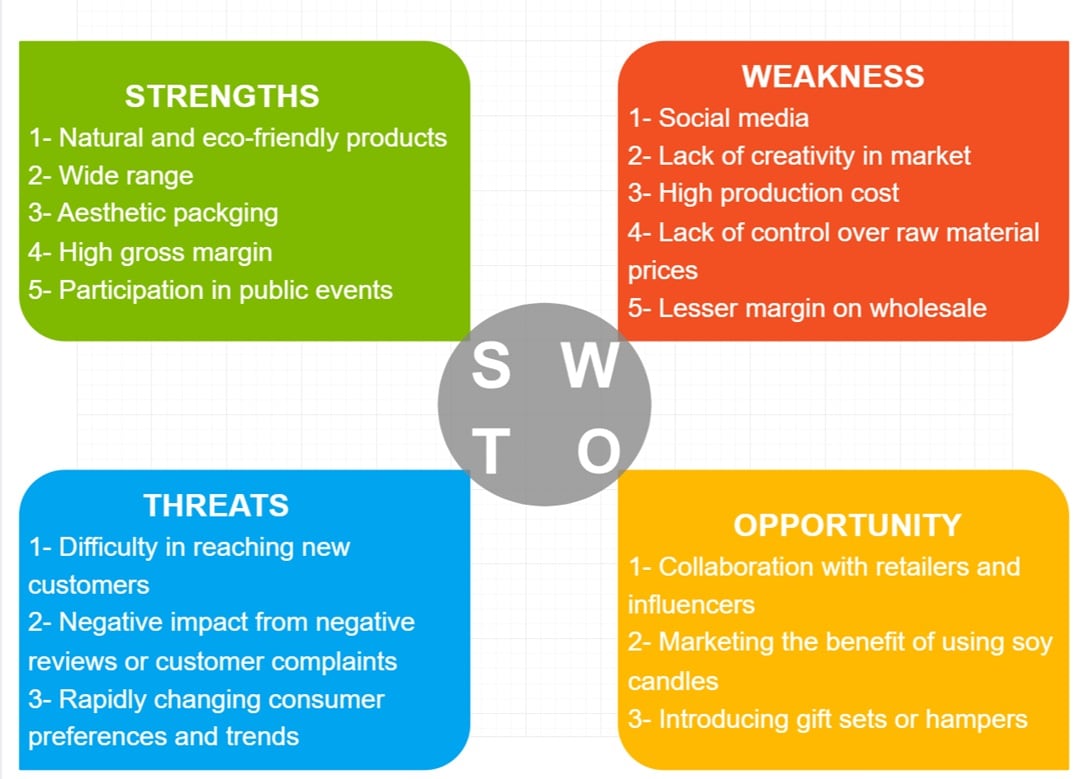
Part 6: How to Conduct a SWOT Analysis with EdrawMax?
Now that you’ve seen a real SWOT analysis in action, let’s talk about making one fast. You want a neat layout and a simple way to keep everything organised. That’s where EdrawMax comes in. It lets you put together a sharp-looking SWOT chart in just a few minutes.
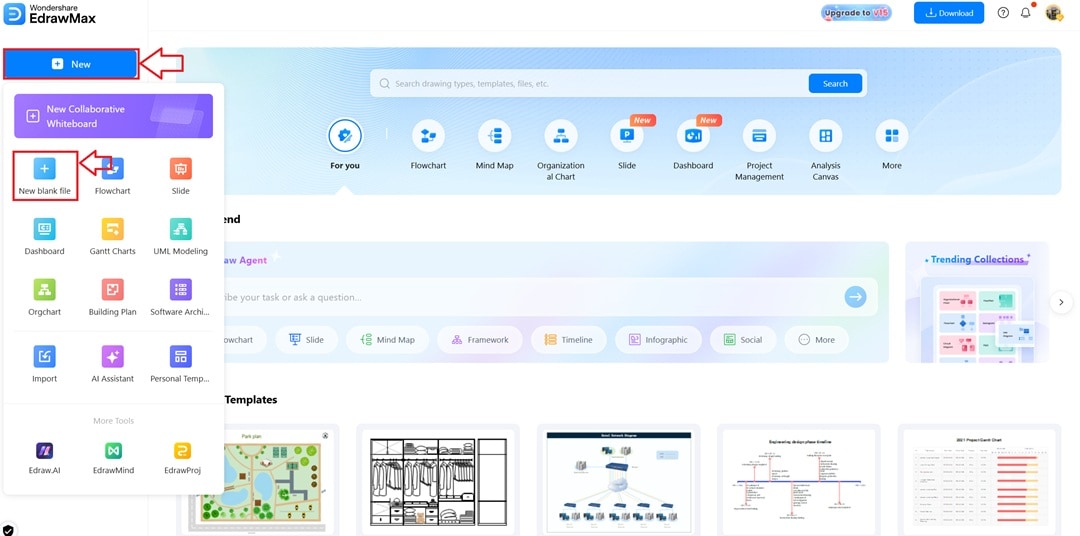
Step1 Begin with the New File
- First, head to the EdrawMax dashboard and look for the New button up in the top left corner.
- Click it, then pick New blank file from the menu.
- Now you’ve got a fresh workspace, all set for you to lay out your SWOT analysis.
 Get 500 free AI tokens
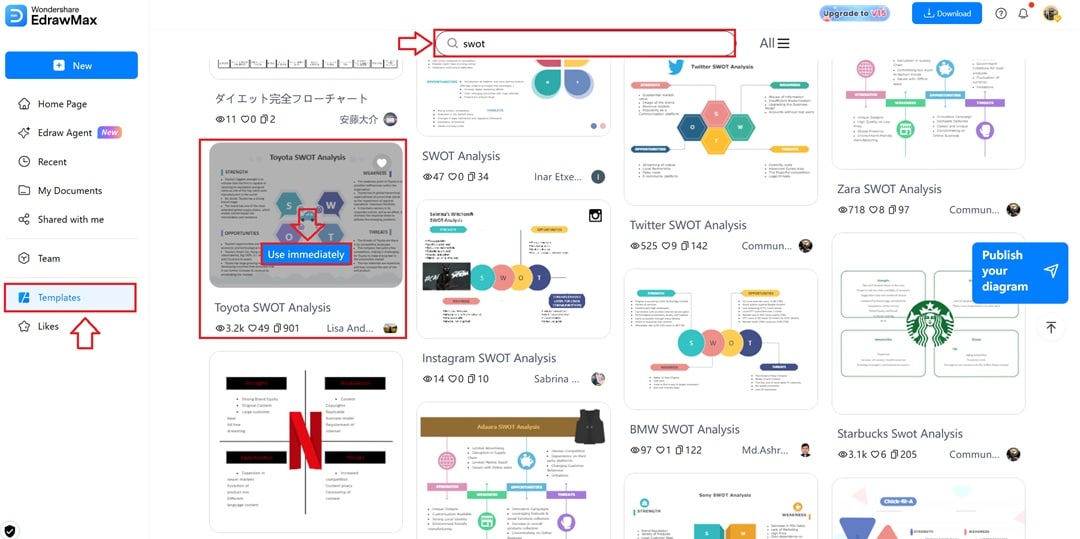
Step2 Pick a SWOT Template
- If you want a head start, open the Templates section on the left.
- Just type “SWOT” into the search bar, and you’ll see a bunch of templates pop up.
- Find one you like, click Use Immediately, and it’ll drop right into your workspace.
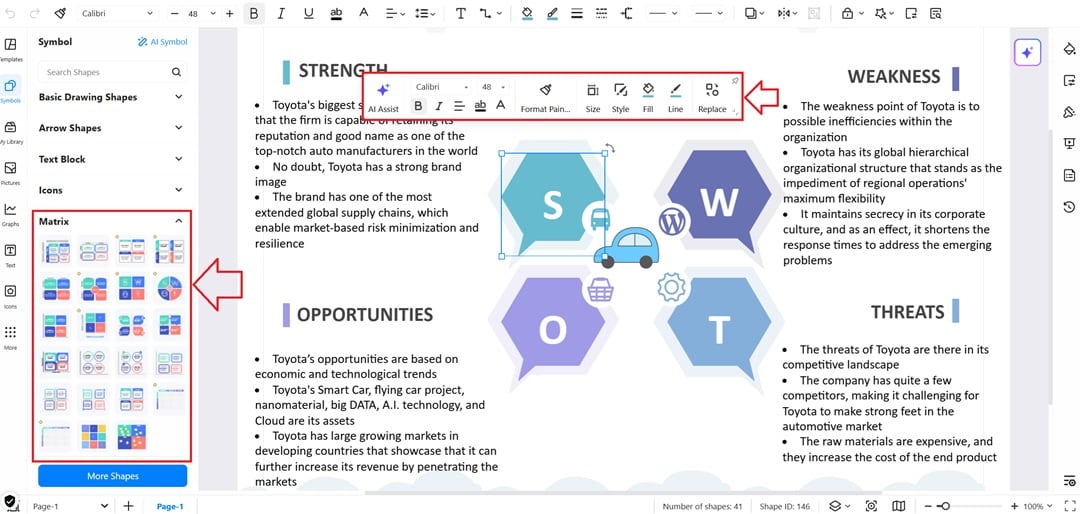
Step3 Edit the Template Layout
- Click any shape or text box in the SWOT template.
- The top toolbar lets you change the size, style, color, or text.
- If you want to add more Matrix shapes, just drag them in from the left panel and update your design.
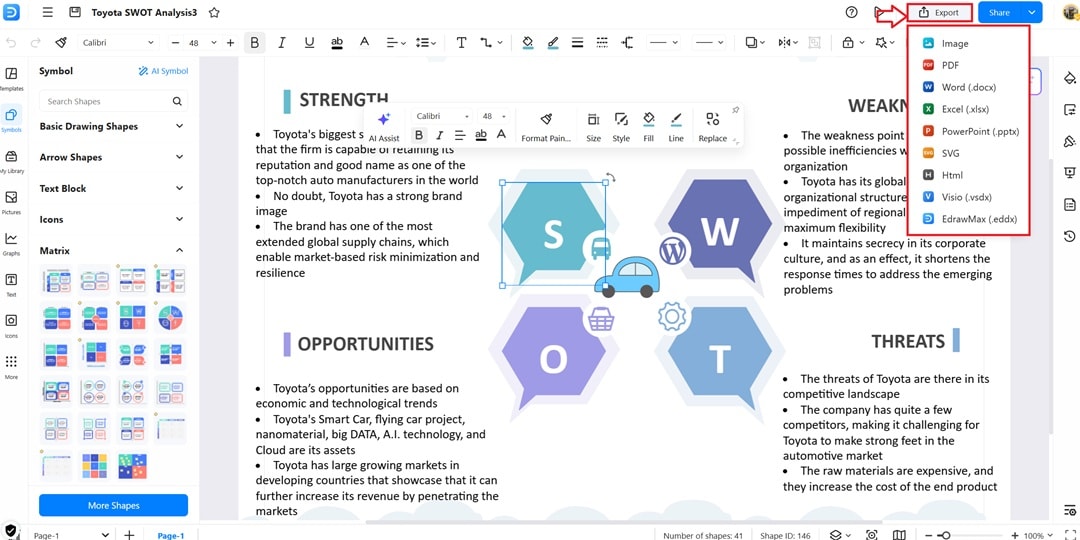
Step4 Export Your SWOT Chart
- When you're ready, hit the Export button in the top right corner.
- Pick the format you want.
- Save it to your device, and you’re all set to share or use your SWOT analysis wherever you need.
Part 7: Common Mistakes When Preparing a SWOT Analysis (SWOT Analysis Tips)
Here are some common mistakes one can make while preparing a SWOT analysis:
- Overloading the List
Cramming too much into the SWOT just muddies the waters. You end up with a mess where nothing stands out. Stick to a handful of important points in each section. - Lacking Specificity
If you’re too vague, the analysis falls flat. Spell out exactly what the issue is and why it matters. The clearer you are, the easier it is to make smart choices. - Overlooking Weaknesses
When you skip over weaknesses, you set yourself up for surprises later. Call out the real problems now, so you can deal with them before they turn into bigger headaches. - Not Planning Ahead
A lot of folks fill out the SWOT chart and call it a day. But the real value shows up when you actually use those insights to make decisions and take action. - Setting Goals That Don’t Fit Reality
When your goals don’t line up with the resources you have, you just end up frustrated. Stick to targets you can actually hit. - Only using SWOT
If you lean on SWOT alone, you’re missing the bigger picture. Mix in some real research or data to truly understand where you stand.
Part 8: Conclusion
You’ve reached the point where the ideas in this guide should feel practical, not distant. You’ve seen how a SWOT analysis comes together, how each piece connects, and how a real example can make a messy situation easier to figure out. By now, this approach feels like something you can just grab whenever you need to clear things up.
Now it’s about putting what you’ve learnt to work. Get straight to the point, be upfront about what’s possible, and pick actions that actually fit your situation. Need a chart that looks good? EdrawMax lets you design one fast. Let your results shape your choices, and you’ll notice you make decisions with clarity and confidence. Build yours now!
FAQ:
-
1. How do SWOT Analysis and the TOWS Matrix compare?
SWOT and the TOWS matrix are both strategic planning tools that analyze internal strengths and weaknesses alongside external opportunities and threats, but they differ in their approach to action.
SWOT identifies the four factors, while the TOWS matrix uses these factors to generate specific, actionable strategies by matching them against each other, for example, matching strengths with opportunities (SO) to create a plan. -
2. How can I identify my strengths?
You can identify your strengths by reflecting on past successes, asking for feedback from others, and taking strengths assessment tests. Look for recurring themes in your accomplishments, consider what activities energize you, and ask friends, family, or colleagues what they see as your key strengths. -
3. How do you turn SWOT into action?
To turn a SWOT analysis into action, you need to identify and prioritize strategic alternatives by pairing different quadrants of the SWOT analysis (e.g., strengths with opportunities) and then develop a detailed action plan. This includes setting specific goals, timelines, and resource allocations, and regularly monitoring progress.
AI Diagram Generator
Enter your prompt. Upload files if needed. Generate diagrams, charts, or slides instantly.




 (AI & Web)